Could you be pregnant? Whether you’re hoping for a positive test or worried about one, it’s natural to watch your body closely for clues. Some women notice changes even before a missed period, while others feel nothing at all for weeks.
This guide explains the most common early pregnancy symptoms, when they usually start, how they differ from PMS, and when to take a test. Use it to understand early pregnancy symptoms, but remember only a test can confirm pregnancy.
Key takeaways
- The most reliable early sign of pregnancy is a missed period, but many women notice other symptoms first.
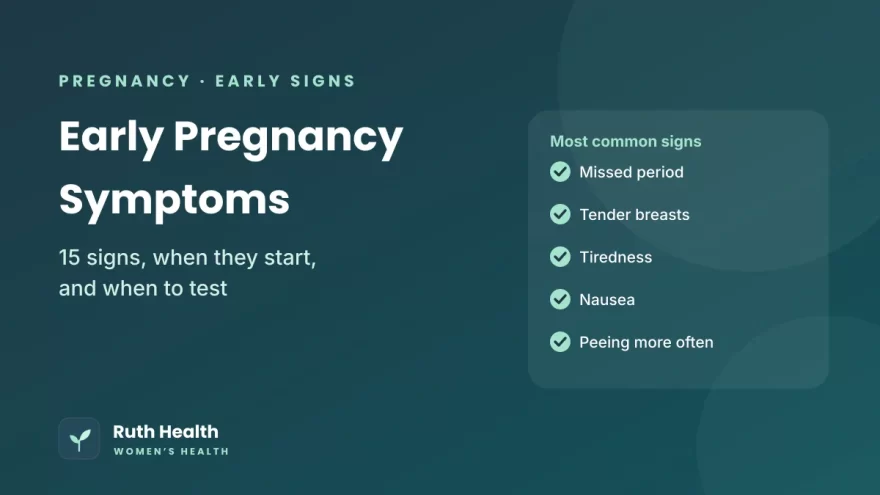
- Common early pregnancy symptoms include tender breasts, tiredness, nausea, needing to pee more often and light spotting.
- Many early symptoms overlap with PMS, so symptoms alone can’t confirm pregnancy.
- Pregnancy symptoms vary from woman to woman. You can be pregnant with few or no symptoms.
- A home pregnancy test is most reliable from the first day of your missed period, and even more so a week later.
How early do pregnancy symptoms start?
Pregnancy hormones start rising after a fertilized egg implants in the uterus, around 6 to 12 days after ovulation. Some women notice symptoms within a week or two of conception, often around the time their period is due. Others don’t notice anything until several weeks later.
According to the National Institute of Child Health and Human Development, many women experience other symptoms of pregnancy before they miss a period, and a woman may have every common symptom, just a few, or none at all.
15 early pregnancy symptoms
1. A missed period
The primary sign of pregnancy is a missed period. If your cycle is usually regular, a late period is the strongest clue. Stress, illness, weight change and hormone conditions can also delay your period. See irregular periods.
2. Tender, swollen breasts
Rising hormones can make breasts sore, heavy, tingly or larger. The darker area around the nipple (areola) may also darken.
3. Fatigue
Feeling unusually tired is very common. Mayo Clinic explains that a rapid rise in progesterone during early pregnancy might contribute to fatigue.
4. Nausea, with or without vomiting
Morning sickness can happen at any time of day. It often begins around week 6 of pregnancy, though some women feel queasy earlier and some never do.
5. Needing to pee more often
Pregnancy increases blood flow to your kidneys, and you may notice more trips to the bathroom early on. If you have burning when you pee, see our guide to UTI symptoms.
6. Light spotting or cramping
Some women have light spotting, known as implantation bleeding, around the time their period would be due. It’s usually much lighter and shorter than a period. Mild cramping can also happen.
7. Bloating
Hormonal changes slow digestion, which can cause a bloated, full feeling similar to before a period. Read about bloating in women.
8. Food cravings or aversions
Suddenly disliking foods you normally enjoy, or craving unusual ones, is common.
9. A heightened sense of smell
Smells such as coffee, perfume or cooking food may suddenly seem much stronger or make you feel sick.
10. Mood swings
Hormone changes can make you feel tearful, irritable or emotional.
11. Constipation
Progesterone relaxes the muscles of the digestive tract, which can slow things down.
12. Headaches
Hormone changes and increased blood volume can trigger headaches in early pregnancy.
13. Feeling lightheaded
Changes in blood pressure and blood sugar can make some women feel dizzy or faint.
14. Increased vaginal discharge
A thin, milky, mild-smelling discharge is common. Discharge that smells strong, itches or looks unusual could be an infection; see bacterial vaginosis.
15. A metallic taste
Some women notice a sour or metallic taste in their mouth.
Remember that many of these signs aren’t unique to pregnancy. They can also mean you’re getting sick or your period is about to start.
Early pregnancy symptoms vs PMS
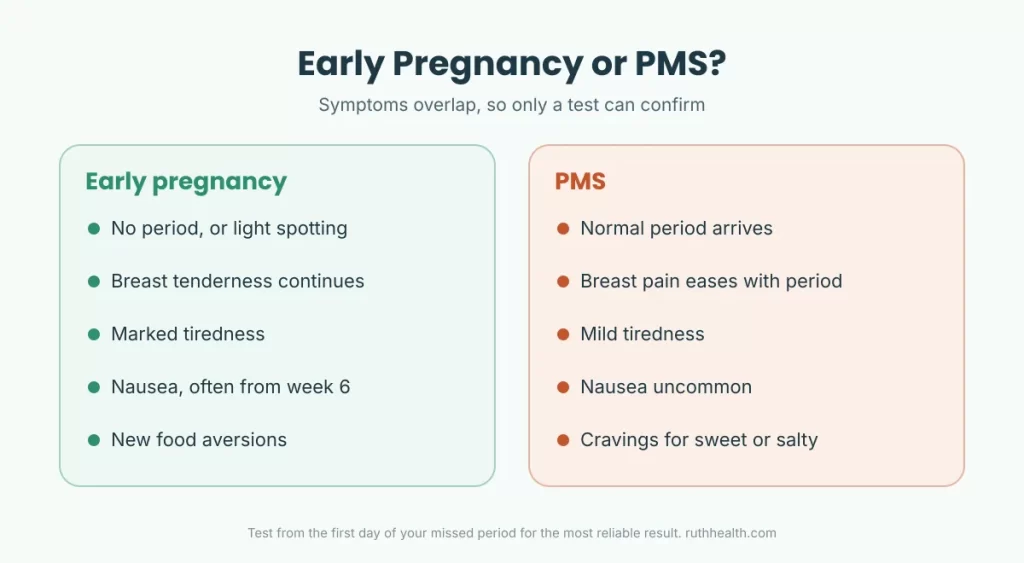
| Symptom | PMS | Early pregnancy |
|---|---|---|
| Breast tenderness | Eases once your period starts | Continues and may increase |
| Bleeding | A normal period | No period, or light spotting only |
| Fatigue | Usually mild | Often marked |
| Nausea | Uncommon | Common, often from around week 6 |
| Cravings | Often sweets or salty foods | Strong cravings or new food aversions |
| Mood changes | Before your period, ease after | Can continue for weeks |
Learn more about PMS symptoms.
When to take a pregnancy test
Home pregnancy tests detect the hormone hCG in urine. For the most accurate result:
- Test on or after the first day of your missed period. Testing earlier increases the chance of a false negative.
- Use your first urine of the morning, when hCG is most concentrated.
- If the test is negative but your period still hasn’t come, test again in a few days to a week.
- If you have irregular cycles, test about 3 weeks after you last had sex without contraception.
A blood test at your doctor’s office can detect pregnancy slightly earlier.
What to do if you think you’re pregnant
- Start a prenatal vitamin with folic acid (at least 400 mcg a day) if you’re not already taking one.
- Stop drinking alcohol and smoking.
- Check your medications with your doctor or pharmacist.
- Book a prenatal appointment once you have a positive test.
When to get urgent care
Seek medical help right away if you might be pregnant and have:
- Severe pain on one side of your lower belly.
- Heavy bleeding.
- Shoulder tip pain, dizziness or fainting.
These can be signs of an ectopic pregnancy or miscarriage.
Also see a doctor if you can’t keep any food or fluids down, as severe vomiting needs treatment.
Frequently asked questions about early pregnancy symptoms
Can you have pregnancy symptoms 1 week after conception?
Some women notice mild symptoms such as breast tenderness or tiredness within a week or two, but most symptoms start around the time of a missed period or later.
Can you be pregnant and have no symptoms?
Yes. Pregnancy symptoms vary widely, and some women have few or none in the early weeks.
What does implantation bleeding look like?
It’s usually light pink or brown spotting that lasts a few hours to a couple of days, much lighter than a normal period.
How soon can a pregnancy test detect pregnancy?
Many tests can detect pregnancy around the day of your missed period. Results are more reliable a week later.
Is cramping a sign of early pregnancy?
Mild cramping can occur in early pregnancy, but it’s also common before a period. Severe or one-sided pain needs urgent medical attention.
The bottom line on early pregnancy symptoms
Early pregnancy symptoms include a missed period, tender breasts, tiredness, nausea, needing to pee more often and light spotting. Because these overlap with PMS and vary so much between women, the only way to know for sure is a pregnancy test, ideally taken from the day your period is due. If you’re pregnant, start folic acid and book a prenatal appointment, and get urgent care for severe pain or heavy bleeding.