A burning feeling when you pee, needing to go every few minutes, and only a few drops coming out: if you’ve had a urinary tract infection (UTI), you know how uncomfortable it is. UTIs are one of the most common infections in women, and for many, they keep coming back.
This guide covers the symptoms of a UTI, why women get them so often, how they’re treated, and proven ways to prevent them. This guide explains everything you need to know about uti symptoms in women.
Key takeaways
- About 60% of women have at least one UTI in their lifetime, and around 10% of women get one each year.
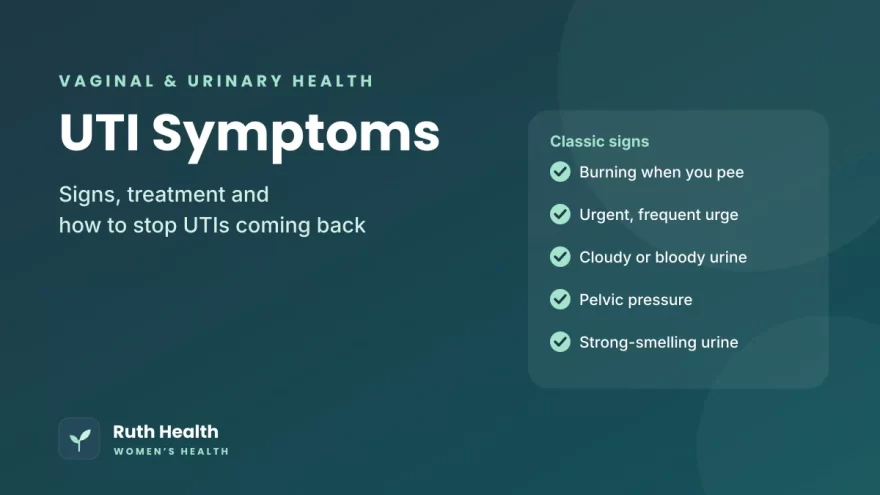
- Common symptoms are burning when you pee, frequent and urgent urination, cloudy or strong-smelling urine and lower belly pain.
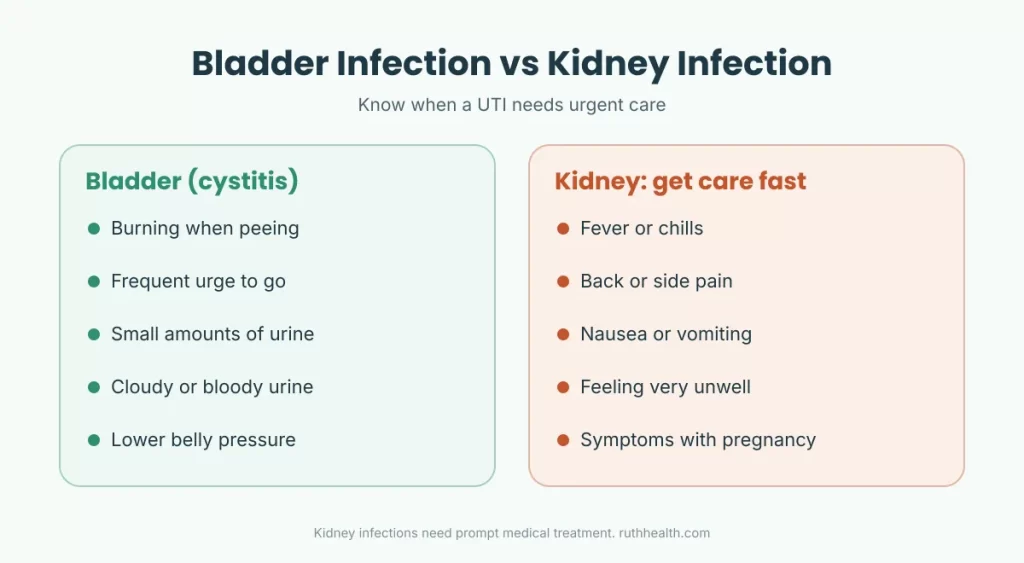
- Fever, back or side pain, nausea or vomiting can mean a kidney infection, which needs prompt treatment.
- Most UTIs are treated with a short course of antibiotics.
- A 2023 Cochrane review found cranberry products reduce repeat UTIs in women with recurrent infections.
What is a UTI?
A urinary tract infection happens when bacteria, most often E. coli from the bowel, get into the urinary tract. Most UTIs affect the bladder (cystitis). If bacteria travel up to the kidneys, it can cause a more serious kidney infection (pyelonephritis).
How common are UTIs?
Very common. According to Cochrane, about 10% of women experience a UTI each year and most women have at least one in their lifetime. Approximately 60% of women have at least one UTI, and 30% to 40% experience recurrent UTIs.
Why do women get more UTIs?
- Shorter urethra: bacteria have a shorter distance to travel to the bladder.
- The urethra is close to the anus and vagina, making it easier for bacteria to spread.
- Sex can push bacteria toward the urethra.
- Spermicides and diaphragms can increase risk.
- Menopause: lower estrogen changes the vaginal and urinary tissues and bacteria.
- Pregnancy changes the urinary tract.
- Not emptying the bladder fully, constipation, diabetes and kidney stones.
UTI symptoms in women
Bladder infection (cystitis)
- Burning or stinging when you pee.
- Needing to pee often, and urgently.
- Passing only small amounts of urine.
- Cloudy, dark or strong-smelling urine.
- Blood in your urine (pink, red or cola-colored).
- Pain or pressure in your lower belly or pelvis.
- Feeling generally unwell or tired.
Kidney infection (needs urgent care)
- Fever and chills.
- Pain in your back or side, below the ribs.
- Nausea or vomiting.
- Feeling very unwell.
In older women
UTIs in older women may cause confusion, agitation, falls or new incontinence rather than classic symptoms.
UTI or something else?
| Condition | Typical symptoms |
|---|---|
| UTI | Burning, frequent urgent urination, cloudy urine, lower belly pain |
| Bacterial vaginosis | Thin gray discharge with a fishy smell, little or no pain |
| Yeast infection | Thick white discharge, itching, soreness |
| STIs | Discharge, pain, bleeding; may cause burning when peeing |
| Vaginal dryness (menopause) | Burning, soreness, pain with sex |
Read our guide to bacterial vaginosis.
How are UTIs diagnosed and treated?
Your doctor may test a urine sample with a dipstick and sometimes send it for culture to identify the bacteria. Most uncomplicated UTIs are treated with a short course of antibiotics, often 3 to 7 days. Always finish the course as prescribed, even if you feel better.
While you wait for treatment:
- Drink plenty of water.
- Use pain relief like paracetamol or ibuprofen if safe for you.
- Use a hot water bottle on your lower belly.
- Avoid sex until symptoms clear.
How to prevent UTIs
1. Drink plenty of water to flush bacteria out regularly.
2. Pee soon after sex.
3. Wipe from front to back.
4. Don’t hold in urine for long periods.
5. Avoid spermicides and diaphragms if you get frequent UTIs.
6. Avoid perfumed products, douches and harsh soaps in the genital area.
7. Treat constipation.
8. Wear breathable cotton underwear.
9. Consider cranberry products if you get recurrent UTIs (see below).
10. Ask about vaginal estrogen after menopause, which can reduce recurrent UTIs.
Does cranberry prevent UTIs?
Yes, for some people. A 2023 Cochrane review of 50 trials with 8,857 participants found cranberry juice, tablets or capsules reduced the number of UTIs in women with recurrent UTIs, in children, and in people after bladder procedures. Cranberries contain proanthocyanidins (PACs), which may stop bacteria sticking to the bladder wall.
However, it did not appear to reduce UTIs in elderly people in care homes, people with bladder emptying problems, or pregnant women. Cranberry is for prevention, not treating an active infection. Compare products in our probiotic and urinary health supplement reviews and bladder support supplement reviews, scored with our 11-point audit.
When to see a doctor
See your doctor if:
- You think you have a UTI, especially for the first time.
- You have blood in your urine.
- You’re pregnant.
- Symptoms don’t improve within 48 hours of starting antibiotics.
- You get UTIs often (2 or more in 6 months, or 3 or more in a year).
Seek urgent care if you have fever, chills, back or side pain, vomiting or feel very unwell.
Frequently asked questions about uti symptoms in women
Can a UTI go away on its own?
Some mild bladder infections clear up, but many need antibiotics. Untreated UTIs can spread to the kidneys, so see a doctor.
How long does a UTI last with antibiotics?
Most women feel better within 1 to 2 days of starting antibiotics.
Why do I keep getting UTIs?
Sex, menopause, spermicides, not emptying your bladder fully, constipation and diabetes can all increase risk. Talk to your doctor about prevention options.
Can drinking water cure a UTI?
Water helps flush bacteria and may help mild symptoms, but it usually isn’t enough to cure an infection.
Is a UTI an STI?
No, but sex can increase the risk of UTIs.
The bottom line on uti symptoms in women
UTIs are very common in women, causing burning, frequent and urgent urination, cloudy urine and lower belly pain. Most are easily treated with antibiotics, but fever, back pain or vomiting need urgent attention. Simple habits like drinking water, peeing after sex and wiping front to back help prevent them, and cranberry products may reduce repeat infections in women who get them often.
Read more in our vaginal and urinary health guides.