Lying awake for hours, waking in the night and staring at the ceiling, or getting up feeling like you haven’t slept at all. If this happens to you regularly, you’re far from alone. Women are more likely than men to have insomnia, and hormones, stress and life stages all play a part.
This guide explains the 15 most common causes of insomnia in women, when it becomes a medical problem, and the treatments that work best. Here is what causes insomnia in women and how to treat it.
Key takeaways
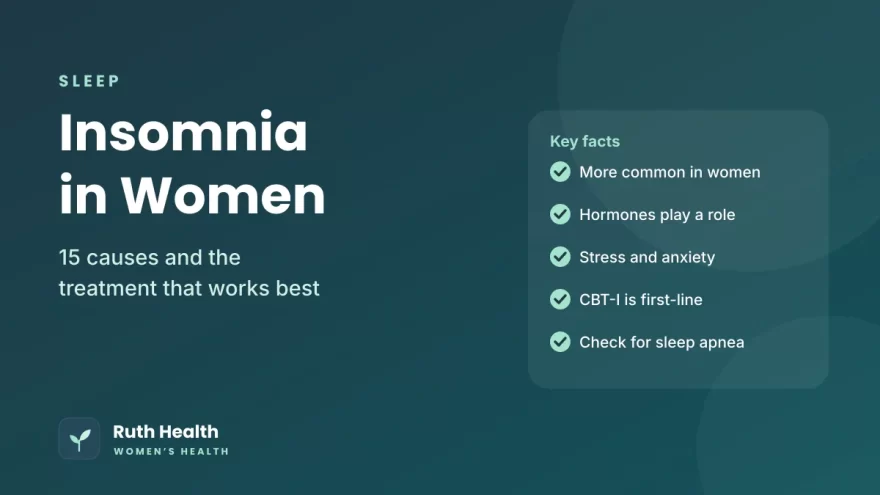
- Insomnia is more common in women than men across all ages: more than 1 in 4 US women have insomnia symptoms.
- Women’s sleep is affected by periods, pregnancy, perimenopause and menopause, as well as stress, anxiety and depression.
- Chronic insomnia means trouble sleeping at least 3 nights a week for 3 months.
- Cognitive behavioral therapy for insomnia (CBT-I) is the recommended first-line treatment.
- Snoring, gasping, restless legs or low mood can point to an underlying condition that needs treatment.
How common is insomnia in women?
The NIH reports that more than one in four women in the United States experience insomnia symptoms, compared with fewer than one in five men. The American College of Physicians also notes that insomnia is more common in women and older adults.
What is insomnia?
Insomnia means trouble falling asleep, staying asleep or waking too early, despite having the chance to sleep, along with feeling tired or struggling during the day. Chronic insomnia means trouble falling or staying asleep at least three nights a week for three months or more.
15 causes of insomnia in women
Hormonal causes
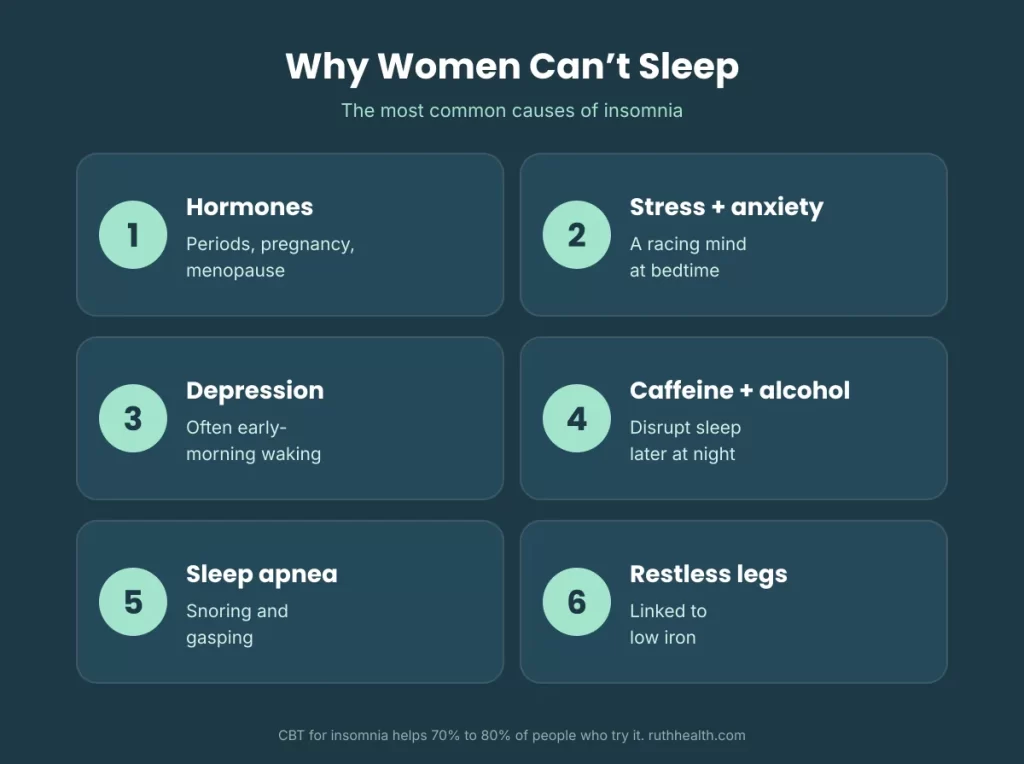
1. Your menstrual cycle. The NIH notes that sleep problems are common in the days before menstruation, especially in women with PMDD. See anxiety before your period.
2. Pregnancy. Discomfort, needing to pee, heartburn and anxiety disrupt sleep, especially in the third trimester.
3. Perimenopause and menopause. Hot flashes and night sweats often interrupt sleep. See menopause insomnia.
4. Thyroid problems. An overactive thyroid can cause restlessness and a racing heart at night.
Mental health causes
5. Stress. Work, family and money worries keep your mind racing.
6. Anxiety. Anxiety is closely linked with trouble falling asleep.
7. Depression. Often causes early-morning waking.
8. A racing mind at bedtime. Planning, replaying the day or worrying about not sleeping.
Lifestyle causes
9. Caffeine, especially in the afternoon or evening.
10. Alcohol, which helps you fall asleep but breaks up sleep later in the night.
11. Irregular sleep schedule, including shift work and lie-ins.
12. Screens and light in the evening, which affect your body clock.
Medical causes
13. Sleep apnea. Loud snoring, gasping and daytime sleepiness are signs. It’s underdiagnosed in women.
14. Restless legs syndrome. An urge to move your legs in the evening, which is more common in women and in pregnancy. Low iron can contribute. See low iron symptoms.
15. Pain, needing to pee and medications. Arthritis, back pain, frequent urination at night and some medications can all disrupt sleep.
If you tend to wake in the small hours, read our guide to waking up at 3am.
The best treatment: CBT for insomnia
The American College of Physicians recommends that all adult patients receive cognitive behavioral therapy for insomnia (CBT-I) as the initial treatment for chronic insomnia. CBT-I is usually delivered over 4 to 8 weeks, and improves sleep and daytime functioning in 70 to 80 percent of treated people, often without medication.
CBT-I usually includes:
- Sleep restriction: matching time in bed to the time you actually sleep.
- Stimulus control: using your bed only for sleep and sex, and getting up if you can’t sleep.
- Cognitive work: challenging worries about sleep.
- Relaxation techniques.
- Sleep hygiene education.
You can do CBT-I with a sleep specialist or psychologist, in a group, online or through an app.
Tips to sleep better tonight
- Keep the same wake-up time every day, including weekends.
- Go to bed only when sleepy.
- Get up if you can’t sleep after about 20 minutes; do something calm in dim light.
- Cut caffeine after midday and limit alcohol.
- Keep your bedroom cool, dark and quiet.
- Put screens away an hour before bed.
- Get daylight in the morning and move during the day.
- Write down worries earlier in the evening so they don’t follow you to bed.
- Avoid long naps; keep any nap short and early.
What about sleeping pills and supplements?
The ACP notes that sleep medications can be associated with serious adverse effects, and that if CBT-I alone doesn’t work, doctors and patients should decide together whether to add medication. Melatonin can help with sleep timing but is less effective for chronic insomnia. Magnesium is popular; see magnesium for sleep. Compare options in our sleep and stress supplement reviews, scored with our 11-point audit.
When to see a doctor
- Insomnia lasts more than a few weeks or affects your daily life.
- You snore loudly, gasp or stop breathing in your sleep.
- You have restless, uncomfortable legs at night.
- You have low mood, anxiety or thoughts of hopelessness.
- You’re falling asleep while driving or at work.
Frequently asked questions about insomnia in women
Why is insomnia more common in women?
Hormone changes across the menstrual cycle, pregnancy and menopause, plus higher rates of anxiety and depression, make insomnia more common in women.
What is the best treatment for insomnia?
Cognitive behavioral therapy for insomnia (CBT-I) is the recommended first-line treatment.
Can hormones cause insomnia?
Yes. Changes before periods, in pregnancy and during perimenopause and menopause commonly disrupt sleep.
How long does insomnia last?
Short-term insomnia often passes with the stressor. Chronic insomnia, lasting 3 months or more, usually needs treatment.
Is it bad to take sleeping pills every night?
Long-term use can cause side effects and dependence. Talk to your doctor about CBT-I and the safest options for you.
The bottom line on insomnia in women
Insomnia is more common in women, often linked to hormones, stress, anxiety and life stages like pregnancy and menopause. Keep a regular wake time, limit caffeine and alcohol, and use your bed only for sleep. CBT-I is the most effective long-term treatment, and a doctor can check for sleep apnea, restless legs, thyroid problems and mood disorders.