Feeling exhausted no matter how much you sleep, short of breath on the stairs, or noticing more hair in your brush? Low iron is one of the most common reasons women feel run down, and it’s often missed because a standard blood count can look normal in its early stages.
This guide explains the symptoms of iron deficiency in women, who is most at risk, which tests to ask for, and how to raise your iron levels safely. Here are the iron deficiency symptoms to watch for, and what to do next.
Key takeaways
- Iron deficiency is the most common nutritional deficiency, and women of reproductive age are at higher risk because of periods and pregnancy.
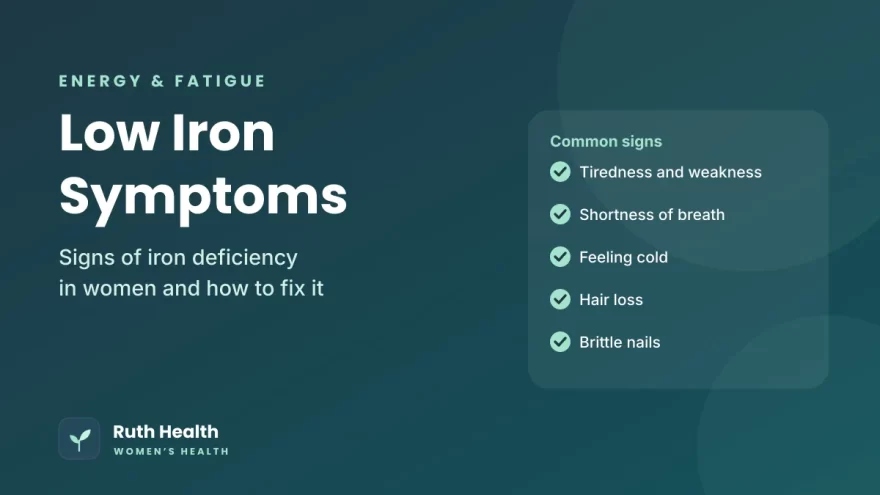
- Symptoms include tiredness, weakness, shortness of breath, pale skin, feeling cold, hair loss and brittle nails.
- Ferritin is the key blood test. You can be iron deficient before you become anemic.
- Women aged 19 to 50 need 18 mg of iron a day, rising to 27 mg in pregnancy.
- Pair plant sources of iron with vitamin C, and don’t take iron supplements without testing.
Why are women more likely to be low in iron?
Iron is needed to make hemoglobin, the protein in red blood cells that carries oxygen around your body. The CDC notes that women of reproductive age are at risk for iron deficiency, which can progress to anemia if not treated.
The main reasons are:
- Periods, especially heavy ones.
- Pregnancy, when iron needs rise sharply.
- Low intake: national surveys show iron is under-consumed by teenage girls and premenopausal women.
- Vegetarian or vegan diets, since plant iron is less easily absorbed.
- Frequent blood donation.
- Gut conditions that reduce absorption, such as celiac disease, or weight loss surgery.
Studies estimate iron deficiency affects about 9% to 16% of US women of reproductive age, and many aren’t diagnosed because screening often relies on hemoglobin, which only falls in later stages.
Iron deficiency symptoms in women
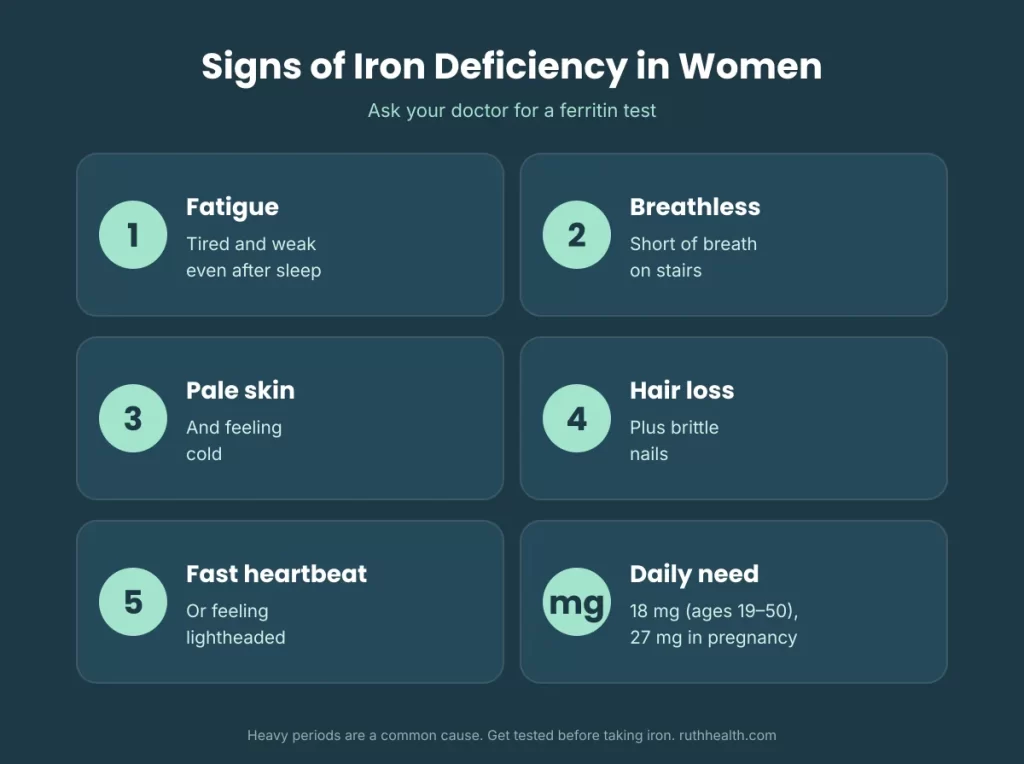
Harvard’s Nutrition Source lists these signs of iron deficiency anemia:
- Fatigue and weakness.
- Lightheadedness.
- Confusion or trouble concentrating.
- Feeling cold.
- Shortness of breath.
- A rapid heartbeat.
- Pale skin.
- Hair loss and brittle nails.
Other possible signs include:
- Headaches.
- Restless legs, especially at night.
- Cravings for ice or non-food items (pica).
- A sore, smooth tongue or cracks at the corners of the mouth.
- Spoon-shaped nails in more severe cases.
- Getting more infections.
Many of these overlap with thyroid problems, depression and other conditions. Read our guides to why you might be always tired, hair loss in women and brittle nails.
Iron deficiency vs iron deficiency anemia
| Stage | What’s happening | Blood tests |
|---|---|---|
| Iron depletion | Iron stores are running low | Low ferritin; hemoglobin normal |
| Iron deficiency | Stores are empty; red cell production affected | Low ferritin, low transferrin saturation; hemoglobin may still be normal |
| Iron deficiency anemia | Not enough healthy red blood cells | Low ferritin and low hemoglobin |
You can have symptoms like tiredness and hair shedding even before you become anemic.
Which tests should you ask for?
- Ferritin: the main measure of your iron stores. The CDC explains that low serum ferritin represents an early stage of iron deficiency. Inflammation can raise ferritin, which may hide deficiency.
- Complete blood count (CBC), including hemoglobin.
- Iron, transferrin and transferrin saturation.
Your doctor may also look for the cause, especially if you have heavy periods, gut symptoms or are over 50.
How much iron do women need?
According to the NIH Office of Dietary Supplements, the recommended amounts are:
| Life stage | Iron per day |
|---|---|
| Teen girls 14 to 18 | 15 mg |
| Women 19 to 50 | 18 mg |
| Women 51 and older | 8 mg |
| Pregnancy | 27 mg |
| Breastfeeding | 9 mg |
Source: NIH Office of Dietary Supplements. The upper limit for adults is 45 mg a day unless your doctor prescribes more.
Best food sources of iron
There are two types of iron in food. Harvard explains that heme iron is found only in meat, poultry and seafood and is better absorbed. Non-heme iron is found in plant foods and fortified foods.
- Heme iron: red meat, poultry, fish, canned sardines, shellfish.
- Non-heme iron: lentils, beans, tofu, spinach, fortified cereals, pumpkin seeds, dark chocolate.
How to absorb more iron
- Pair plant iron with vitamin C. The NIH notes your body absorbs plant iron better when you eat it with meat, seafood and vitamin C foods such as citrus, strawberries, peppers, tomatoes and broccoli.
- Avoid tea and coffee with meals, as tannins reduce absorption.
- Separate calcium supplements from iron-rich meals; large amounts of calcium can inhibit non-heme iron absorption.
Iron supplements: what to know
If your levels are low, your doctor may recommend a supplement. Tips:
- Get tested first. Too much iron can be harmful, and some people have a genetic condition (hemochromatosis) that causes iron overload.
- Common side effects include constipation and nausea.
- Taking iron every other day may improve absorption and reduce side effects for some people. Ask your doctor.
- Take it with vitamin C or orange juice, away from tea, coffee and calcium.
- Recheck your levels after about 2 to 3 months.
Keep iron supplements away from children, as accidental overdose is dangerous.
If you’re comparing products, see our reviews scored with our 11-point audit.
When to see a doctor
- You have symptoms of iron deficiency, especially with heavy periods.
- You’re pregnant or planning a pregnancy.
- You’re short of breath, have chest pain or a racing heart.
- You have black stools, blood in your stool or unexplained weight loss.
- Your levels don’t improve with supplements.
Frequently asked questions about iron deficiency symptoms
What are the first signs of low iron in women?
Tiredness, weakness, feeling cold, shortness of breath on exertion, pale skin and hair shedding are common early signs.
Can low iron cause hair loss?
Yes. Low iron stores are linked to hair shedding in women. See hair loss in women.
How long does it take to raise iron levels?
Many people feel better within a few weeks of starting iron, but rebuilding stores usually takes about 3 months or longer.
What ferritin level is too low?
Labs use different cut-offs, and the right target depends on your situation. Ask your doctor to explain your result.
Can you have low iron without anemia?
Yes. Iron stores can run low before hemoglobin falls, and you may still have symptoms.
The bottom line on iron deficiency symptoms
Iron deficiency is common in women because of periods, pregnancy and low intake. Symptoms include tiredness, weakness, shortness of breath, feeling cold, hair loss and brittle nails. Ask your doctor for a ferritin test, eat iron-rich foods with vitamin C, and only take supplements after testing. Heavy periods or other signs of blood loss should always be checked.