
Waking up once or twice a night to pee may seem like a minor annoyance, but over time it wrecks your sleep, leaves you tired and can even raise the risk of falls. Doctors call this nocturia, and it’s common in women, especially after 40.
This guide explains what causes frequent urination at night, how to work out your cause, and practical ways to sleep through. Here is what causes frequent urination at night and how to sleep through.
Key takeaways
- Nocturia means waking up to pee during the night. Waking more than once is usually considered a problem.
- Common causes include drinking late, caffeine and alcohol, overactive bladder, menopause, sleep apnea, diabetes, swelling in the legs and certain medications.
- A 3-day bladder diary helps you and your doctor find the cause.
- Cutting fluids 2 to 3 hours before bed, elevating swollen legs in the evening and treating the cause often help.
- See a doctor if you’re thirsty all the time, snore loudly, have pain or blood in your urine.
What is nocturia?
Nocturia is waking up to pass urine during your main sleep period. Cleveland Clinic describes it as regularly waking up more than once because you have to pee. Many experts consider one trip a night normal, especially as you get older.
It’s common: a Canadian survey found that 36.4% of adults wake at least once a night to pee, and 9.1% wake twice or more, with rates rising with age.
Why it matters
Frequent waking disrupts sleep, causing daytime tiredness, poor concentration and low mood. It also increases fall risk: one analysis found that nearly 50% of women who void twice or more nightly report falls, compared with 27% of women who wake once or not at all.
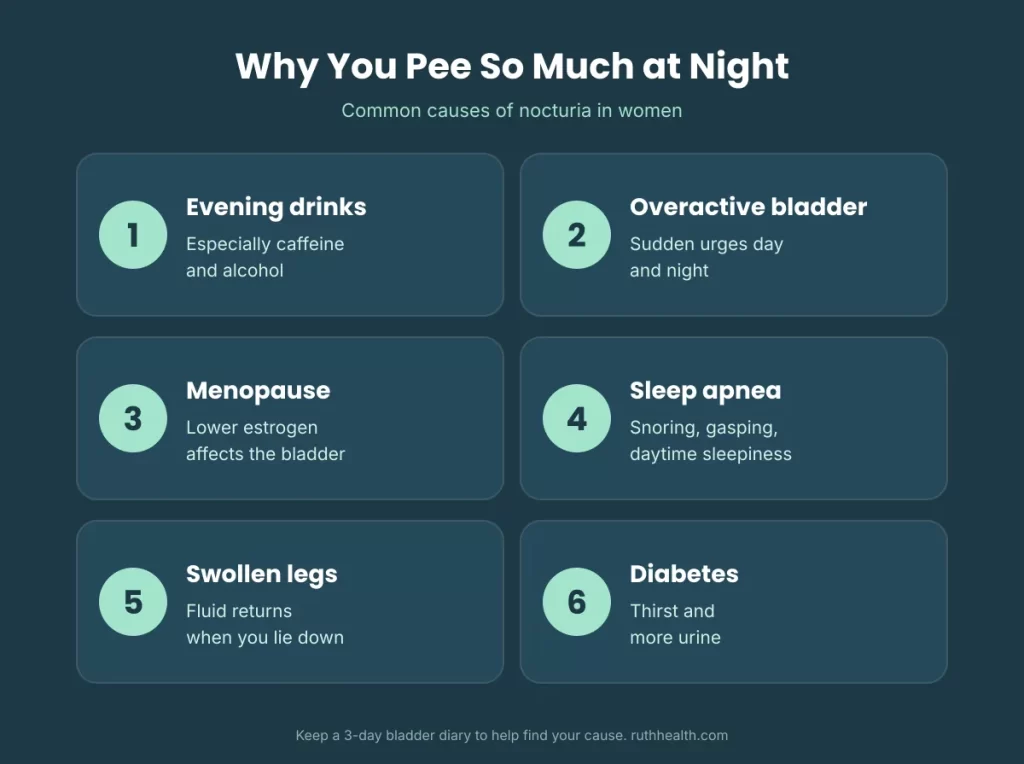
What causes frequent urination at night?
Too much fluid in the evening
Drinking large amounts in the evening, especially caffeine or alcohol, is one of the most common and easiest-to-fix causes.
Caffeine and alcohol
Both increase urine production and irritate the bladder.
Overactive bladder
A sudden urge to pee, during the day and night, can mean overactive bladder. See our guide to overactive bladder.
Menopause
Lower estrogen affects the bladder and urethra, and night sweats and poor sleep mean you wake more often and notice the urge. See menopause insomnia.
Sleep apnea
Obstructive sleep apnea causes changes in the body that increase urine production at night. Research notes that nocturia is associated with sleep apnea, which is underdiagnosed in women. Snoring, gasping and daytime sleepiness are clues.
Fluid in your legs
If your ankles swell during the day, that fluid moves back into your bloodstream when you lie down, and your kidneys make more urine at night. Heart, kidney or vein problems can contribute.
Diabetes
High blood sugar makes you pee more and feel thirsty. See normal blood sugar levels.
Medications
Diuretics (water pills), taken in the evening, are a common cause. Some other medicines can also play a part.
Urinary tract infection
A UTI can cause urgency and frequency day and night, often with burning. See UTI symptoms.
Weak pelvic floor or prolapse
Pelvic floor problems can make it harder to empty your bladder fully. See weak pelvic floor.
Poor sleep
Sometimes you wake for another reason, then go to the bathroom “just in case”. Treating insomnia can reduce nighttime trips.
Keep a bladder diary
For 3 days, write down:
- What and how much you drink, and when.
- When you pee and roughly how much.
- When you go to bed and wake up.
- Any leaks or urgency.
This shows whether you’re making too much urine overall, too much at night, or have a small bladder capacity, and helps your doctor choose treatment.
How to stop peeing so much at night
- Drink most of your fluids earlier in the day and cut back 2 to 3 hours before bed, without restricting overall fluids.
- Avoid caffeine after lunch and limit alcohol, especially in the evening.
- Empty your bladder twice before bed: pee, wait a few minutes, then try again.
- Elevate your legs for an hour or two in the late afternoon or evening if your ankles swell, or try compression stockings if your doctor agrees.
- Ask about medication timing: take diuretics in the morning if your doctor approves.
- Do pelvic floor exercises to strengthen bladder control. See Kegel exercises.
- Manage blood sugar and weight.
- Get checked for sleep apnea if you snore or feel sleepy during the day.
- Make the path to the bathroom safe with a night light to reduce fall risk.
Medical treatments
Depending on the cause, your doctor may suggest:
- Treatment for overactive bladder, such as bladder training or medication.
- Vaginal estrogen for postmenopausal women.
- Treatment for sleep apnea, diabetes, heart or kidney conditions.
- Medications that reduce nighttime urine production, in selected cases.
Do bladder supplements help?
Some supplements are marketed for nighttime urination, but evidence is limited. Compare products in our bladder support supplement reviews, scored with our 11-point audit.
When to see a doctor
- You wake twice or more most nights and it affects your sleep.
- You’re very thirsty or peeing large amounts.
- You snore loudly or stop breathing during sleep.
- You have pain, burning, blood in your urine or fever.
- Your legs are swollen or you’re short of breath.
- You’ve had a fall at night.
Frequently asked questions about frequent urination at night
How many times is it normal to pee at night?
Once a night is generally considered normal, especially as you get older. Twice or more is often bothersome and worth checking.
Why do I pee so much at night but not during the day?
Common reasons include drinking late, fluid in your legs moving back into circulation when you lie down, sleep apnea and some medications.
Is frequent urination at night a sign of diabetes?
It can be, especially with thirst, tiredness or weight loss. Ask your doctor for a blood sugar test.
Can menopause cause frequent urination at night?
Yes. Lower estrogen affects the bladder, and poor sleep makes you more aware of the urge.
Should I stop drinking water to avoid peeing at night?
No. Drink enough during the day and reduce fluids in the 2 to 3 hours before bed.
The bottom line on frequent urination at night
Frequent urination at night is common in women and has many causes, from evening drinks and caffeine to overactive bladder, menopause, sleep apnea and diabetes. Keep a bladder diary, shift fluids earlier, cut evening caffeine and alcohol, and elevate swollen legs. See your doctor if it’s disrupting your sleep or comes with thirst, snoring, pain or blood in your urine.