Leaking a little when you cough, sneeze, laugh or jump is incredibly common, especially after childbirth and menopause. But it isn’t something you just have to accept. Kegel exercises, also called pelvic floor muscle training, are a simple, free and proven way to strengthen the muscles that control your bladder.
The catch is that many women do them incorrectly. This step-by-step guide shows you how to find the right muscles, how to do Kegel exercises correctly, how often to do them, and when to expect results. Follow these kegel exercises steps to do them correctly from day one.
Key takeaways
- Kegel exercises strengthen the pelvic floor muscles that support your bladder, uterus and bowel.
- A Cochrane review of 31 trials with 1,817 women found that women with stress incontinence who did pelvic floor training were about 8 times more likely to report being cured.
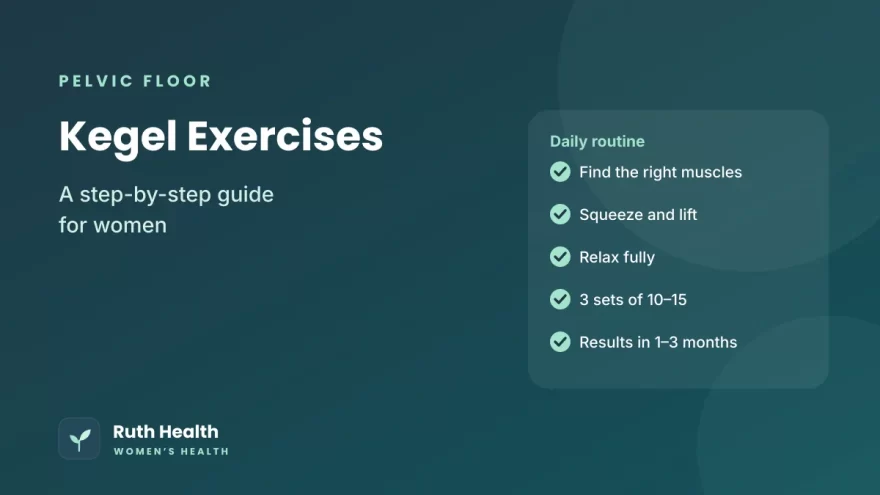
- Aim for at least three sets of 10 to 15 squeezes a day, lying, sitting and standing.
- Most women notice improvement in 1 to 3 months of regular practice.
- If you can’t find the right muscles, a pelvic floor physical therapist can help.
What are Kegel exercises?
Kegel exercises strengthen the pelvic floor, a hammock of muscles at the base of your pelvis. According to Mayo Clinic, these muscles support the uterus, bladder, small intestine and rectum. When they’re weak, you may leak urine, feel heaviness in your pelvis or have less control over gas.
Pregnancy, childbirth, aging, menopause, being overweight, chronic coughing and straining with constipation can all weaken your pelvic floor.
Benefits of Kegel exercises
The evidence is strong. A Cochrane review of 31 trials involving 1,817 women found:
- Women with stress incontinence (leaking when you cough or sneeze) who did pelvic floor training were, on average, 8 times more likely to report being cured.
- Women with any type of incontinence were about 5 times more likely to report being cured.
- Women were more satisfied with treatment, and those in control groups were more likely to seek further treatment.
The authors concluded that pelvic floor muscle training can cure or improve symptoms of stress and all other types of urinary incontinence, supporting it as a first-line treatment.
Kegels may also help:
- Reduce urgency and leaks when you can’t make it to the bathroom in time.
- Support recovery after childbirth.
- Improve control over gas and bowel leakage.
- Improve sensation and sexual function for some women.

How to do Kegel exercises step by step
Step 1: Find the right muscles
The pelvic floor muscles are the ones you’d use to stop yourself passing gas or to slow the flow of urine. The NIDDK suggests inserting a clean finger into your vagina and squeezing as if you were trying to hold in urine: if you feel tightness around your finger, you’ve found the right muscles.
Don’t make a habit of stopping your urine flow to practice, as this can interfere with emptying your bladder.
Step 2: Get comfortable
Empty your bladder first. Start lying down with your knees bent, which is the easiest position.
Step 3: Squeeze and lift
Tighten your pelvic floor muscles, imagining you’re lifting them up and in. Hold for 3 to 5 seconds.
Step 4: Relax fully
Let the muscles go completely and rest for 3 to 5 seconds. Relaxing is as important as squeezing.
Step 5: Repeat
MedlinePlus recommends you repeat 10 times, 3 times a day (morning, afternoon and night). As you get stronger, work up to holding for 10 seconds with 10 seconds of rest.
Step 6: Add quick flicks
Once you’re comfortable, add sets of quick, strong squeezes and releases. These train your muscles to react fast when you cough or sneeze.
How often should you do Kegels?
Mayo Clinic advises aiming for at least three sets a day, working up to 10 to 15 Kegels in each set, for example one set lying down, one sitting and one standing.
| Stage | Hold | Rest | Reps per set | Sets per day |
|---|---|---|---|---|
| Beginner | 3 seconds | 3 seconds | 10 | 3 |
| Building | 5 seconds | 5 seconds | 10 to 15 | 3 |
| Advanced | 10 seconds | 10 seconds | 10 to 15 | 3, plus quick flicks |
Common Kegel mistakes
- Squeezing your stomach, thighs or buttocks instead of your pelvic floor. Keep them relaxed.
- Holding your breath. Breathe normally throughout.
- Bearing down instead of lifting up.
- Not relaxing between squeezes.
- Overdoing it. MedlinePlus warns that doing Kegels incorrectly or with too much force may tighten vaginal muscles too much, which can cause pain during sex.
- Giving up too soon.
How long until Kegels work?
Be patient. The University of Colorado urogynecology team notes that women usually start seeing benefits after 1 to 3 months of consistent practice. Keep going after you see improvement to maintain the results.
The “knack”: squeeze before you sneeze
Once your muscles are stronger, practice tightening your pelvic floor just before you cough, sneeze, laugh or lift. This simple habit can prevent many leaks.
When Kegels aren’t enough
Kegels are less effective for some types of leakage. Mayo Clinic notes they’re less helpful for women with severe leakage or overflow incontinence. See a doctor or pelvic floor physical therapist if:
- You can’t feel your pelvic floor muscles contract.
- You see no improvement after 3 months.
- You have pelvic pain, pain during sex or a feeling of something bulging in your vagina.
- You leak a lot, or leak with a sudden strong urge.
A physical therapist can check your technique and may use biofeedback or other tools. Read more in our guide to bladder leakage in women.
Do bladder supplements help?
Some supplements claim to support bladder control, but evidence is generally limited and they don’t replace pelvic floor training. Compare products in our bladder support supplement reviews, scored with our 11-point audit.
Frequently asked questions about kegel exercises
How do I know if I’m doing Kegels correctly?
You should feel a lift and squeeze inside, with no movement of your stomach, buttocks or thighs. If you’re unsure, a pelvic floor physical therapist can check.
Can I do Kegels while pregnant?
Yes, Kegels are generally safe and helpful during pregnancy and after birth. Check with your doctor or midwife if you have any complications.
Can you do too many Kegels?
Yes. Overdoing them can cause muscle fatigue or tension. Stick to about three sets a day and always relax fully between squeezes.
Do Kegels help after menopause?
Yes. Pelvic floor training helps women of all ages, including after menopause, when falling estrogen can weaken pelvic tissues.
Are Kegels good for overactive bladder?
They can help you control sudden urges. Combined with bladder training, they’re often recommended as a first step.
The bottom line on kegel exercises
Kegel exercises are one of the most effective, low-cost ways to prevent and treat bladder leakage. Find the right muscles, squeeze and lift for a few seconds, relax fully, and aim for three sets of 10 to 15 a day. Most women see results within 1 to 3 months. If you can’t find the muscles or don’t improve, a pelvic floor physical therapist can help.