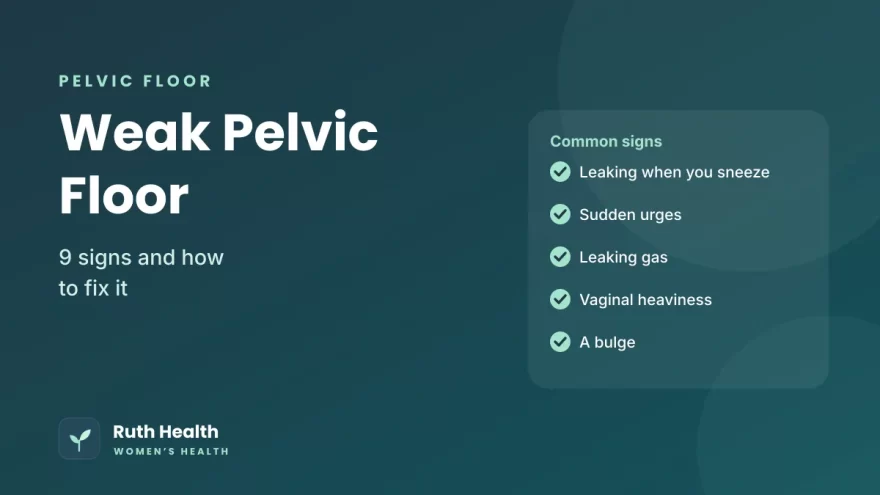
Your pelvic floor is a group of muscles you probably never think about, until something goes wrong. Leaking when you sneeze, a heavy feeling in your vagina, or struggling to hold in gas can all be signs that these muscles have weakened.
Pelvic floor problems are extremely common, especially after childbirth and menopause, but they’re also very treatable. This guide covers the 9 most common signs of a weak pelvic floor, what causes it, and how to fix it. Here are the signs of a weak pelvic floor and how to fix it.
Key takeaways
- Nearly 1 in 4 US women has at least one pelvic floor disorder, rising to over 40% of women aged 60 to 79.
- Signs include leaking urine, urgency, leaking gas or stool, pelvic heaviness, a vaginal bulge and reduced sensation during sex.
- Pregnancy, childbirth, menopause, aging, excess weight, chronic coughing and constipation are common causes.
- Pelvic floor muscle training is the first-line treatment and works for most women.
- Not all pelvic floor problems are weakness: a tight, overactive pelvic floor can cause pain and needs a different approach.
What is the pelvic floor?
Your pelvic floor is a sling of muscles and connective tissue at the base of your pelvis. The NIH describes how these muscles and ligaments form a sling across the opening of a woman’s pelvis, holding the bladder, uterus, bowel and rectum in place. They help control your bladder and bowels and play a role in sexual function.
How common are pelvic floor problems?
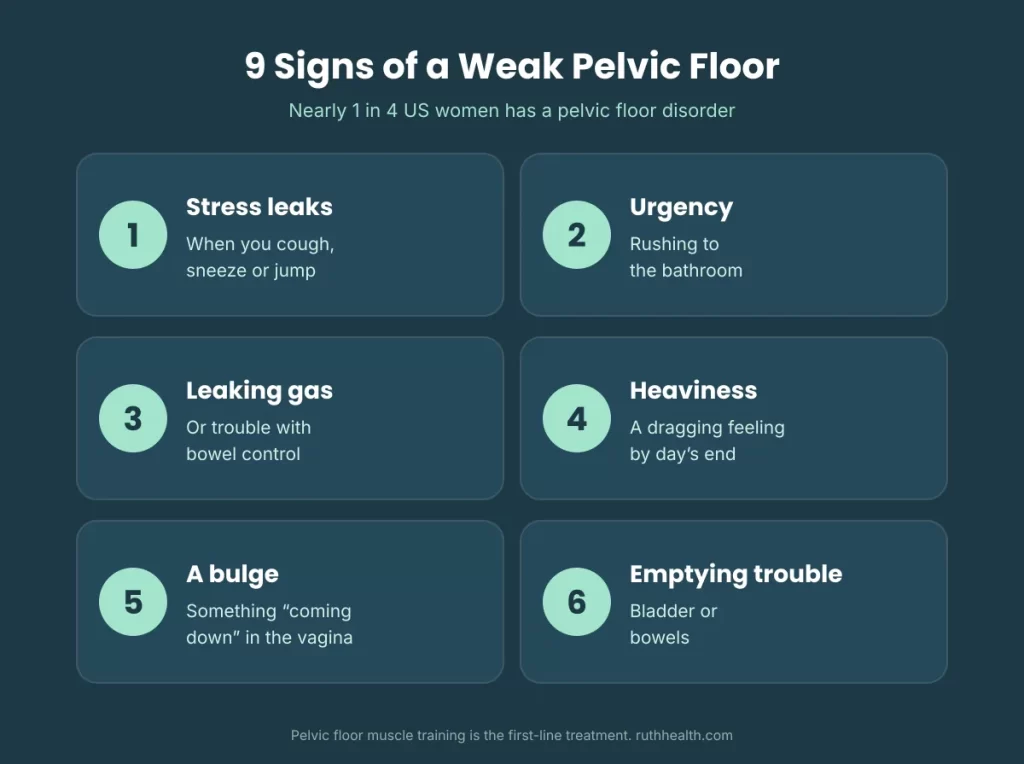
Very. NIH-funded research found that nearly 24% of US women are affected by one or more pelvic floor disorders. The frequency increases with age, affecting more than 40% of women aged 60 to 79 and about 50% of women 80 and older.
9 signs of a weak pelvic floor
1. Leaking when you cough, sneeze, laugh or exercise
This is stress urinary incontinence, the most common sign. See bladder leakage in women.
2. Sudden urges to pee
Needing to rush to the bathroom, sometimes leaking on the way. See overactive bladder.
3. Peeing more often
Including waking at night to pee. See frequent urination at night.
4. Leaking gas or stool
Difficulty controlling wind or bowel movements.
5. A heavy or dragging feeling in your vagina
The NIH lists heaviness, fullness, pulling or aching in the vagina that gets worse by the end of the day as a possible sign of prolapse.
6. A bulge in your vagina
Seeing or feeling “something coming out” can mean pelvic organ prolapse, where the bladder, uterus or bowel drops into the vagina.
7. Trouble emptying your bladder or bowels
Feeling like you haven’t fully emptied, or needing to press or change position to finish.
8. Reduced sensation during sex
Some women notice less sensation or a “looser” feeling.
9. Lower back or pelvic ache
A weak core and pelvic floor can contribute to discomfort, though back pain has many causes.
What causes a weak pelvic floor?
- Pregnancy and vaginal childbirth, especially large babies, long pushing or assisted delivery. NIH research found prevalence rose with the number of births.
- Menopause: falling estrogen weakens pelvic tissues.
- Aging.
- Excess weight, which puts extra pressure on the pelvic floor. NIH data showed 26.3% of overweight and 30.4% of obese women had a pelvic floor disorder, compared with 15.1% of underweight and normal-weight women.
- Chronic coughing, from smoking, asthma or allergies.
- Constipation and straining.
- Heavy lifting, especially with poor technique.
- High-impact exercise without pelvic floor support.
- Previous pelvic surgery.
Weak vs tight pelvic floor
| Weak (underactive) pelvic floor | Tight (overactive) pelvic floor |
|---|---|
| Leaking with coughing or exercise | Pelvic pain or pain with sex |
| Heaviness or bulge | Trouble starting to pee or a weak stream |
| Leaking gas or stool | Constipation or painful bowel movements |
| Helped by strengthening | Helped by relaxation and stretching first |
If you have pain, see a pelvic floor physical therapist before doing lots of Kegels, as strengthening a tight pelvic floor can make symptoms worse.
How to strengthen a weak pelvic floor
Pelvic floor muscle training (Kegels)
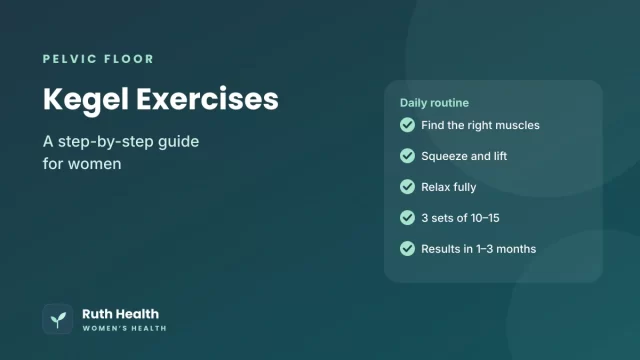
This is the first-line treatment. Learn how in our step-by-step guide to Kegel exercises. Aim for three sets of 10 to 15 squeezes daily, and be patient: improvement usually takes 1 to 3 months.
See a pelvic floor physical therapist
A specialist can check whether you’re using the right muscles, tailor exercises and use tools like biofeedback.
Use “the knack”
Squeeze your pelvic floor just before you cough, sneeze or lift.
Lift safely
Breathe out as you lift and bend at the knees. Avoid holding your breath and straining.
Treat constipation
Eat fiber, drink water and don’t strain on the toilet. A small footstool can help.
Keep a healthy weight
Even modest weight loss can reduce pressure on the pelvic floor.
Quit smoking
To reduce chronic coughing.
Choose pelvic-floor-friendly exercise
Walking, swimming, cycling, Pilates and strength training with good technique. Build up gradually to high-impact exercise.
Medical treatments
If exercises aren’t enough, your doctor may suggest:
- Vaginal estrogen after menopause.
- A pessary, a removable device that supports prolapsed organs.
- Treatments for overactive bladder.
- Surgery for stress incontinence or prolapse in some women.
When to see a doctor
- Leaking affects your daily life or exercise.
- You see or feel a bulge.
- You have trouble emptying your bladder or bowels.
- You have pelvic pain or pain with sex.
- You leak stool.
Many women feel embarrassed, but doctors and physical therapists treat these problems every day.
New to pelvic floor work? Start with our guide to diaphragmatic breathing and pelvic floor therapy. Pelvic floor physical therapists often teach this breathing before Kegels, because a weak pelvic floor works best when it can fully relax as well as lift.
Frequently asked questions about a weak pelvic floor
How do I know if my pelvic floor is weak?
Common signs include leaking when you cough or sneeze, sudden urges, leaking gas, and a heavy feeling in your vagina.
Can a weak pelvic floor be fixed?
Yes. Pelvic floor training improves or cures symptoms for many women, and other treatments help when needed.
How long does it take to strengthen your pelvic floor?
Most women notice improvement after 1 to 3 months of regular exercise.
Can you strengthen your pelvic floor after menopause?
Yes. Pelvic floor training works at any age, and vaginal estrogen may help too.
Is it too late to fix my pelvic floor years after childbirth?
No. Pelvic floor training helps at any stage.
The bottom line on weak pelvic floor
A weak pelvic floor is very common, especially after childbirth and menopause. Signs include leaking, urgency, heaviness and a vaginal bulge. Pelvic floor exercises are the first-line treatment, alongside healthy weight, treating constipation and safe lifting. See a doctor or pelvic floor physical therapist if symptoms affect your life, if you see a bulge, or if you have pain.