That sudden, desperate need to pee that comes out of nowhere. Knowing where every bathroom is before you leave the house. Waking up two or three times a night. If this sounds familiar, you may have overactive bladder, a common condition that’s very treatable.
This guide explains overactive bladder symptoms in women, what causes it, and the treatments that work, starting with simple changes you can make today. Here is what overactive bladder is and how to treat it.
Key takeaways
- Overactive bladder (OAB) causes a sudden, strong urge to pee, often with frequent urination, waking at night to pee and sometimes leaking.
- It’s common: the large NOBLE study found about 17% of US women have OAB, and it becomes more common with age.
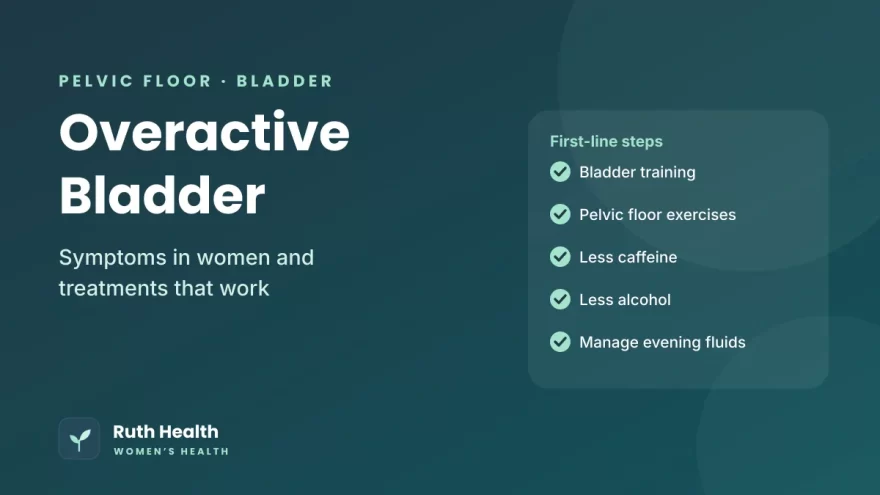
- Behavioral treatments are first-line: bladder training, pelvic floor exercises, cutting back on caffeine and alcohol, and managing fluids.
- Medications, nerve stimulation and bladder Botox help when lifestyle changes aren’t enough.
- See a doctor for pain, blood in your urine or fever, which can point to infection or another problem.
What is overactive bladder?
Overactive bladder isn’t a disease but a group of symptoms caused by the bladder muscle contracting when it shouldn’t. Symptoms include:
- Urgency: a sudden, strong need to pee that’s hard to put off.
- Frequency: peeing more often than usual, often 8 or more times a day.
- Nocturia: waking up more than once a night to pee.
- Urge incontinence: leaking when you feel the urge, before you reach the toilet.
How common is overactive bladder in women?
Very. The National Overactive Bladder Evaluation (NOBLE) program found that approximately 16% of men and 17% of women in the US are affected by OAB. Prevalence increases with age, rising to over 30% in those over 65, and postmenopausal women are more likely to have symptoms.
What causes overactive bladder?
Often there’s no single cause. Contributing factors include:
- Age and menopause: falling estrogen affects the bladder and urethra.
- Weak pelvic floor muscles after pregnancy and childbirth.
- Bladder irritants such as caffeine, alcohol and fizzy drinks.
- Drinking large amounts of fluid, especially in the evening.
- Excess weight, which puts pressure on the bladder.
- Constipation, which presses on the bladder.
- Nerve conditions such as multiple sclerosis, Parkinson’s or stroke.
- Diabetes, which can increase urine output.
- Certain medications, such as diuretics.
Overactive bladder vs other bladder problems
| Condition | Main symptom |
|---|---|
| Overactive bladder | Sudden urge, frequency, waking at night |
| Stress incontinence | Leaking when you cough, sneeze, laugh or exercise |
| Mixed incontinence | Both urge and stress leaking |
| Urinary tract infection | Burning, urgency, cloudy urine, sometimes fever |
Read our guides to bladder leakage and UTI symptoms.
First-line treatment: behavioral changes
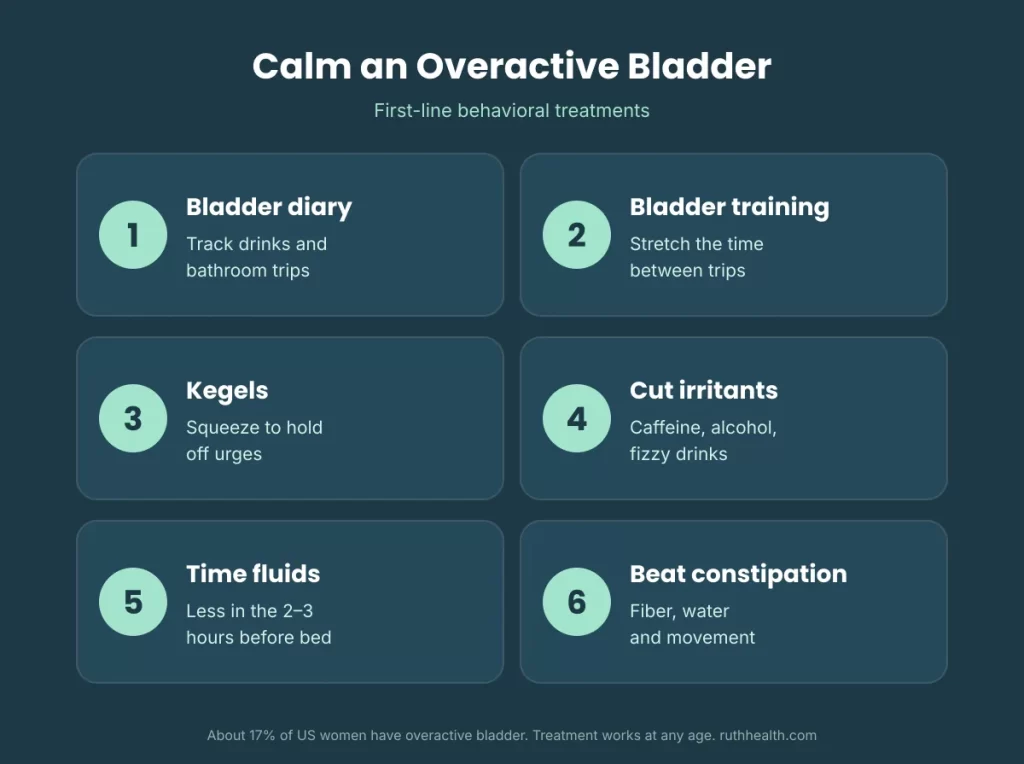
Behavioral treatments are considered first-line treatment for OAB at all ages. A review found that multicomponent behavioral approaches produced improvements similar in degree to prescription medications.
1. Bladder training
Bladder training gradually teaches your bladder to hold more and wait longer:
1. Keep a bladder diary for 3 days, noting when you pee and how much you drink.
2. Pee on a schedule, for example every hour, even if you don’t feel the urge.
3. When an urge hits between scheduled times, stand still, do quick pelvic floor squeezes and breathe slowly until it passes.
4. Increase the time between bathroom trips by 15 minutes every week or so.
5. Aim to go every 3 to 4 hours.
2. Pelvic floor exercises
Strong pelvic floor muscles help you hold on during an urge. Learn how in our guide to Kegel exercises.
3. Cut back on bladder irritants
Caffeine and alcohol prompt the kidneys to produce urine and act as bladder irritants, and fizzy drinks can also irritate the bladder. Research shows high caffeine intake is an independent risk factor for bladder overactivity. Other possible triggers include spicy foods, artificial sweeteners and citrus.
4. Manage your fluids
Don’t stop drinking, as concentrated urine can irritate the bladder. Spread drinks through the day and cut back in the 2 to 3 hours before bed.
5. Lose weight if needed
Weight loss has been shown to decrease incontinence in women with obesity.
6. Prevent constipation
Eat enough fiber, drink water and stay active.
Medical treatments
If behavioral changes don’t help enough, your doctor may suggest:
- Medications: anticholinergics or beta-3 agonists (such as mirabegron or vibegron) relax the bladder muscle.
- Vaginal estrogen for postmenopausal women, which may help urgency.
- Nerve stimulation: tibial nerve stimulation or sacral neuromodulation.
- Bladder Botox injections, which relax the bladder muscle for several months.
Your doctor may also check for a UTI, blood in your urine and how well your bladder empties.
When to see a doctor
- Your symptoms affect your sleep, work or social life.
- You have pain or burning when you pee.
- You see blood in your urine.
- You have a fever, back pain or feel unwell.
- You have trouble emptying your bladder.
Do bladder supplements help?
Some supplements, such as pumpkin seed extract, are marketed for bladder control, but evidence is limited. Compare products in our bladder support supplement reviews, scored with our 11-point audit.
Frequently asked questions about overactive bladder
Can overactive bladder be cured?
Many women improve significantly with bladder training, pelvic floor exercises and lifestyle changes. Medications and other treatments can help further.
What drinks make overactive bladder worse?
Coffee, tea, energy drinks, alcohol and fizzy drinks are common triggers.
Should I drink less water if I have overactive bladder?
Don’t cut fluids too much. Drink steadily through the day and reduce intake in the evening.
Is overactive bladder a normal part of aging?
It becomes more common with age, but it isn’t something you have to live with. Treatment works at any age.
How often is it normal to pee?
Most people pee 4 to 8 times a day and up to once at night. Going more often, or with sudden urgency, may be OAB.
The bottom line on overactive bladder
Overactive bladder is common in women, especially after menopause. It causes sudden urges, frequent urination and night-time trips to the bathroom. Start with bladder training, pelvic floor exercises, cutting back on caffeine and alcohol, and managing fluids. If symptoms persist, talk to your doctor about medications or other effective treatments.