You’ve had a blood test and the result says 104 mg/dL, or your A1C is 5.8%. Is that normal? Blood sugar numbers can be confusing, especially when different tests use different ranges.
This guide explains normal blood sugar levels for women, what each test means, how levels change after meals and with age, and when your results need attention. Use this chart to understand normal blood sugar levels and what your results mean.
Key takeaways
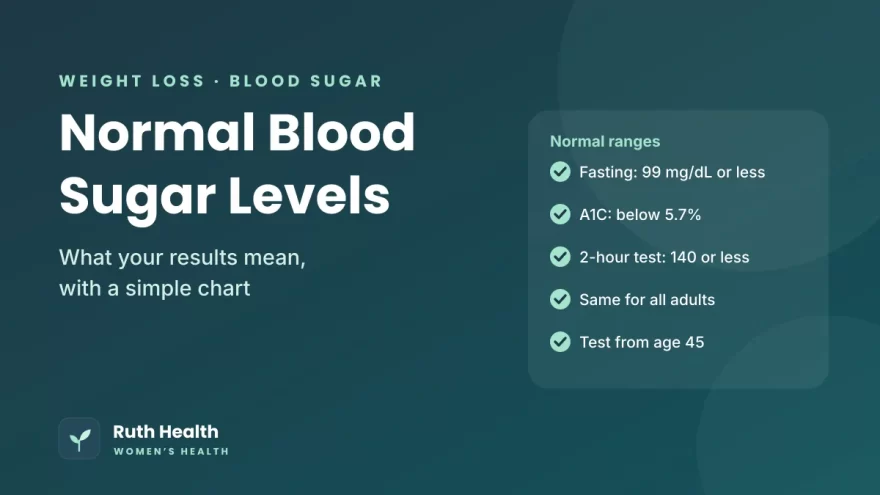
- A normal fasting blood sugar is 99 mg/dL or below. 100 to 125 mg/dL suggests prediabetes, and 126 mg/dL or higher suggests diabetes.
- A normal A1C is below 5.7%. 5.7% to 6.4% is prediabetes, and 6.5% or higher is diabetes.
- Two hours after a glucose drink, normal is 140 mg/dL or lower.
- The diagnostic ranges are the same for women and men of all adult ages, though targets for people with diabetes may differ.
- Prediabetes usually has no symptoms, so testing is the only way to know.
Normal blood sugar levels chart
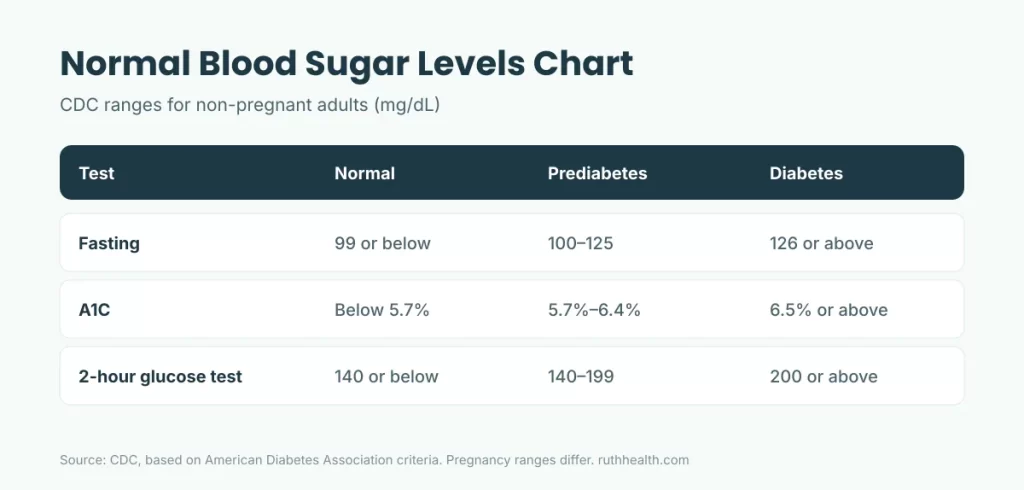
The CDC uses the following ranges, based on American Diabetes Association criteria:
| Test | Normal | Prediabetes | Diabetes |
|---|---|---|---|
| Fasting blood sugar | 99 mg/dL or below | 100 to 125 mg/dL | 126 mg/dL or above |
| A1C | Below 5.7% | 5.7% to 6.4% | 6.5% or above |
| 2-hour glucose tolerance test | 140 mg/dL or below | 140 to 199 mg/dL | 200 mg/dL or above |
| Random blood sugar | N/A | N/A | 200 mg/dL or above (with symptoms) |
Sources: CDC diabetes testing and CDC diabetes tests.
If you see results in mmol/L (used in the UK, Canada, Australia and many other countries), divide mg/dL by 18. For example, 100 mg/dL is about 5.6 mmol/L.
The main blood sugar tests explained
Fasting blood sugar
This measures your blood sugar after an overnight fast. It’s usually done first thing in the morning. A normal fasting level is 99 mg/dL or below.
A1C (HbA1c)
The A1C test measures your average blood sugar over the past 3 months by checking how much sugar is attached to the hemoglobin in your red blood cells. You don’t need to fast. Conditions that affect red blood cells, such as anemia, can sometimes make A1C less accurate.
Oral glucose tolerance test (OGTT)
You fast overnight, drink a sugary liquid, and have blood tests afterward. At 2 hours, 140 mg/dL or lower is considered normal. This test is also used to check for gestational diabetes in pregnancy, which has different cut-offs.
Random blood sugar
A test taken at any time of day. A level of 200 mg/dL or higher with symptoms such as thirst and frequent urination suggests diabetes.
Normal blood sugar levels for women by age
The diagnostic ranges above apply to all non-pregnant adults, regardless of age or sex. However:
- Blood sugar tends to creep up with age, so prediabetes becomes more common after 40.
- Targets can be relaxed for some older adults with diabetes, to reduce the risk of dangerous lows. Your doctor will set a personal target.
- Pregnancy has different, tighter targets. Ask your midwife or doctor.
What’s a normal blood sugar after eating?
For people without diabetes, blood sugar rises after meals and usually returns close to baseline within 2 to 3 hours. A reading of 140 mg/dL or lower 2 hours after eating is generally considered normal. Large, carb-heavy meals and sugary drinks cause bigger spikes.
Why prediabetes matters
Prediabetes means your blood sugar is higher than normal but not yet in the diabetes range. The CDC notes that prediabetes and type 2 diabetes often don’t have any symptoms, and catching it early can help you prevent or delay type 2 diabetes. Common risk factors include:
- Being over 45.
- Carrying extra weight, especially around the belly.
- Family history of type 2 diabetes.
- Physical inactivity.
- A history of gestational diabetes or PCOS.
Read about insulin resistance in women and PCOS symptoms.
Signs your blood sugar may be high
- Increased thirst and peeing more often.
- Tiredness.
- Blurred vision.
- Slow-healing cuts or frequent infections.
- Feeling hungry all the time. See why you might be always hungry.
Signs of low blood sugar
Low blood sugar (below 70 mg/dL) is uncommon in people without diabetes but can happen with some medications. Signs include shakiness, sweating, a racing heart, confusion and irritability. Take some fast-acting sugar and seek help if symptoms are severe.
How often should you get tested?
The CDC recommends that you get an A1C test if you’re over 45, or younger if you’re overweight and have another risk factor. If your result is normal, testing is often recommended every three years. With prediabetes, testing is usually repeated every 1 to 2 years.
How to keep your blood sugar in a normal range
- Walk for 10 to 15 minutes after meals.
- Build meals around vegetables, protein and fiber.
- Swap sugary drinks for water.
- Strength train at least twice a week.
- Lose a little weight if you need to.
- Sleep 7 to 9 hours.
Read our full guide on how to lower blood sugar naturally. If you’re considering supplements, compare products in our weight loss supplement reviews, scored with our 11-point audit.
Frequently asked questions about normal blood sugar levels
What is a normal blood sugar level for a woman?
A normal fasting blood sugar is 99 mg/dL or below, and a normal A1C is below 5.7%. These ranges are the same for women and men.
Is a fasting blood sugar of 105 normal?
No. A fasting level of 100 to 125 mg/dL falls in the prediabetes range. Talk to your doctor about repeating the test and making lifestyle changes.
What is a normal A1C for a woman over 50?
Below 5.7% is normal for all non-pregnant adults. If you have diabetes, your doctor may set a personal A1C target.
What blood sugar level is dangerous?
Very high levels (often above 300 mg/dL) or low levels (below 70 mg/dL, especially below 54 mg/dL) need prompt attention. Seek urgent care for confusion, vomiting or fainting.
Can stress raise blood sugar?
Yes. Stress hormones like cortisol raise blood sugar. Learn about high cortisol symptoms.
The bottom line on normal blood sugar levels
Normal blood sugar levels are a fasting result of 99 mg/dL or below, an A1C below 5.7%, and 140 mg/dL or lower 2 hours after a glucose drink. These ranges are the same for all adults. Because prediabetes rarely causes symptoms, regular testing is the best way to catch problems early, and lifestyle changes can bring your numbers back into the normal range.