
“Cortisol belly,” “cortisol face” and “high cortisol symptoms” have exploded across social media, often with a supplement or detox plan attached. But what does high cortisol actually do to a woman’s body? How can you tell the difference between everyday stress and a real medical problem? And what genuinely helps bring it down?
This guide separates fact from hype. It explains what cortisol does, the signs of chronically high levels in women, the rare medical condition you shouldn’t miss, and evidence-based ways to lower cortisol naturally.
Key takeaways
- Cortisol is your main stress hormone. It’s essential, and levels naturally rise in the morning and fall at night.
- Chronic stress can keep cortisol elevated, which is linked to belly fat, poor sleep, cravings, anxiety, and blood sugar problems.
- Research shows women with more belly fat release more cortisol under stress, even when they’re otherwise slim.
- Cushing’s syndrome, a medical condition of very high cortisol, is rare but important to rule out. Signs include wide purple stretch marks, easy bruising, a rounded face and muscle weakness.
- Sleep, exercise, stress management, balanced eating and limiting alcohol and caffeine are the most effective natural ways to lower cortisol.
What is cortisol and what does it do?
Cortisol is a steroid hormone made by your adrenal glands, two small glands on top of your kidneys. It’s often called the “stress hormone,” but it does much more than respond to stress. It helps:
- Control blood sugar and metabolism.
- Regulate blood pressure.
- Reduce inflammation.
- Manage your sleep-wake cycle.
- Support memory and focus.
Cortisol follows a daily rhythm. It normally peaks within an hour of waking and drops to its lowest around midnight. This morning rise helps you wake up and feel alert.
When you face a stressor, your brain signals the adrenal glands to release more cortisol so you have extra energy to respond. Once the stress passes, levels should return to normal. The problems start when stress never really switches off.
Two very different types of “high cortisol”
It’s important to understand that people use “high cortisol” to describe two very different things.
| Stress-related high cortisol | Cushing’s syndrome | |
|---|---|---|
| What it is | Cortisol stays somewhat elevated from chronic stress, poor sleep or lifestyle | A medical condition with very high cortisol levels |
| How common | Very common | Rare, about 2 to 3 new cases per million people a year (from the body’s own production) |
| Causes | Ongoing stress, sleep deprivation, poor diet, overtraining | Pituitary or adrenal tumors, or long-term steroid medicines like prednisone |
| Typical signs | Fatigue, poor sleep, anxiety, irritability, cravings, belly weight | Rounded face, wide purple stretch marks, easy bruising, thin skin, muscle weakness, high blood pressure and blood sugar |
| Reversible? | Usually, with lifestyle changes | Needs medical diagnosis and treatment |
As Baylor Scott & White Health explains, hypercortisolism (Cushing’s syndrome) is often caused by a tumor in the pituitary or adrenal glands or by long-term steroid use. Endogenous Cushing’s is diagnosed about three times more often in women, mostly between ages 25 and 50.
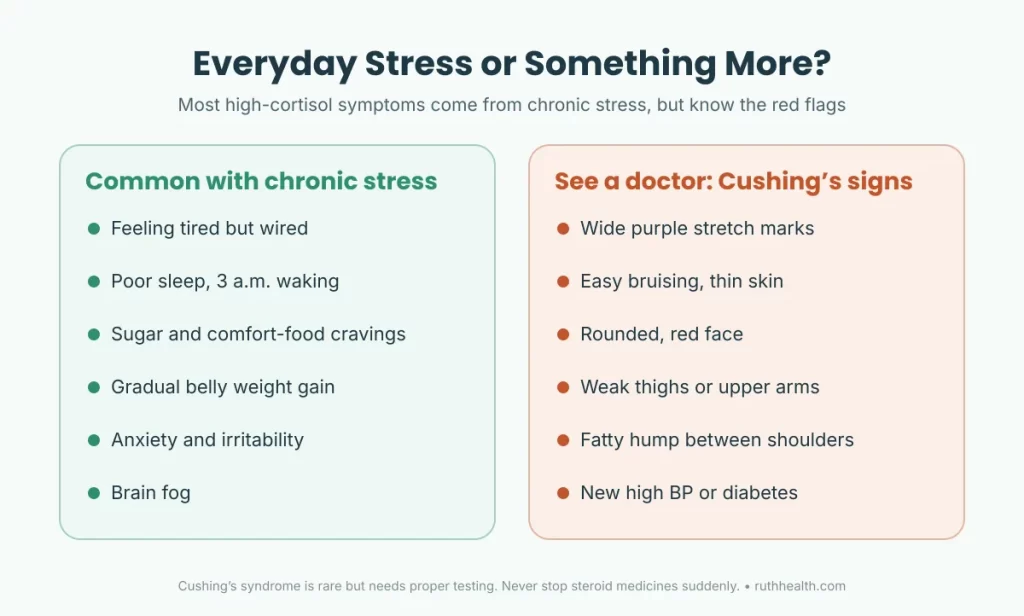
Most women with “high cortisol symptoms” have stress-related changes, not Cushing’s. But because the early signs overlap, it’s worth knowing the red flags.
12 signs of high cortisol in women
These symptoms are common with chronic stress. Many have other causes too, so they’re clues rather than proof.
1. Weight gain around your middle
Belly fat is the symptom most people associate with high cortisol. Fat cells in the abdomen have more receptors for cortisol than fat elsewhere. A well-known study in Psychosomatic Medicine found that women with more central fat secreted significantly more cortisol during stressful tasks and reported more chronic stress. Lean women with belly fat also failed to “get used to” repeated stress and kept releasing more cortisol (Yale News).
2. Cravings for sugar and fatty foods
Cortisol can boost your appetite, particularly for high-calorie, sugary and fatty foods. Research from UCSF suggests these “comfort foods” may temporarily dampen the stress response, which may explain why stress eating is so hard to resist (UCSF).
3. Feeling “tired but wired”
You feel exhausted during the day but can’t switch off at night. This happens when cortisol’s natural rhythm is disrupted and stays higher in the evening.
4. Trouble sleeping or waking up at 3 a.m.
Elevated evening cortisol can make it hard to fall asleep or cause you to wake in the early hours with a racing mind.
5. Anxiety, irritability and low mood
Chronic stress and high cortisol are linked with anxiety, irritability and feeling overwhelmed.
6. Brain fog and poor memory
Long-term high cortisol may affect concentration and memory.
7. Rising blood sugar
Cortisol raises blood sugar to give you quick energy. Over time, chronic stress can impair insulin sensitivity, leading to higher blood sugar and more fat storage.
8. High blood pressure
Cortisol can increase blood pressure, which is one reason chronic stress is linked to heart disease.
9. Irregular periods and low libido
Stress hormones can interfere with the hormones that control your menstrual cycle, causing missed or irregular periods and a lower sex drive.
10. Getting sick more often
Cortisol reduces inflammation, but chronically high levels can weaken your immune response, so you may catch more colds.
11. Digestive problems
Stress affects gut movement and sensitivity, contributing to bloating, constipation or diarrhea.
12. Skin changes
Acne flare-ups, slow wound healing and, in more severe cases, thin skin and easy bruising.
Red flags for Cushing’s syndrome
Tiredness, poor sleep and a thicker waist alone don’t point to Cushing’s. See your doctor promptly if you notice:
- Wide (more than 1 cm), purple or red stretch marks, especially on the belly, thighs or breasts.
- Easy bruising and thin skin.
- A rounded, red face (“moon face”).
- A fatty hump between your shoulders.
- Weakness in your thighs or upper arms (for example, trouble getting up from a chair).
- New high blood pressure, diabetes or bone fractures without an obvious reason.
- Rapid weight gain concentrated on the face and trunk while arms and legs stay thin.
If you take steroid medications (tablets, injections, or high-dose inhalers or creams) and notice these signs, talk to your doctor, but don’t stop steroids suddenly, as that can be dangerous.
How is high cortisol tested?
Because cortisol changes throughout the day, a single morning blood test isn’t very useful. If your doctor suspects Cushing’s, they may order:
- Late-night saliva cortisol test: cortisol should be very low at night.
- 24-hour urine cortisol test: measures total cortisol over a full day.
- Low-dose dexamethasone suppression test: checks whether your body lowers cortisol normally after a small dose of a steroid.
At-home “adrenal fatigue” or cortisol tests sold online are often unreliable. “Adrenal fatigue” isn’t a recognized medical diagnosis.
How to lower cortisol naturally
For stress-related high cortisol, these steps have the best support:
1. Prioritize sleep
Aim for 7 to 9 hours. Keep a consistent schedule, avoid screens before bed, and keep your bedroom cool and dark. Poor sleep raises cortisol the next day, creating a vicious cycle.
2. Exercise, but don’t overdo it
Regular moderate exercise like brisk walking, cycling, swimming and strength training helps your body handle stress better. Very intense or long workouts without enough recovery can raise cortisol. If you’re exhausted, swap a hard session for a walk or yoga.
3. Practice daily stress relief
Deep breathing, meditation, mindfulness, yoga and tai chi can reduce stress hormone levels. Even 5 to 10 minutes of slow breathing (inhale for 4 seconds, exhale for 6) can calm your nervous system.
4. Eat balanced meals
Include protein, fiber and healthy fats at every meal to keep blood sugar steady. Skipping meals or very low-calorie diets can raise cortisol. Limit ultra-processed, sugary foods.
5. Cut back on caffeine and alcohol
Caffeine raises cortisol, especially when you’re already stressed or sleep-deprived. Try to stop caffeine by early afternoon. Alcohol disrupts sleep and can raise cortisol.
6. Spend time outdoors and with people you love
Time in nature, laughter, social connection and hobbies all help buffer stress.
7. Get help for ongoing stress or anxiety
Talking therapies like cognitive behavioral therapy (CBT) are very effective for chronic stress and anxiety.
Do supplements lower cortisol?
Ashwagandha is the most studied herb for stress, and some trials suggest it may lower cortisol and perceived stress. Magnesium, omega-3s and L-theanine are also popular. Evidence is mixed, product quality varies widely, and supplements can interact with medications. Ashwagandha isn’t recommended during pregnancy or for people with thyroid or autoimmune conditions without medical advice.
Supplements can’t replace sleep, exercise and stress management. If you want to compare products, see our sleep and stress supplement reviews, scored with our 11-point audit.
When to see a doctor
Make an appointment if:
- You have any red flags for Cushing’s syndrome listed above.
- Stress, anxiety or low mood are affecting your daily life.
- You have new high blood pressure, high blood sugar or unexplained weight gain.
- Your periods have stopped or become very irregular.
- You’ve made lifestyle changes for several months without improvement.
Frequently asked questions about high cortisol symptoms
What does a cortisol belly look like?
It usually refers to fat stored around the abdomen, often with a firmer, rounder midsection. However, belly fat has many causes, including genetics, menopause, diet and inactivity, so it isn’t proof of high cortisol on its own.
How long does it take to lower cortisol?
Lifestyle changes can begin to lower stress hormones within weeks, but noticeable changes in sleep, cravings and weight usually take a few months of consistent habits.
Can high cortisol cause weight gain even if I eat healthily?
It can contribute by increasing appetite, affecting blood sugar and encouraging fat storage around the middle. But sleep, activity, hormones and genetics all play a role too.
Is cortisol higher during menopause?
Hormone changes during perimenopause, along with night sweats and poor sleep, can affect stress hormone patterns. Read more about why weight shifts during menopause.
Can you test cortisol at home?
Some saliva tests are available, but they’re hard to interpret on your own and many direct-to-consumer tests are unreliable. If you’re worried, ask your doctor about proper testing.
The bottom line on high cortisol symptoms
Cortisol is a vital hormone, but chronic stress can keep it elevated, contributing to belly fat, cravings, poor sleep, anxiety and blood sugar problems. For most women, the cause is ongoing stress and lifestyle, which can be improved with better sleep, regular exercise, stress relief, balanced meals and less caffeine and alcohol.
Cushing’s syndrome is rare, but don’t ignore red flags like wide purple stretch marks, easy bruising, a rounded face or muscle weakness. See your doctor for proper testing. Explore more in our stress and mood guides.
