
A sudden wave of heat rushes up your chest and face, your skin flushes, you start sweating, and a few minutes later you feel chilled. If that sounds familiar, you’ve experienced a hot flash, the most common symptom of menopause.
Hot flashes can be mild and occasional, or so frequent and intense that they disrupt work, sleep and confidence. This guide explains what causes them, how long they really last, common triggers, and every treatment option with real evidence, from simple cooling tricks to the newest non-hormonal medicines.
Key takeaways
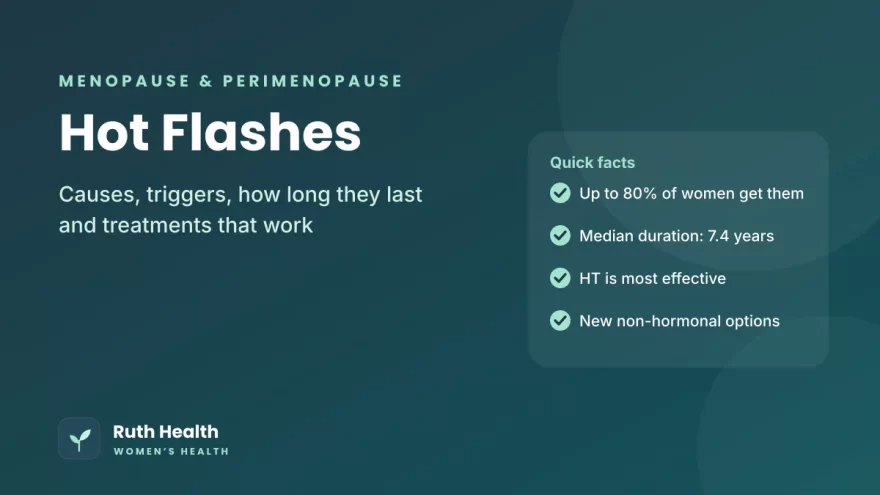
- Up to 80% of women have hot flashes or night sweats during the menopause transition, but fewer than 30% get treatment.
- They last a median of 7.4 years, much longer than the “6 months to 2 years” many women are told.
- Hot flashes are caused by changes in the brain’s temperature control center as estrogen falls.
- Hormone therapy is the most effective treatment for healthy women under 60 or within 10 years of menopause.
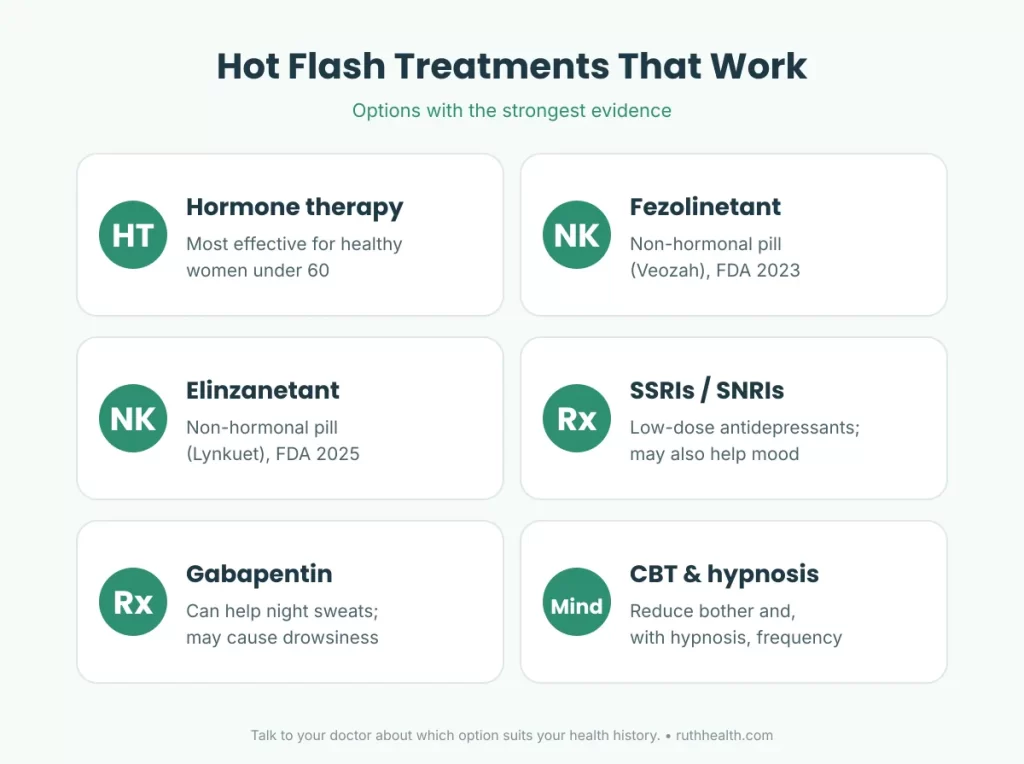
- Proven non-hormonal options include CBT, clinical hypnosis, certain antidepressants, gabapentin, fezolinetant (Veozah) and elinzanetant (Lynkuet).
What is a hot flash?
A hot flash (also called a hot flush) is a sudden feeling of intense heat, usually in the face, neck and chest. It may come with:
- Red, flushed skin.
- Sweating, sometimes heavy.
- A fast or pounding heartbeat.
- A feeling of anxiety or unease just before it starts.
- Chills afterwards as your body cools down.
Most hot flashes last 1 to 5 minutes. Women report an average of 4 to 5 hot flashes a day, though some have as many as 20, and about 1 in 4 women have them every day. When they happen at night, they’re called night sweats and can soak your clothes and bedding.
Doctors call hot flashes and night sweats together vasomotor symptoms (VMS).
What causes hot flashes?
Hot flashes start in the brain. Your hypothalamus acts like a thermostat, keeping your core temperature in a narrow comfortable range. Estrogen helps keep that thermostat stable.
As estrogen levels fall and fluctuate during perimenopause and menopause, a group of nerve cells in the hypothalamus (called KNDy neurons) becomes overactive. The comfortable temperature range narrows, so even a tiny rise in body temperature makes your brain think you’re overheating. It responds by widening blood vessels in your skin and triggering sweating to dump heat fast. That’s the flash.
This discovery is why new medicines that block signals in these neurons (neurokinin receptor blockers) have been developed.
How common are hot flashes?
Very common. Up to 80% of women experience hot flashes or night sweats during menopause, yet according to a review in the Journal of the American Board of Family Medicine, fewer than 30% are treated. A Mayo Clinic review puts the number who receive treatment at only about 1 in 4.
How long do hot flashes last?
Much longer than many women expect. The landmark SWAN study in JAMA Internal Medicine followed women for 17 years and found that frequent hot flashes lasted a median of 7.4 years.
Duration varied a lot:
| Group | Median duration of hot flashes |
|---|---|
| All women | 7.4 years |
| Started hot flashes in premenopause or early perimenopause | More than 11.8 years |
| Started hot flashes after menopause | 3.4 years |
| African American women | 10.1 years |
| White women | 6.5 years |
| Hispanic women | 8.9 years |
Women who started having hot flashes earlier had them the longest. Higher stress, anxiety and depressive symptoms at the start were also linked to longer-lasting symptoms.
Why hot flashes matter for your health
Hot flashes aren’t just uncomfortable. They can:
- Disrupt sleep, leading to tiredness, poor concentration and irritability.
- Affect mood, with links to anxiety and low mood.
- Affect work and relationships, especially when they’re frequent.
- Be linked to weight gain. As explained in our guide to menopause weight gain, persistent hot flashes and night sweats may precede weight gain, partly through poor sleep.
Research from SWAN has also linked frequent or persistent hot flashes to markers of heart disease risk, which is another reason not to simply “put up with them.”
Common hot flash triggers
Triggers vary from person to person. Common ones include:
- Hot drinks and spicy food.
- Alcohol, especially red wine.
- Caffeine.
- Hot rooms, hot weather, saunas and hot baths.
- Stress and anxiety.
- Smoking.
- Tight or heavy clothing.
Keeping a hot flash diary for 2 weeks can help you spot your personal triggers. Note that the Menopause Society’s review found no strong evidence that avoiding triggers or cooling techniques actually reduce hot flashes overall. They can still help you feel more comfortable in the moment.
Natural ways to manage hot flashes
These steps are low-risk and can make hot flashes easier to live with:
- Dress in layers so you can remove clothing quickly. Choose breathable fabrics like cotton or moisture-wicking materials.
- Keep cool: use a fan at your desk and bedside, keep your bedroom cool, and try cooling pillows or mattress pads.
- Carry cold water and sip it when a flash starts.
- Try slow, paced breathing: breathe in for 5 seconds and out for 5 seconds when you feel a hot flash coming.
- Limit alcohol and caffeine, and stop smoking.
- Lose weight if you’re overweight. The Menopause Society considers weight loss a reasonable option, as extra weight is linked with more hot flashes.
Proven treatments for hot flashes
Hormone therapy (HT)
Hormone therapy, usually estrogen (plus progestogen if you have a uterus), is the most effective treatment. According to a review of current guidelines, the benefits typically outweigh the risks for healthy women with symptoms who are under 60 years old or within 10 years of their final period.
HT comes as tablets, patches, gels or sprays. It isn’t suitable for everyone, including some women with a history of breast cancer, blood clots, stroke or certain liver problems. Your doctor can help you weigh the benefits and risks.
Non-hormonal prescription medicines
The Menopause Society’s 2023 position statement recommended several non-hormonal options based on strong evidence: CBT, clinical hypnosis, SSRI/SNRI antidepressants, gabapentin and fezolinetant, with oxybutynin also recommended.
| Treatment | How it works | Notes |
|---|---|---|
| Fezolinetant (Veozah) | Blocks NK3 receptors in the brain’s temperature center | FDA-approved in 2023; liver tests needed |
| Elinzanetant (Lynkuet) | Blocks NK1 and NK3 receptors | FDA-approved in October 2025; may also improve sleep |
| Low-dose paroxetine (Brisdelle) | SSRI antidepressant | FDA-approved for hot flashes; can interact with tamoxifen |
| Venlafaxine, escitalopram, citalopram | SSRI/SNRI antidepressants | Used off-label; may also help mood |
| Gabapentin | Nerve medicine | Can help night sweats; may cause drowsiness |
| Oxybutynin | Bladder medicine | Can cause dry mouth; caution in older women |
Elinzanetant is the newest option. In a study published in JAMA Internal Medicine, women taking it saw a 74% reduction in daily moderate-to-severe hot flashes over 12 weeks, compared with 47% on placebo. It was approved by the FDA in October 2025.
Cognitive behavioral therapy (CBT)
CBT helps you change how you think about and respond to hot flashes. It’s especially good at reducing how much hot flashes bother you and interfere with daily life, even if the number doesn’t change much.
Clinical hypnosis
Clinical hypnosis uses guided relaxation and mental imagery (such as imagining cool places). A scoping review presented at the Menopause Society found it consistently reduced hot flash frequency and severity, and suggested it may outperform CBT for hot flashes themselves.
Do supplements help hot flashes?
Many supplements are marketed for hot flashes, including black cohosh, soy isoflavones, red clover, evening primrose oil and pollen extracts. Evidence for most is weak or mixed, and the Menopause Society does not recommend them as proven treatments. Some, like black cohosh, have rare reports of liver problems.
If you want to try a supplement, choose a product with third-party testing and tell your doctor, especially if you take other medicines or have a history of breast cancer. See how products compare in our menopause supplement reviews, scored with our 11-point audit.
When to see a doctor
See your doctor if:
- Hot flashes or night sweats are disrupting your sleep, work or quality of life.
- You’re under 40 and having hot flashes (possible early menopause).
- You have night sweats with fever, weight loss or swollen glands, which can point to other conditions.
- You’re having hot flashes and your periods haven’t changed.
- You’re considering hormone therapy or another prescription treatment.
Frequently asked questions
What does a hot flash feel like?
Most women describe a sudden wave of heat rising through the chest, neck and face, often with flushing, sweating and a racing heart, followed by feeling chilled.
Can you have hot flashes before your periods stop?
Yes. Many women start having hot flashes in perimenopause while they’re still having periods, sometimes years before their final period.
What helps hot flashes at night?
Keep your bedroom cool, use a fan, wear light breathable sleepwear, use moisture-wicking sheets, avoid alcohol and spicy food in the evening, and keep cold water by the bed. If night sweats are frequent, talk to your doctor about treatment.
Can hot flashes come back after they stop?
Yes, some women have hot flashes return years after menopause, especially after stopping hormone therapy.
Are hot flashes a sign of anything else?
Usually they’re due to menopause. But hot flashes or sweats can also be caused by thyroid problems, infections, some medications and, rarely, other conditions. See your doctor if your symptoms don’t fit the usual pattern.
The bottom line
Hot flashes affect most women during menopause and often last much longer than expected, a median of more than 7 years. They’re caused by changes in the brain’s temperature control as estrogen falls. Simple steps like dressing in layers, keeping cool and limiting triggers can help you feel more comfortable, but you don’t have to just put up with them.
Hormone therapy is the most effective treatment for many women, and there are now several proven non-hormonal options, including new medicines like fezolinetant and elinzanetant, plus CBT and clinical hypnosis. Talk to your doctor about what’s right for you. Read more in our menopause and perimenopause guides.
