
Insulin resistance is one of the most common health problems you’ve probably never been tested for. It can quietly develop for years, making it harder to lose weight, increasing cravings, and raising your risk of type 2 diabetes, heart disease and fatty liver, often without any obvious symptoms.
For women, insulin resistance is also closely linked to PCOS, pregnancy diabetes and the changes of menopause. This guide explains what insulin resistance is, the signs to watch for, how it’s diagnosed, and the diet and lifestyle steps that can reverse it.
Key takeaways
- Insulin resistance means your cells don’t respond well to insulin, so your body has to make more of it to keep blood sugar normal.
- About 98 million US adults have prediabetes, and more than 8 in 10 don’t know it.
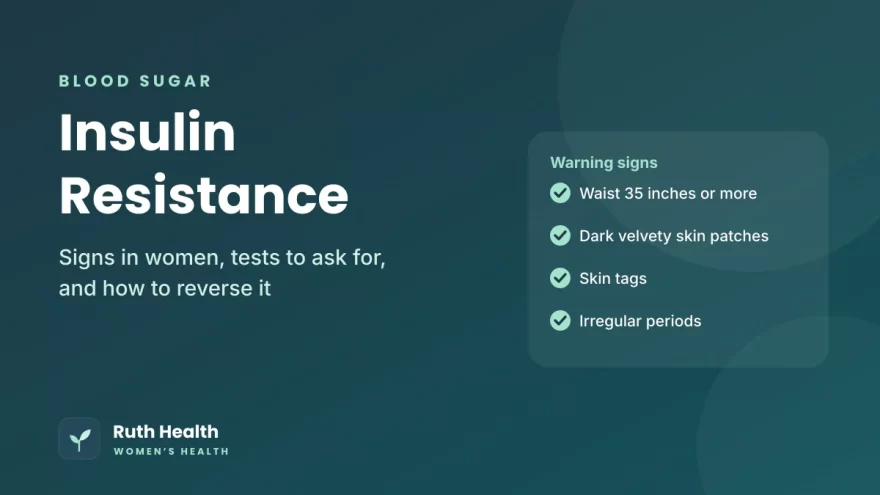
- It usually has no clear symptoms, but clues include a waist of 35 inches or more, dark velvety skin patches, skin tags and irregular periods.
- Up to 70% of women with PCOS have insulin resistance, including many at a normal weight.
- Losing 5% to 7% of your body weight and getting 150 minutes of activity a week cut the risk of type 2 diabetes by 58% in a major trial.
What is insulin resistance?
When you eat, your blood sugar (glucose) rises. Your pancreas releases insulin, a hormone that acts like a key, letting glucose enter your muscle, fat and liver cells to be used for energy.
With insulin resistance, your cells don’t respond well to insulin and can’t easily take up glucose from your blood. Your pancreas compensates by making more insulin. For a while, this keeps blood sugar normal, but high insulin levels have effects of their own, including encouraging fat storage and, in women, increasing androgen (male hormone) production.
Over time, the pancreas may not keep up. Blood sugar rises into the prediabetes range and, eventually, type 2 diabetes.
How common is insulin resistance?
Extremely common. The CDC estimates that roughly 98 million American adults have prediabetes, and more than 8 in 10 of them don’t know it. Insulin resistance usually comes before prediabetes, so even more people are affected.
What causes insulin resistance?
According to the National Institute of Diabetes and Digestive and Kidney Diseases (NIDDK), researchers think excess weight, especially around the belly, and lack of physical activity are the major factors. Other contributors include:
- Belly (visceral) fat: releases substances that interfere with insulin.
- Inactivity: muscles that are used regularly take up glucose more easily.
- Diet high in refined carbs and sugary drinks.
- Poor sleep and chronic stress: raise cortisol, which increases blood sugar.
- Genetics and family history of type 2 diabetes.
- Age: risk rises after 45.
- Ethnicity: higher risk in Black, Hispanic/Latino, Native American, South Asian and Pacific Islander people.
- Certain medicines, such as steroids.
Conditions linked to insulin resistance in women
- PCOS: up to 70% of women with PCOS have insulin resistance, including many at a normal weight. Read our PCOS diet guide.
- Gestational diabetes: diabetes during pregnancy raises your future risk of type 2 diabetes.
- Menopause: falling estrogen shifts fat to your belly, which can worsen insulin resistance. See why weight changes in menopause.
- Fatty liver disease, sleep apnea and Cushing’s syndrome are also associated with insulin resistance.
Signs and symptoms of insulin resistance in women
Most people have no symptoms. Insulin resistance and prediabetes usually have no symptoms, and it’s often picked up through routine blood work. But there are clues:
1. A larger waist
A waist measurement of 35 inches (89 cm) or more for women is linked to insulin resistance, even if your BMI is in the normal range.
2. Dark, velvety skin patches (acanthosis nigricans)
Darker, thicker skin on the back of the neck, armpits, groin or under the breasts is one of the few visible signs of high insulin and warrants a blood sugar test.
3. Skin tags
Multiple small skin growths, especially on the neck and armpits, are linked to insulin resistance.
4. Irregular periods, acne or excess hair
High insulin can raise androgen levels, leading to PCOS-like symptoms such as irregular periods, acne, oily skin and unwanted facial hair.
5. Weight gain that’s hard to shift
Especially around the belly, even when you’re eating carefully.
6. Strong cravings and energy crashes
Feeling shaky, tired or hungry soon after meals, especially carb-heavy ones.
7. Signs of high blood sugar (later stage)
Increased thirst, frequent urination, blurry vision and tiredness may mean blood sugar has risen into the diabetes range. See a doctor promptly.
How is insulin resistance diagnosed?
There’s no single routine test for insulin resistance, but your doctor can check for prediabetes and diabetes:
| Test | Normal | Prediabetes | Diabetes |
|---|---|---|---|
| Fasting blood glucose | Below 100 mg/dL | 100 to 125 mg/dL | 126 mg/dL or higher |
| HbA1c (3-month average) | Below 5.7% | 5.7% to 6.4% | 6.5% or higher |
| 2-hour oral glucose tolerance test | Below 140 mg/dL | 140 to 199 mg/dL | 200 mg/dL or higher |
Your doctor may also check your waist, blood pressure, cholesterol and triglycerides. High triglycerides with low HDL (“good”) cholesterol is a common pattern with insulin resistance. Some doctors also use fasting insulin or a calculation called HOMA-IR, though these aren’t standardized.
Who should get tested? Adults with overweight or obesity aged 35 and older, women with PCOS or a history of gestational diabetes, and anyone with risk factors or symptoms should ask about screening.
How to reverse insulin resistance
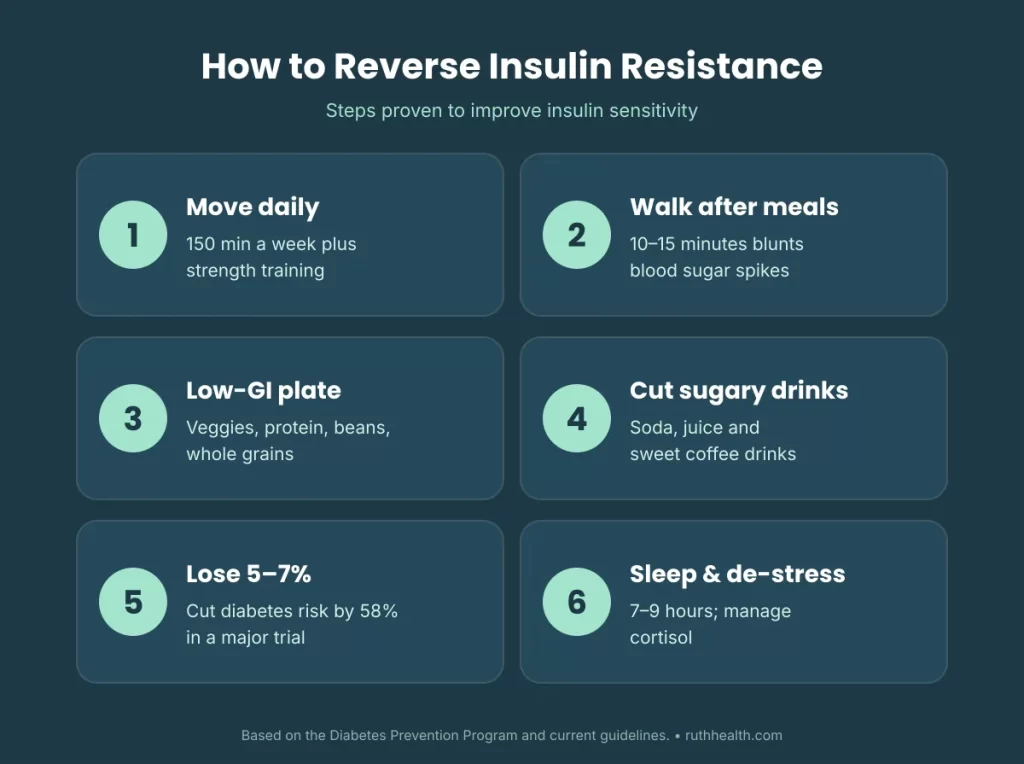
The good news: insulin resistance is often reversible. The landmark Diabetes Prevention Program showed that losing 5% to 7% of body weight through healthier eating and at least 150 minutes of activity a week led to a 58% lower rate of type 2 diabetes, and 71% lower in people aged 60 and over. For someone weighing 200 pounds, that’s just 10 to 14 pounds.
1. Move your body every day
Exercise makes muscles take up glucose even without much insulin, and the effect lasts for hours afterwards.
- Aim for at least 150 minutes of moderate activity a week (like brisk walking).
- Add strength training 2 to 3 times a week; more muscle means more places to store glucose.
- Take a 10 to 15 minute walk after meals to blunt blood sugar spikes.
- Break up long periods of sitting.
2. Change what’s on your plate
- Choose low-glycemic carbs: oats, beans, lentils, quinoa, whole grains and vegetables instead of white bread, pastries and sugary cereals.
- Fill half your plate with non-starchy vegetables.
- Include protein at every meal (eggs, fish, chicken, tofu, Greek yogurt, beans).
- Choose healthy fats: olive oil, nuts, seeds, avocado and oily fish.
- Cut sugary drinks: soda, juice and sweetened coffee drinks are among the biggest culprits.
- Eat vegetables and protein before carbs in a meal to reduce the blood sugar rise.
The Mediterranean diet is one of the best-studied patterns for improving insulin sensitivity.
3. Lose belly fat
Even modest weight loss reduces visceral fat and improves insulin sensitivity. Focus on steady, sustainable changes rather than crash diets.
4. Prioritize sleep
Aim for 7 to 9 hours. Even a few nights of poor sleep can reduce insulin sensitivity. If you snore loudly or stop breathing at night, ask about sleep apnea.
5. Manage stress
Chronic stress raises cortisol, which pushes blood sugar up. Find a daily stress-relief habit, such as walking, breathing exercises or yoga. Learn more in our guide to high cortisol symptoms.
6. Medication, if needed
If lifestyle changes aren’t enough, your doctor may suggest medicines like metformin. In the Diabetes Prevention Program, metformin reduced diabetes risk by 31%. GLP-1 medicines may also be an option for some people.
Can supplements help insulin resistance?
Some supplements, such as inositol (for PCOS), berberine, chromium, magnesium and cinnamon, are studied for blood sugar control. Evidence varies, and some can interact with diabetes medications or cause low blood sugar. Always talk to your doctor before taking them. You can compare products in our weight loss supplement reviews, scored with our 11-point audit.
When to see a doctor
See your doctor if:
- You have dark, velvety skin patches or many skin tags.
- Your waist is 35 inches or more.
- You have irregular periods, acne or excess hair growth.
- You have a family history of type 2 diabetes, or had gestational diabetes.
- You notice increased thirst, frequent urination, blurred vision or unexplained tiredness.
Frequently asked questions
Can insulin resistance be reversed?
Yes, in many people. Weight loss, regular exercise, a healthier diet and better sleep can significantly improve insulin sensitivity and return blood sugar to normal.
How long does it take to reverse insulin resistance?
Insulin sensitivity starts improving within days of increasing activity. Measurable changes in blood sugar and HbA1c usually take 3 months or more of consistent changes.
Can thin women have insulin resistance?
Yes. Genetics, PCOS, inactivity, poor sleep and belly fat can all cause insulin resistance in women with a normal BMI. That’s why waist size can be more telling than weight.
What is the best diet for insulin resistance?
There’s no single best diet, but eating patterns built on vegetables, low-GI carbs, lean protein and healthy fats, like the Mediterranean diet, have strong evidence. Cutting sugary drinks and refined carbs makes a big difference.
Is insulin resistance the same as prediabetes?
Not quite. Insulin resistance comes first: your body needs more insulin to keep blood sugar normal. Prediabetes means your blood sugar has already risen above normal but isn’t yet in the diabetes range.
The bottom line
Insulin resistance is extremely common and often silent, but it’s an early warning sign you can act on. Clues include a waist of 35 inches or more, dark skin patches, skin tags, irregular periods and stubborn belly weight. A simple blood test can check for prediabetes.
The most effective treatments are lifestyle-based: move every day, build meals around vegetables, protein and low-GI carbs, lose a modest amount of weight if needed, sleep well and manage stress. Losing just 5% to 7% of your body weight can cut your diabetes risk by more than half. Read more in our blood sugar guides.
