If you’ve been diagnosed with polycystic ovary syndrome (PCOS), you’ve probably heard that diet matters, and then been given very little practical advice about what to actually eat. Search online and you’ll find everything from keto to “no dairy, no gluten, no fruit” rules, often with little evidence behind them.
This guide cuts through the noise. It explains what the research really shows about food and PCOS, which foods to build your meals around, which to limit, and gives you a practical 7-day meal plan you can start this week.
Key takeaways
- PCOS affects about 1 in 8 women of reproductive age, and insulin resistance is a key driver in many of them.
- The 2023 international PCOS guideline says there is no single “PCOS diet”. Healthy eating that you can stick to matters more than any one plan.
- Diets with low-glycemic-index carbs, more fiber, lean protein and healthy fats (like the Mediterranean and DASH diets) have the best evidence.
- If you carry extra weight, losing just 5% to 10% of your body weight can improve insulin resistance, cycles, androgen levels and fertility.
- Lean women with PCOS benefit from the same eating pattern, even without weight loss.
What is PCOS and why does diet matter?
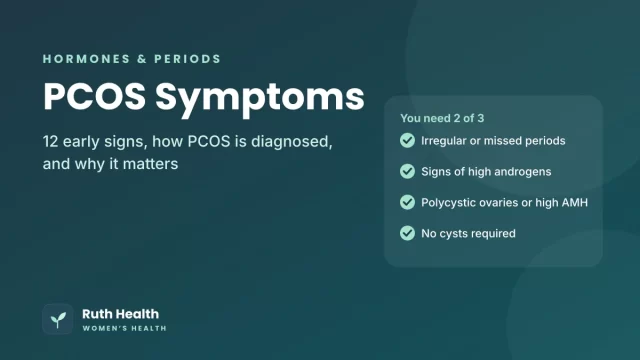
Polycystic ovary syndrome is one of the most common hormone conditions in women. According to the 2023 international evidence-based guideline, it affects about 12% of women of reproductive age. Diagnosis is based on at least two of three features: irregular or absent ovulation, signs of high androgens (like excess hair growth or acne), and polycystic ovaries on ultrasound or a high AMH blood level.
Diet matters because of insulin resistance. Many women with PCOS, including some who are not overweight, have cells that respond poorly to insulin. The body makes more insulin to compensate, and high insulin tells the ovaries to make more testosterone. That extra testosterone can disrupt ovulation and cause symptoms like irregular periods, acne and unwanted hair. What you eat directly affects how much insulin your body releases, which is why food is one of the most powerful tools you have.
Is there one best diet for PCOS?
The short answer is no. The 2023 guideline, endorsed by 39 organizations worldwide, recommends a healthy lifestyle for all women with PCOS but does not recommend any specific diet. A review in BMC Endocrine Disorders also found limited evidence to favor one diet composition over another.
That said, some patterns do have better results in studies:
- An early systematic review used to build PCOS guidelines found that low-glycemic-index diets improved menstrual regularity and quality of life, low-GI or lower-carb diets reduced insulin resistance and cholesterol more, and higher-protein diets improved mood and self-esteem. Most importantly, weight loss improved PCOS regardless of which diet was used.
- Reviews of dietary approaches support the Mediterranean diet, the DASH diet and moderately lower-carbohydrate diets (30% to 45% of calories from carbs).
- A 2024 systematic review concluded that low-GI, high-fiber, omega-3-rich, Mediterranean and anti-inflammatory diets improve insulin sensitivity and hormonal balance in women with PCOS.
The practical takeaway: the best PCOS diet is a whole-food, low-GI eating pattern you can follow long term, not a strict plan you quit after three weeks.
| Diet approach | What the research shows | Best for |
|---|---|---|
| Low-glycemic index | More regular cycles, lower insulin resistance, better quality of life | Almost everyone with PCOS |
| Mediterranean | Better insulin sensitivity, heart health, sustainable | Long-term eating pattern |
| DASH | Lower insulin resistance and inflammation, blood pressure benefits | Women with high blood pressure or heart risk |
| Moderately lower-carb (30% to 45% of calories) | Better insulin resistance and ovulation in some studies | Women with marked insulin resistance |
| Higher protein | Better fullness, mood and self-esteem | Women struggling with hunger and cravings |
| Very low-carb or keto | Short-term weight loss, but hard to sustain; limited long-term data | Only with professional guidance |
How much weight loss helps PCOS?
If you are carrying extra weight, you don’t need to reach an “ideal” weight to see benefits. A systematic review of PCOS diet therapy found that a relatively small weight loss of about 5% can improve insulin resistance, high androgens, menstrual function and fertility. Other reviews describe 5% to 10% weight loss combined with physical activity as the first-line strategy.
For a woman weighing 180 pounds (82 kg), that means losing about 9 to 18 pounds (4 to 8 kg).
If you’re a lean woman with PCOS, weight loss isn’t the goal. Instead, focus on the same low-GI, high-fiber, protein-rich eating pattern, which can still improve glucose control and insulin resistance.
Best foods to eat with PCOS
Build your meals around these groups:
1. High-fiber vegetables
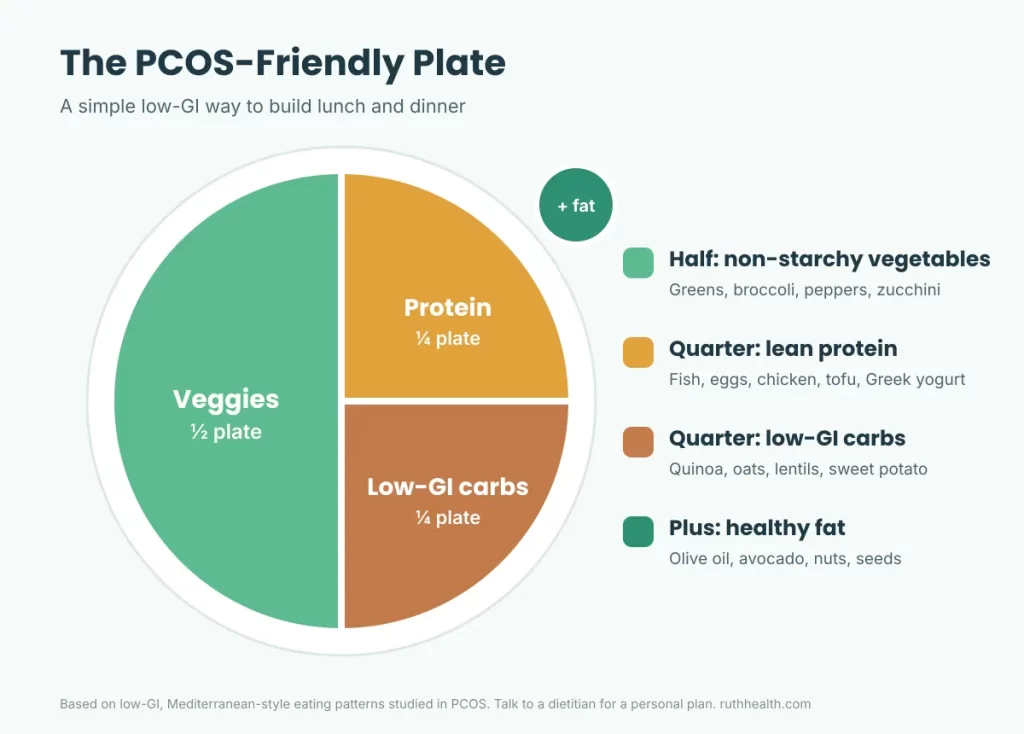
Leafy greens, broccoli, cauliflower, peppers, zucchini, green beans, Brussels sprouts and tomatoes. Fiber slows how quickly sugar enters your blood, keeps you full and supports a healthy gut. Aim for half your plate at lunch and dinner.
2. Low-glycemic-index carbohydrates
These raise blood sugar slowly: oats, quinoa, barley, brown or basmati rice, whole-grain bread, sweet potatoes, lentils, chickpeas and beans. You don’t need to cut carbs completely. Choose these instead of refined ones and keep portions to about a quarter of your plate.
3. Lean and plant protein
Eggs, fish, chicken, turkey, Greek yogurt, cottage cheese, tofu, tempeh, lentils and beans. Protein helps control appetite and reduces the blood sugar spike from carbs eaten in the same meal. Include some at every meal and snack.
4. Healthy fats and omega-3s
Extra virgin olive oil, avocado, nuts, seeds (especially flax and chia) and oily fish like salmon, sardines and mackerel two or more times a week. Omega-3 fats may help reduce inflammation and improve blood fats.
5. Low-sugar fruit
Berries, apples, pears, oranges, cherries and kiwi are good choices. Eat whole fruit rather than juice, and pair it with protein or nuts, like an apple with peanut butter.
6. Anti-inflammatory extras
Herbs and spices like cinnamon, turmeric and ginger, green tea, and plenty of colorful plants. Women with PCOS often have low-grade inflammation, and these foods support an anti-inflammatory eating pattern.
Foods to limit with PCOS
You don’t have to ban these forever, but eating less of them will help most women:
- Sugary drinks: soda, sweet tea, energy drinks and fruit juice cause rapid blood sugar and insulin spikes.
- Refined carbs: white bread, white pasta, most breakfast cereals, pastries and crackers.
- Sweets and desserts: candy, cakes, cookies and ice cream. Save them for occasional treats.
- Ultra-processed and fried foods: chips, fast food and processed meats are often high in refined carbs, unhealthy fats and salt.
- Alcohol: it adds empty calories and can affect blood sugar and sleep.
Do you need to cut dairy or gluten?
There’s no strong evidence that all women with PCOS need to avoid dairy or gluten. Unless you have celiac disease, a lactose intolerance or notice clear symptoms, there’s no need to cut them out. Plain Greek yogurt and cheese can be good protein sources. If you suspect a food is a problem, talk to a dietitian before removing whole food groups.
7-day PCOS meal plan
This plan follows a low-GI, higher-protein, Mediterranean-style pattern. Adjust portions to your hunger and goals.
| Day | Breakfast | Lunch | Dinner | Snack |
|---|---|---|---|---|
| Monday | Greek yogurt with berries, chia and walnuts | Quinoa salad with chickpeas, cucumber, tomato, feta and olive oil | Baked salmon, roasted broccoli and sweet potato | Apple with peanut butter |
| Tuesday | 2-egg veggie omelet with whole-grain toast | Lentil soup with a side salad | Chicken stir-fry with peppers, snow peas and brown rice | Handful of almonds |
| Wednesday | Overnight oats with cinnamon, flaxseed and pear | Whole-grain wrap with turkey, hummus and spinach | Turkey chili with beans and a green salad | Cottage cheese with cherry tomatoes |
| Thursday | Smoothie with spinach, berries, Greek yogurt and nut butter | Leftover turkey chili | Grilled shrimp, quinoa and roasted zucchini | Carrot sticks with hummus |
| Friday | Scrambled tofu with spinach and mushrooms | Tuna and white bean salad with olive oil and lemon | Lean beef or tempeh burger (no bun) with roasted vegetables | Berries with a few walnuts |
| Saturday | Whole-grain toast with avocado and 2 poached eggs | Mediterranean bowl: falafel or chicken, tabbouleh, greens, tahini | Baked cod, barley and green beans | Greek yogurt with cinnamon |
| Sunday | Chia pudding with almond milk and raspberries | Leftover cod and barley salad | Roast chicken, cauliflower mash and Brussels sprouts | Boiled egg and an orange |
Smart eating habits that help PCOS
- Never eat carbs alone. Pair them with protein, fat or fiber to slow the blood sugar rise.
- Eat a bigger breakfast and a smaller dinner. Some studies suggest front-loading calories may help insulin and androgen levels in PCOS.
- Eat vegetables and protein first. Starting a meal with these, then eating carbs, can reduce blood sugar spikes.
- Plan and prep. Cooking a big batch of grains, beans and roasted vegetables on Sunday makes healthy choices easy all week.
- Avoid crash diets. Very restrictive diets often lead to rebound weight gain and can affect your mental health. Women with PCOS also have a higher risk of disordered eating, so be gentle with yourself.
Exercise, sleep and stress also matter
Diet works best alongside other lifestyle habits:
- Exercise: both aerobic exercise and resistance training improve insulin sensitivity and support weight loss in PCOS. Aim for at least 150 minutes of moderate activity a week plus 2 strength sessions.
- Sleep: poor sleep worsens insulin resistance and cravings. Aim for 7 to 9 hours.
- Stress: chronic stress can affect hormones and eating habits. Find something that helps you unwind daily.
What about supplements for PCOS?
Some supplements are popular for PCOS, including inositol (myo-inositol and D-chiro-inositol), vitamin D, omega-3s and berberine. Evidence for some is promising, but it’s still mixed, and the 2023 guideline does not recommend them as routine treatment. Supplements should never replace diet and medical care.
If you’re considering a supplement, talk to your doctor first, especially if you’re trying to conceive or take metformin or other medications. You can read our hormone balance supplement reviews to see how products compare on our 11-point audit.
When to see a doctor
Talk to your doctor or a gynecologist if you:
- Have fewer than 8 periods a year, or go more than 3 months without one.
- Notice new excess hair growth, severe acne or hair thinning on your scalp.
- Are trying to get pregnant and haven’t conceived after 12 months (or 6 months if you’re over 35).
- Have signs of high blood sugar, like extreme thirst or frequent urination.
A registered dietitian who understands PCOS can also help create a plan tailored to you.
Frequently asked questions
What is the fastest way to lose weight with PCOS?
There’s no safe shortcut. A steady loss of about 0.5 to 1 kg (1 to 2 pounds) a week through a low-GI diet, regular exercise and enough sleep is the most sustainable approach. Even a 5% loss can improve symptoms.
Is the keto diet good for PCOS?
Some small studies show short-term improvements in weight and hormones, but long-term evidence is limited and the diet is hard to sustain. A moderately lower-carb, Mediterranean-style diet gives many of the same benefits and is easier to follow.
Can diet alone cure PCOS?
No. PCOS is a lifelong condition, but diet and lifestyle can greatly reduce symptoms, restore more regular cycles and lower your long-term risk of type 2 diabetes and heart disease. Some women also need medication.
Should I eat fruit if I have PCOS?
Yes. Whole fruit contains fiber, vitamins and antioxidants. Choose lower-sugar fruits like berries, apples and pears, and pair them with protein or fat.
How long does it take for a PCOS diet to work?
Many women notice more energy and fewer cravings within a few weeks. Changes in cycles, skin and weight usually take 3 to 6 months of consistent effort.
The bottom line
There’s no single perfect PCOS diet, and you don’t need to follow extreme rules. The best approach is a whole-food eating pattern built on low-GI carbs, high-fiber vegetables, lean protein and healthy fats, like the Mediterranean or DASH diet. If you carry extra weight, losing just 5% to 10% can make a real difference to your hormones, cycles and fertility.
Pair your diet with regular exercise, good sleep and stress management, and work with your doctor or a dietitian to personalize your plan. Explore more in our hormones and periods guides.