Irregular periods, stubborn acne, unwanted facial hair, thinning hair on your head, or trouble losing weight: on their own, each can seem like a separate annoyance. Together, they may be signs of polycystic ovary syndrome (PCOS), one of the most common hormone conditions in women and one of the most underdiagnosed. This guide explains everything you need to know about pcos symptoms.
This guide explains the early signs of PCOS, why symptoms look so different from woman to woman, how PCOS is diagnosed under the latest international guideline, and why getting diagnosed matters for your long-term health.
Key takeaways
- PCOS affects about 1 in 8 women of reproductive age, yet the WHO estimates up to 70% of women with PCOS are undiagnosed.
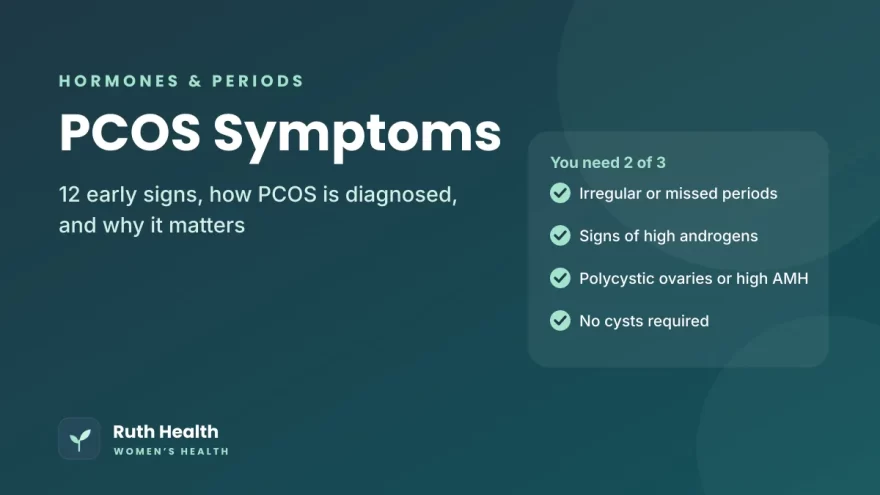
- The main signs are irregular or missed periods, signs of high androgens (excess hair, acne, scalp hair thinning) and polycystic ovaries on ultrasound or a high AMH level.
- You only need 2 of these 3 features to be diagnosed. You do not need to have cysts.
- PCOS affects women of all sizes, and insulin resistance is common even in lean women.
- Early diagnosis helps manage symptoms and lowers the risk of type 2 diabetes, heart disease and fertility problems.
What is PCOS?
Polycystic ovary syndrome is a hormone condition that affects how the ovaries work. According to the 2023 international evidence-based guideline, endorsed by 39 organizations worldwide, PCOS affects about 12% of women of reproductive age.
Despite the name, PCOS isn’t really about cysts. The “cysts” are actually many small, immature egg follicles that haven’t developed properly because ovulation isn’t happening regularly.
PCOS is a whole-body condition, not just a reproductive one. It involves:
- Hormones: higher levels of androgens (male-type hormones like testosterone).
- Metabolism: insulin resistance, which drives many symptoms.
- Reproduction: irregular or absent ovulation.
- Mental health: higher rates of anxiety and depression.
Why PCOS often goes undiagnosed
According to the World Health Organization, up to 70% of women worldwide with PCOS remain undiagnosed, commonly because symptoms vary so widely. Many women don’t realize that oily skin, acne and extra hair growth can be signs of a medical condition, so they may not mention them to their doctor.
Symptoms can also be mistaken for normal puberty in teens, or blamed on stress or weight.
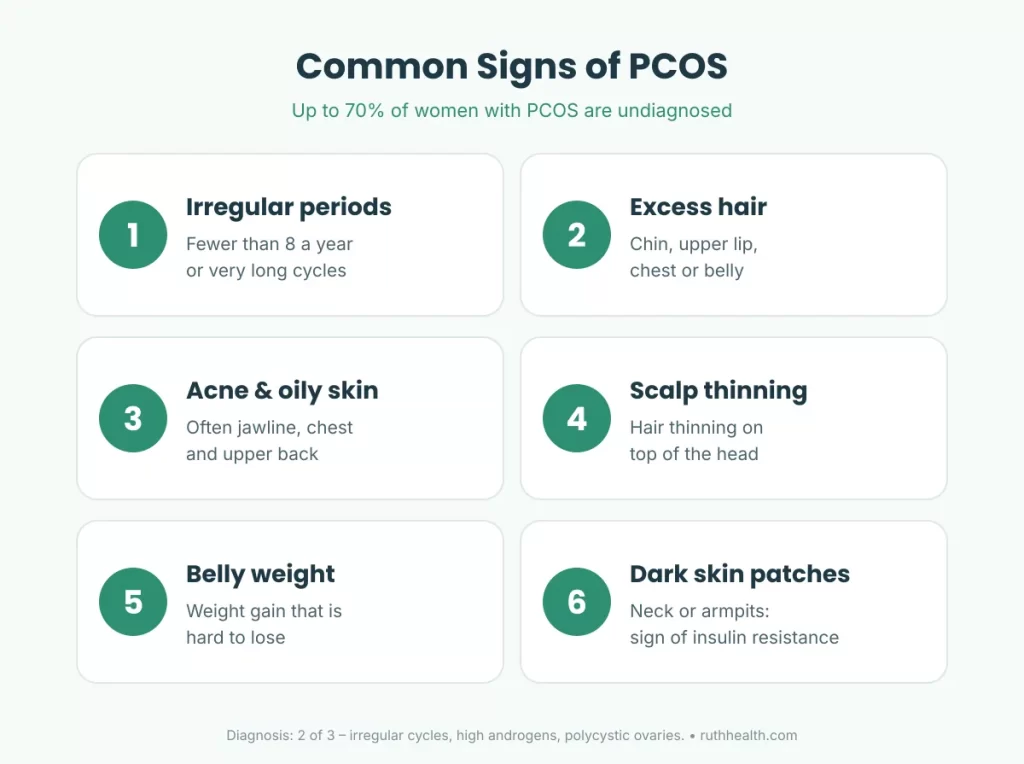
12 common signs and symptoms of PCOS
Not everyone with PCOS has every symptom. Symptoms can be mild or severe and can change at different life stages, as Better Health Channel notes.
1. Irregular, infrequent or missed periods
This is often the first sign. You might have:
- Fewer than 8 periods a year.
- Cycles longer than 35 days, or very unpredictable cycles.
- No periods for months at a time.
- Occasionally, heavy or prolonged bleeding when a period does come.
2. Excess hair growth (hirsutism)
Coarse, dark hair on the face (chin, upper lip, jawline), chest, belly, back or upper thighs. The NICHD lists hirsutism on the face, chest, belly or upper thighs as a key symptom.
3. Acne
Severe, late-onset or persistent acne that doesn’t respond well to usual treatments, often on the jawline, chin, chest and upper back.
4. Oily skin
High androgens increase oil production in the skin.
5. Thinning hair or hair loss on the scalp
Hair may thin on the top of the head, similar to female pattern hair loss. Learn more in our guide to hair loss in women.
6. Weight gain or difficulty losing weight
Especially around the belly. PCOS can affect women of all weights, but a heavier weight can increase the hormones responsible for symptoms.
7. Dark, velvety skin patches
Called acanthosis nigricans, these appear on the neck, armpits, groin or under the breasts and are a sign of insulin resistance.
8. Skin tags
Small skin growths, often in the armpits or on the neck.
9. Trouble getting pregnant
Because ovulation is irregular, PCOS is one of the most common causes of fertility problems. The good news is that it’s also one of the most treatable.
10. Pelvic pain
Some women have pelvic pain during or between periods, sometimes with heavy bleeding.
11. Mood changes
Anxiety, depression and low self-esteem are more common in women with PCOS.
12. Fatigue and sleep problems
Including a higher risk of obstructive sleep apnea, especially in women with higher weight.
Early signs of PCOS in teens
PCOS symptoms often start around the first period, but they can be hard to spot because irregular cycles and acne are common during puberty. Signs worth checking with a doctor include:
- Periods that are still very irregular 3 or more years after they started.
- No period by age 15, or within 3 years of breast development.
- Significant excess hair growth.
- Severe acne that doesn’t respond to treatment.
Doctors may consider treating severe symptoms even before a formal diagnosis, according to the NICHD.
How is PCOS diagnosed?
Under the 2023 international guideline, adults are diagnosed with PCOS if they have at least 2 of these 3 features, after other causes have been ruled out:
| Feature | What it means | How it’s checked |
|---|---|---|
| Irregular or absent ovulation | Infrequent, irregular or missed periods | Your cycle history |
| High androgens | Clinical signs (hirsutism, acne, scalp hair loss) or high levels in blood tests | Physical exam and blood tests for testosterone |
| Polycystic ovaries | Many small follicles on the ovaries, or a high AMH level | Pelvic ultrasound or AMH blood test |
A key update in the 2023 guideline is that polycystic ovary morphology can now be assessed with either an ultrasound or an elevated anti-Müllerian hormone (AMH) blood test.
In teenagers, ultrasound and AMH aren’t recommended for diagnosis; doctors rely on irregular cycles and high androgens.
Tests your doctor may order
- Hormone tests: testosterone, sex hormone-binding globulin (SHBG), and sometimes AMH.
- Tests to rule out other causes: thyroid function (TSH), prolactin, and 17-hydroxyprogesterone (for a condition called congenital adrenal hyperplasia).
- Pregnancy test if periods have stopped.
- Metabolic tests: blood sugar, HbA1c or an oral glucose tolerance test, and cholesterol.
- Pelvic ultrasound in adults, if needed.
Why getting diagnosed matters
PCOS isn’t only about periods and skin. It raises your long-term risk of:
- Type 2 diabetes and prediabetes, due to insulin resistance. Learn more about insulin resistance in women.
- Heart disease. The 2023 guideline recommends recognizing that women with PCOS have increased cardiovascular risk factors.
- Gestational diabetes and pregnancy complications.
- Endometrial (womb lining) problems if periods are very infrequent for a long time.
- Anxiety, depression and disordered eating.
- Sleep apnea.
Early diagnosis means you can manage symptoms, protect your fertility and lower these risks.
Treatment options for PCOS
There’s no cure for PCOS, but symptoms can be managed effectively:
- Lifestyle changes: a healthy diet and regular exercise are first-line for all women with PCOS. If you carry extra weight, losing 5% to 10% can improve cycles, androgen levels and fertility. See our PCOS diet guide and 7-day meal plan.
- Hormonal birth control: regulates periods, protects the womb lining, and reduces acne and hair growth.
- Metformin: improves insulin resistance and may help with weight and cycles.
- Anti-androgen medicines: like spironolactone, for excess hair and acne (not during pregnancy).
- Fertility treatment: letrozole is often the first choice to help you ovulate.
- Hair removal: laser, electrolysis or creams for unwanted hair.
- Mental health support: screening and treatment for anxiety and depression.
Some women also try supplements like inositol. Evidence is promising but mixed, and they’re not a replacement for medical care. Compare products in our hormone balance supplement reviews, scored with our 11-point audit.
When to see a doctor
See your doctor if:
- Your periods are irregular, infrequent or have stopped (and you’re not pregnant).
- You have excess facial or body hair, severe acne or scalp hair thinning.
- You’ve been trying to get pregnant for 12 months (or 6 months if you’re over 35).
- You have dark velvety skin patches or signs of high blood sugar.
- You’ve been diagnosed with PCOS and your symptoms are getting worse.
Frequently asked questions about pcos symptoms
Can you have PCOS without cysts?
Yes. You only need 2 of the 3 diagnostic features, so you can have PCOS with normal-looking ovaries if you have irregular cycles and high androgens.
Can you have PCOS and regular periods?
It’s possible. Some women with PCOS have fairly regular cycles but high androgens and polycystic ovaries.
Can thin women have PCOS?
Yes. PCOS affects women of all sizes, and many lean women with PCOS still have insulin resistance.
Does PCOS go away after menopause?
Periods stop at menopause, and some androgen-related symptoms may ease, but metabolic risks like diabetes and heart disease remain, so ongoing healthy habits and checkups are important.
Can I get pregnant with PCOS?
Yes. Many women with PCOS get pregnant, sometimes with help from lifestyle changes or fertility treatment. Talk to your doctor if you’re planning a pregnancy.
The bottom line on pcos symptoms
PCOS is common, often missed, and looks different in every woman. Watch for irregular or missed periods, excess facial or body hair, persistent acne, scalp hair thinning, weight gain around the belly and dark skin patches. You only need 2 of the 3 main features to be diagnosed, and you don’t need cysts.
If you recognize these signs, talk to your doctor. A diagnosis gives you access to treatments that improve symptoms, protect fertility and lower your long-term risk of diabetes and heart disease. Read more in our PCOS guides.