
You’ve always been able to handle stress, but lately you feel on edge for no clear reason. Your heart races, you wake at night with a sense of dread, small things feel overwhelming, and maybe you’ve even had a panic attack for the first time. If you’re in your 40s or early 50s, perimenopause could be part of the picture. This guide explains everything you need to know about perimenopause anxiety.
Anxiety is one of the most common, and most overlooked, symptoms of the menopause transition. This guide explains why perimenopause can trigger anxiety, the signs to look for, how to tell a hot flash from a panic attack, and the treatments that help.
Key takeaways
- Perimenopause is a vulnerable time for anxiety and depression, likely because fluctuating estrogen affects brain chemicals like serotonin and GABA.
- Women with a symptomatic menopause transition had a 64% higher risk of anxiety and about twice the risk of depression in one large study.
- Hot flashes, night sweats and poor sleep can all worsen anxiety.
- Women with a past history of anxiety, depression, PMS or postpartum depression are at higher risk.
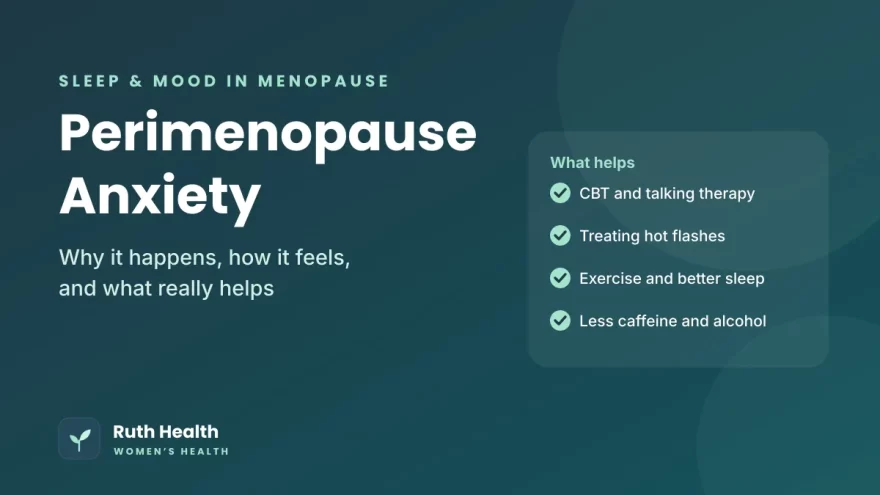
- Effective treatments include CBT, antidepressants, hormone therapy for menopause symptoms, exercise and better sleep.
Can perimenopause cause anxiety?
Yes. Perimenopause, the years leading up to your final period, usually starts in your mid-40s and can last 4 to 10 years. During this time, estrogen and progesterone don’t simply decline; they rise and fall unpredictably. Those swings can affect your mood.
A systematic review in Australasian Psychiatry concluded that menopause increases vulnerability to depression and anxiety, possibly because estrogen fluctuations affect serotonin and GABA, two brain chemicals involved in mood and calm.
A large real-world study in European Psychiatry found that women with a symptomatic menopause transition had:
- About 2.1 times the risk of depression.
- About 1.6 times the risk of anxiety.
- About 1.5 times the risk of sleep disorders.
A 2024 study also found women were 40% more likely to experience depressive symptoms during perimenopause than before it.
Why does perimenopause cause anxiety?
Several things combine:
1. Fluctuating hormones
Estrogen supports serotonin (the “feel-good” chemical) and progesterone has a calming effect via GABA. When these hormones swing up and down, your mood can swing too. Research led by Dr. Hadine Joffe linked increases in depression symptoms in perimenopause to fluctuations in estradiol and progesterone.
2. Hot flashes and night sweats
Hot flashes often start with a rush of adrenaline-like feelings: racing heart, warmth and a sense of panic. Night sweats wake you up repeatedly. A review of menopause and depression found vasomotor symptoms raise the risk of mood problems.
3. Poor sleep
Broken sleep from night sweats, needing to pee or simply waking at 3 a.m. makes anxiety much worse. Lack of sleep lowers your ability to cope with stress the next day.
4. Midlife stress
Perimenopause often coincides with caring for children and ageing parents, career pressure, relationship changes and health worries. These life stresses add to hormonal changes.
5. Past mental health history
According to Harvard Health, most women who develop significant mood problems in perimenopause have had them before. Johns Hopkins psychiatrist Dr. Jennifer Payne has noted that women with a previous diagnosis of depression or anxiety are at greater risk during perimenopause (NPR). A history of severe PMS or postpartum depression may also raise your risk.
Signs of perimenopause anxiety
Anxiety can show up in your mind and body:
Emotional and mental signs
- Constant worry or a sense of dread.
- Feeling on edge, restless or “wired.”
- Irritability and a short temper.
- Trouble concentrating or brain fog.
- Feeling overwhelmed by things you used to handle easily.
- New fears or avoiding situations.
Physical signs
- Racing or pounding heart (palpitations).
- Shortness of breath or tight chest.
- Muscle tension, headaches or jaw clenching.
- Stomach upset or nausea.
- Trouble falling or staying asleep.
- Feeling shaky or dizzy.
Because many of these overlap with other conditions, including thyroid problems and heart rhythm issues, it’s important to get checked by a doctor rather than assuming it’s “just hormones.”
Hot flash or panic attack? How to tell the difference
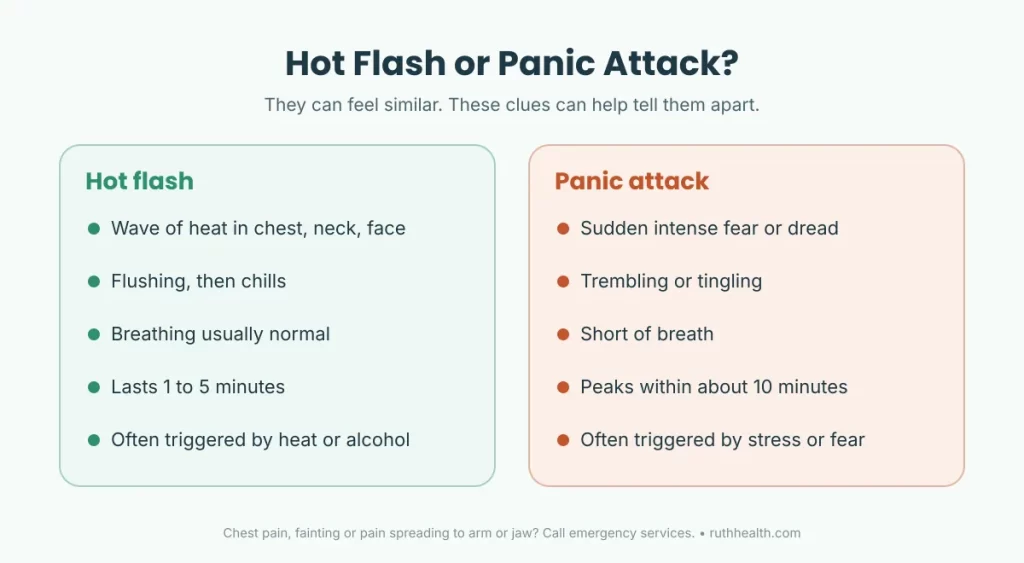
Hot flashes and panic attacks can feel similar: both can cause a racing heart, sweating and a sense of panic. Some clues:
| Hot flash | Panic attack | |
|---|---|---|
| Main feeling | Intense heat rising through chest, neck and face | Overwhelming fear or sense of doom |
| Breathing | Usually normal | Often short of breath or feeling unable to breathe |
| Skin | Flushing, sweating, then chills | Sweating, trembling, sometimes tingling |
| Length | 1 to 5 minutes | Peaks within 10 minutes, can last longer |
| Trigger | Often heat, alcohol, spicy food, stress, or none | Often stress or fear, sometimes none |
According to Dr. Joffe at Harvard Health, one way to tell them apart is that hot flashes don’t make you short of breath, while panic attacks may.
A single panic attack doesn’t mean you have panic disorder. As Cleveland Clinic explains, panic disorder involves frequent attacks plus ongoing worry about the next one. Women prone to anxiety or who’ve had postpartum depression may be more likely to develop panic disorder during menopause, but anyone can.
Important: chest pain, severe shortness of breath, fainting or pain spreading to your arm, jaw or back can be signs of a heart attack. Call emergency services immediately; don’t assume it’s anxiety.
How common is anxiety in perimenopause?
Research cited by Cleveland Clinic suggests that about 15% to 50% of perimenopausal and postmenopausal women experience symptoms like anxiety, depression, forgetfulness and insomnia, and that more severe menopause symptoms are linked to more severe mental health symptoms.
Despite this, many women don’t get help. Only about half of women in perimenopause or later stages said they had spoken to a health provider about their symptoms, according to a report from UC Berkeley’s Greater Good.
Treatments for perimenopause anxiety
The best approach often combines several of these:
Cognitive behavioral therapy (CBT)
CBT is one of the most effective treatments for anxiety at any age. It teaches you to notice and challenge anxious thoughts and change unhelpful patterns. CBT designed for menopause can also reduce how much hot flashes and sleep problems bother you.
Antidepressants (SSRIs and SNRIs)
Medicines like escitalopram, sertraline and venlafaxine treat anxiety and depression. Some, such as low-dose paroxetine and venlafaxine, also reduce hot flashes, so they can help with both.
Hormone therapy for menopause symptoms
Hormone therapy is not an approved treatment for anxiety itself. But if hot flashes and night sweats are driving your poor sleep and anxiety, treating them can make a big difference. Some women find their mood improves once their hormone symptoms are controlled. Discuss benefits and risks with your doctor. Read more in our guide to treating hot flashes.
Exercise
Regular exercise, especially aerobic activity like brisk walking, cycling or swimming, reduces anxiety symptoms and improves sleep. Aim for at least 150 minutes a week, plus strength training twice a week.
Better sleep
Keep a regular sleep schedule, keep your bedroom cool, limit screens before bed, and avoid caffeine after early afternoon. If you can’t sleep, CBT for insomnia (CBT-I) is the most effective long-term treatment.
Cut back on caffeine and alcohol
Caffeine can trigger a racing heart and jitteriness. Alcohol may feel relaxing at first, but it disrupts sleep and can increase anxiety the next day (“hangxiety”).
Relaxation techniques
Slow breathing (in for 4 seconds, out for 6 to 8 seconds), mindfulness, yoga and progressive muscle relaxation can calm your nervous system quickly.
Social support
Talking to friends, joining a menopause support group, or simply naming what’s happening can reduce feelings of isolation and fear.
Do supplements help perimenopause anxiety?
Some supplements like magnesium, ashwagandha, L-theanine, saffron and omega-3s are popular for stress and mood. Evidence varies, products differ widely in quality, and some interact with medications, including antidepressants. Talk to your doctor before trying them. You can read our guide on magnesium for sleep or compare products in our sleep and stress supplement reviews.
When to see a doctor
Make an appointment if:
- Anxiety or low mood is affecting your work, relationships or daily life.
- You’re having panic attacks.
- You’re struggling to sleep most nights.
- You feel hopeless, numb or no longer enjoy things you used to.
- You’ve had anxiety or depression before and notice it returning.
Your doctor may check your thyroid and other blood tests, ask about your menopause symptoms, and talk through treatment options. Cleveland Clinic notes that doctors will also want to rule out medical causes such as thyroid problems.
If you ever have thoughts of harming yourself, seek help right away. In the US, call or text 988 to reach the Suicide and Crisis Lifeline, or contact your local emergency number.
Frequently asked questions
How long does perimenopause anxiety last?
It varies. For many women, anxiety eases once hormone levels settle after menopause, but it can last several years. Treatment can help you feel better much sooner, so there’s no need to wait it out.
Can perimenopause cause anxiety even if I’ve never had it before?
Yes. While women with a past history are at higher risk, anxiety can appear for the first time during perimenopause.
Can perimenopause cause heart palpitations?
Yes. Fluctuating hormones and hot flashes can cause palpitations. But palpitations can also be caused by heart rhythm problems or an overactive thyroid, so always get them checked.
Does HRT help with anxiety?
Hormone therapy isn’t a treatment for anxiety disorders, but it can improve sleep and reduce hot flashes, which may ease anxiety for some women. Antidepressants and CBT are the proven treatments for anxiety itself.
What’s the difference between perimenopause anxiety and an anxiety disorder?
Perimenopause can trigger anxiety symptoms, and in some women this develops into an anxiety disorder, where symptoms are persistent and interfere with daily life. A doctor or mental health professional can help work out which you’re experiencing.
The bottom line
Perimenopause anxiety is real, common and treatable. Fluctuating estrogen and progesterone, hot flashes, poor sleep and midlife stress can all combine to make you feel anxious, irritable or panicky, especially if you’ve had anxiety or depression before.
You don’t have to just push through it. CBT, antidepressants, treating hot flashes and night sweats, regular exercise, better sleep and cutting back on caffeine and alcohol can all help. Talk to your doctor about how you’re feeling. Explore more in our menopause sleep and mood guides.
