
“Is it my hormones?” is one of the most common questions women ask when they feel tired, gain weight, break out, or notice their mood or periods changing. Sometimes the answer is yes. But “hormonal imbalance” is a broad term, and the signs often overlap with stress, poor sleep and other health problems.
This guide explains what a hormonal imbalance really is, the 14 most common signs in women, the conditions that usually cause them, which tests are actually useful, and what helps.
Key takeaways
- Your body makes more than 50 hormones. A hormonal imbalance means having too much or too little of one or more of them.
- Many hormone changes are normal: puberty, the menstrual cycle, pregnancy, postpartum and perimenopause.
- Common causes of true imbalances include thyroid disease, PCOS, perimenopause, insulin resistance, high cortisol and high prolactin.
- Nearly every “hormone imbalance” symptom can have other causes, so testing should be targeted, not random.
- Many online “hormone balancing” products and tests aren’t evidence-based. A doctor can order the right tests for your symptoms.
What is a hormonal imbalance?
Hormones are chemical messengers made by glands such as the thyroid, ovaries, adrenal glands and pancreas. They travel through your blood and control metabolism, growth, reproduction, sleep, mood and more.
According to Cleveland Clinic, a hormonal imbalance happens when you have too much or too little of one or more hormones. Because your body makes over 50 different hormones, it’s a broad term that covers many different conditions.
It’s important to know that hormones naturally go up and down. Estrogen and progesterone change throughout your cycle, and levels shift during puberty, pregnancy and perimenopause. These changes aren’t “imbalances,” even when they cause symptoms.
Key hormones that affect women’s health
| Hormone | Made by | What it does | Signs of too much or too little |
|---|---|---|---|
| Estrogen | Ovaries (and fat tissue) | Regulates periods, supports bones, skin, mood and heart | Low: hot flashes, vaginal dryness, low mood. Fluctuating: mood swings, heavy periods |
| Progesterone | Ovaries (after ovulation) | Prepares the womb lining; calming effect | Low: irregular or heavy periods, spotting, poor sleep |
| Testosterone and androgens | Ovaries and adrenal glands | Libido, muscle, energy | High: acne, excess hair, scalp hair loss, irregular periods (PCOS) |
| Thyroid hormones (T4, T3) | Thyroid | Control metabolism and energy | Low: tiredness, weight gain, feeling cold. High: anxiety, weight loss, racing heart |
| Insulin | Pancreas | Moves sugar into cells | Resistance: belly weight, cravings, dark skin patches |
| Cortisol | Adrenal glands | Stress response, blood sugar, inflammation | High: belly fat, poor sleep, anxiety. Low: fatigue, dizziness |
| Prolactin | Pituitary gland | Breast milk production | High: irregular or missed periods, milky nipple discharge |
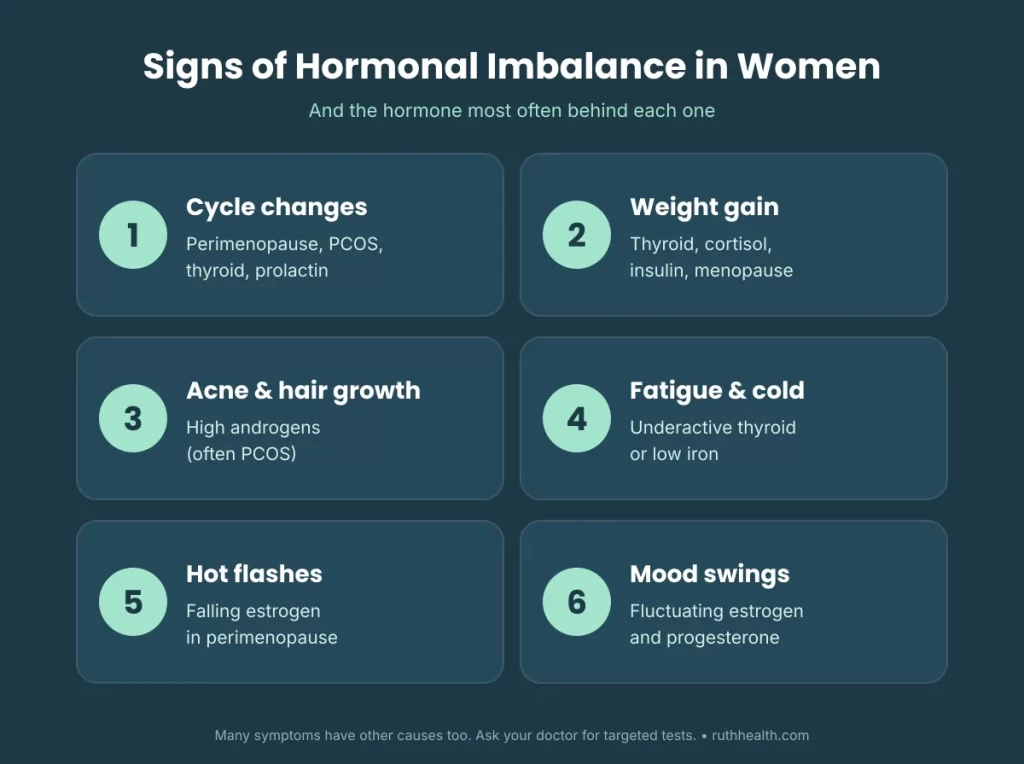
14 signs of hormonal imbalance in women
Remember, as Cleveland Clinic’s Dr. Pelin Batur notes, nearly every symptom of an imbalance can have other causes too.
1. Irregular, heavy or missed periods
Changes to your cycle are one of the clearest signs that something in your hormones has shifted, whether from perimenopause, PCOS, thyroid problems, high prolactin, stress or significant weight change.
2. Unexplained weight gain or difficulty losing weight
According to Cleveland Clinic, excess cortisol and low thyroid hormone can contribute to weight gain. Insulin resistance and menopause also play big roles.
3. Fatigue
Feeling tired all the time can point to thyroid problems, low iron, poor sleep or blood sugar issues.
4. Mood swings, anxiety or low mood
Fluctuating estrogen can affect brain chemicals. Kaiser Permanente notes that when estrogen drops, serotonin may also go down, which can cause anxiety or mood swings. An overactive thyroid can also cause anxiety. Read more about perimenopause anxiety.
5. Acne, especially along the jaw and chin
Adult acne can be linked to higher androgens, as in PCOS. Cleveland Clinic notes that thyroid imbalances can also cause acne.
6. Excess facial or body hair
Coarse hair on the chin, upper lip, chest or belly may mean your body is producing too many androgens, according to UCLA Health.
7. Hair thinning or hair loss
Thyroid problems, high androgens, postpartum hormone shifts and menopause can all cause hair thinning. See our guide to hair loss in women.
8. Hot flashes and night sweats
The hallmark of falling estrogen in perimenopause and menopause, though overactive thyroid and other conditions can also cause sweating. See our guide to hot flashes.
9. Trouble sleeping
Low progesterone, night sweats and high evening cortisol can all disrupt sleep.
10. Low libido
Changes in estrogen, testosterone, thyroid and stress hormones can lower your sex drive.
11. Vaginal dryness
Falling estrogen during perimenopause, menopause, breastfeeding or with some medications can cause dryness and painful sex.
12. Brain fog and poor memory
Common in perimenopause and with thyroid problems.
13. Belly fat and cravings
High cortisol and insulin resistance can both increase cravings for sugary foods and encourage fat storage around the middle. Learn about high cortisol symptoms and insulin resistance.
14. Feeling too hot or too cold
An underactive thyroid often makes you feel cold; an overactive thyroid makes you feel hot and sweaty.
What causes hormonal imbalance in women?
Some causes are natural life stages; others are medical conditions:
Natural causes
- Puberty.
- Menstrual cycle changes and PMS.
- Pregnancy and postpartum.
- Breastfeeding.
- Perimenopause and menopause.
Medical conditions
- Thyroid disease: hypothyroidism (underactive) and hyperthyroidism (overactive). Cleveland Clinic notes that thyroid disease requires treatment.
- PCOS: high androgens and insulin resistance. Read about PCOS symptoms.
- Insulin resistance and type 2 diabetes.
- High prolactin: from a benign pituitary growth or some medications.
- Cushing’s syndrome (too much cortisol) or Addison’s disease (too little), both rare.
- Primary ovarian insufficiency: when the ovaries stop working normally before age 40.
Lifestyle and other factors
- Chronic stress and poor sleep.
- Significant weight gain or loss.
- Over-exercising or under-eating, which can stop periods.
- Some medications, including hormonal birth control, steroids and some antidepressants.
Which hormone tests do you actually need?
There’s no single “hormone panel” that suits everyone. As Dr. Batur explains, women often come in after being told online to “get their hormones checked,” but testing should match your symptoms. Common tests include:
- Thyroid: TSH, sometimes free T4.
- PCOS: testosterone, SHBG, sometimes AMH.
- Missed periods: pregnancy test, FSH, LH, estradiol, prolactin, TSH.
- Blood sugar: fasting glucose or HbA1c.
- Suspected Cushing’s: late-night saliva cortisol, 24-hour urine cortisol or a dexamethasone suppression test.
- Fatigue: full blood count and ferritin (iron), vitamin B12, vitamin D.
A note on perimenopause: hormone tests are often not helpful for diagnosing perimenopause in women over 45, because levels change from day to day. Doctors usually diagnose it based on your age and symptoms.
Be cautious with at-home hormone tests. Many direct-to-consumer saliva or urine tests are hard to interpret and not always reliable.
How to support healthy hormone balance
Treatment depends on the cause. Thyroid disease, PCOS and other conditions need medical treatment. But these habits support your hormones overall:
1. Eat balanced meals with protein, fiber, healthy fats and plenty of vegetables to keep blood sugar steady.
2. Limit sugary drinks and refined carbs, which drive insulin spikes.
3. Exercise regularly, combining cardio and strength training, without overtraining.
4. Sleep 7 to 9 hours on a consistent schedule.
5. Manage stress with breathing exercises, walks, yoga or therapy.
6. Maintain a healthy weight if you can; both too much and too little body fat affect hormones.
7. Limit alcohol and don’t smoke.
8. Eat enough: under-eating, especially with intense exercise, can stop your periods.
What about “hormone balancing” supplements?
Many supplements claim to “balance hormones,” but there’s no single product that can fix every hormone issue, and some can interact with medications or mask symptoms that need medical attention. Some ingredients, like inositol for PCOS, have more research than others.
If you’re considering one, choose third-party tested products and talk to your doctor first. See our hormone balance supplement reviews, scored with our 11-point audit.
When to see a doctor
Make an appointment if you have:
- Irregular, very heavy or missed periods (and you’re not pregnant).
- Unexplained weight gain or loss.
- Persistent fatigue, hair loss or feeling too hot or cold.
- New excess facial or body hair, or severe acne.
- Milky discharge from your nipples when not breastfeeding.
- Hot flashes or menopause symptoms before age 40.
- Mood changes that affect your daily life.
Frequently asked questions
How do I know if my hormones are imbalanced?
Look for patterns of symptoms, such as cycle changes plus acne and hair growth, or fatigue plus weight gain plus feeling cold. A doctor can order targeted blood tests to confirm what’s going on.
Can hormonal imbalance cause weight gain?
Yes. Low thyroid hormone, high cortisol, insulin resistance, PCOS and menopause can all contribute to weight gain, especially around the belly.
Can stress cause a hormonal imbalance?
Yes. Chronic stress raises cortisol and can disrupt your menstrual cycle, sleep and blood sugar control.
What foods help balance hormones?
There’s no magic food, but a diet rich in vegetables, fiber, lean protein, healthy fats and whole grains supports steady blood sugar and overall hormone health.
Can birth control fix a hormonal imbalance?
Hormonal birth control can regulate periods and reduce acne and excess hair in conditions like PCOS, but it treats symptoms rather than the underlying cause. Your doctor can help decide if it’s right for you.
The bottom line
Hormonal imbalance is a broad term for having too much or too little of a hormone. Many hormone changes are a normal part of life, but conditions like thyroid disease, PCOS, insulin resistance, perimenopause and high prolactin can cause real imbalances with symptoms like irregular periods, weight changes, fatigue, acne, hair changes and mood swings.
Because these symptoms have many possible causes, the best first step is to see your doctor for targeted testing rather than relying on online quizzes or supplements. Healthy eating, regular exercise, good sleep and stress management support your hormones whatever the cause. Read more in our hormone balance guides.
