
Finding more hair than usual in your brush, shower drain or on your pillow can be upsetting. Hair loss in women is far more common than most people realize, yet it’s often brushed off or misunderstood. The good news is that many causes are temporary or treatable, especially when they’re caught early.
This guide explains the different types of hair loss in women, the 12 most common causes, the tests worth asking your doctor about, and the treatments that actually have evidence behind them.
Key takeaways
- It’s normal to lose about 50 to 100 hairs a day. Losing noticeably more, or seeing thinning, is worth looking into.
- The two most common types are female pattern hair loss (gradual thinning on top) and telogen effluvium (sudden all-over shedding after stress, illness or childbirth).
- Around 40% of women show some hair loss by age 50.
- Low iron stores (ferritin), thyroid problems, hormone changes and crash diets are common, fixable causes.
- Topical minoxidil is the only FDA-approved medicine for female pattern hair loss. Starting treatment early gives the best results.
How much hair loss is normal?
Each hair grows for several years, rests, then falls out and is replaced. Because of this cycle, losing around 50 to 100 hairs a day is normal, and you may notice more on wash days.
Signs that your hair loss may not be normal include:
- Clumps of hair coming out when you brush or wash.
- A wider parting or more visible scalp on top of your head.
- A thinner ponytail than usual.
- Bald patches, broken hairs, or a scalp that’s itchy, red or sore.
Types of hair loss in women
Doctors divide hair loss into two broad groups: non-scarring (where follicles are still alive and hair can regrow) and scarring (where follicles are damaged). Most hair loss in women is non-scarring.
| Type | What it looks like | Common triggers | Can it regrow? |
|---|---|---|---|
| Female pattern hair loss | Gradual thinning on the crown, widening part; hairline usually stays | Genetics, hormones, age, menopause | Treatment can slow loss and regrow some hair |
| Telogen effluvium | Sudden, diffuse shedding all over the scalp | Childbirth, illness, fever, surgery, stress, crash diets, low iron | Usually regrows within 6 to 12 months once the trigger is fixed |
| Alopecia areata | Round, smooth bald patches | Autoimmune | Often regrows; treatments available |
| Traction alopecia | Thinning at the hairline or where hair is pulled | Tight braids, ponytails, extensions | Yes if caught early; can become permanent |
| Scarring alopecia | Patches with shiny skin, redness, scaling or pain | Inflammatory skin conditions | No, needs urgent dermatology care to stop progression |
Female pattern hair loss
Female pattern hair loss (FPHL) is the most common form of hair loss in women. According to DermNet, around 40% of women show signs of it by age 50. It has a strong genetic link and often becomes noticeable after hormone changes like pregnancy or menopause. Unlike men, women rarely go bald; instead, hair thins over the top of the head while the front hairline usually stays.
Telogen effluvium
Telogen effluvium (TE) is the most frequent cause of diffuse, sudden hair loss in women. A shock to your system pushes many hairs into the resting phase at once. About 2 to 3 months later, they fall out together. That delay is why many women don’t link their shedding to the trigger.
12 common causes of hair loss in women
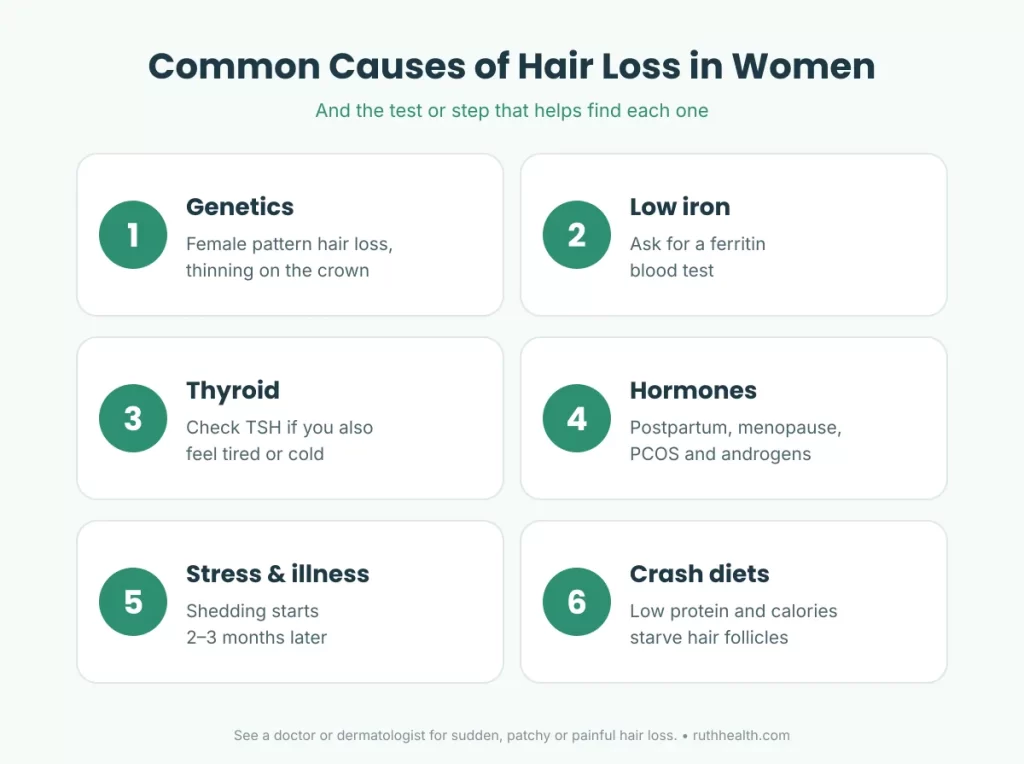
1. Genetics
If your mother, father or other relatives have thinning hair, you’re more likely to develop female pattern hair loss. The genes can come from either side of your family.
2. Low iron and ferritin
Iron is one of the best-studied links to female hair loss. A meta-analysis in Skin Appendage Disorders found women with non-scarring hair loss had significantly lower ferritin (stored iron) than women without hair loss. A study of 2,851 women with telogen effluvium found low ferritin and serum iron were common findings.
Importantly, you can have low ferritin even if you’re not anemic. Heavy periods, pregnancy, a vegetarian diet and frequent blood donation all raise your risk.
3. Thyroid problems
Both an underactive and an overactive thyroid can cause diffuse hair thinning. Other clues include tiredness, weight changes, feeling too hot or cold, and changes in your periods.
4. Childbirth (postpartum hair loss)
High pregnancy hormones keep hair in the growth phase. After birth, hormones drop and that extra hair sheds, usually starting 2 to 4 months postpartum. It typically settles within a year.
5. Menopause and hormone changes
Falling estrogen during perimenopause and menopause can make hair finer and reveal female pattern hair loss. Female pattern hair loss tends to peak after major hormone shifts like pregnancy or menopause.
6. PCOS and high androgens
Polycystic ovary syndrome can raise androgen (male hormone) levels, which may cause thinning on the scalp along with acne or extra facial hair. A review in the International Journal of Women’s Dermatology advises investigating hormone disorders in women with hair loss and signs of high androgens.
7. Stress, illness and surgery
A major illness, high fever (including COVID-19), surgery or severe emotional stress can trigger telogen effluvium a few months later.
8. Crash diets and low protein
Rapid weight loss and diets low in protein, calories, iron or zinc can starve hair follicles of what they need. Hair loss often starts 2 to 3 months after starting a very restrictive diet.
9. Vitamin D deficiency
A study in Skin Pharmacology and Physiology found low ferritin and low vitamin D levels were associated with both telogen effluvium and female pattern hair loss.
10. Medications
Some blood pressure medications, antidepressants, blood thinners, retinoids, thyroid medicines and stopping or changing birth control pills can trigger shedding. Never stop a prescribed medicine without talking to your doctor.
11. Tight hairstyles and harsh treatments
Tight braids, buns, weaves and extensions can cause traction alopecia. Frequent bleaching, relaxers and high heat can damage the hair shaft and cause breakage.
12. Autoimmune and scalp conditions
Alopecia areata, lupus and scalp conditions like psoriasis or fungal infections can cause hair loss. Any patchy loss, redness, scaling or pain should be checked by a dermatologist.
Tests to ask your doctor about
Many causes of hair loss can be found with simple blood tests. A large study of women with telogen effluvium concluded that blood counts, biochemical and hormone tests are important for finding the cause and guiding treatment. Ask your doctor about:
- Ferritin (iron stores) and a full blood count
- Thyroid function (TSH, and sometimes free T4)
- Vitamin D
- Vitamin B12 and folate
- Hormones such as testosterone if you have irregular periods, acne or extra hair growth
- Zinc, in some cases
A dermatologist may also examine your scalp with a magnifying device (dermoscopy), do a gentle “pull test,” or occasionally take a small scalp biopsy.
Treatments that work for hair loss in women
The right treatment depends on the cause, so getting a diagnosis first matters.
Topical minoxidil
Topical minoxidil is the only drug with proven effectiveness for promoting hair growth in women with pattern hair loss, and it’s FDA-approved for this use. According to UF Health, the 2% solution or 5% foam is recommended for women.
- Results take 3 to 6 months; you may notice a temporary increase in shedding in the first weeks, which is a sign it’s working.
- It must be used long term. Stopping usually leads to the regrown hair falling out.
- It isn’t recommended during pregnancy or breastfeeding.
Prescription treatments
For female pattern hair loss, a dermatologist may suggest anti-androgen medicines like spironolactone, especially if you have signs of high androgens. Low-dose oral minoxidil is also increasingly prescribed. These need medical supervision.
Treating the underlying cause
- Iron deficiency: iron supplements or infusions if your ferritin is low (under medical guidance, since too much iron is harmful).
- Thyroid problems: correcting thyroid levels often stops shedding.
- Telogen effluvium: once the trigger is resolved, hair usually regrows on its own within 6 to 12 months.
Other options
Platelet-rich plasma (PRP) injections, low-level laser devices, and microneedling are emerging treatments with some promising results, though evidence is still developing. Hair transplantation can be an option for some women with stable pattern hair loss.
Can supplements help hair loss?
Supplements help most when they fix a real deficiency, such as low iron, vitamin D or B12. If your levels are normal, taking extra is unlikely to grow more hair.
Biotin is a common ingredient in hair supplements, but true biotin deficiency is rare and there’s little evidence it helps healthy people. High-dose biotin can also interfere with some lab tests, including thyroid and heart tests, so tell your doctor if you take it.
If you’re comparing products, see our hair and skin supplement reviews and how we score them using our 11-point review method.
Daily habits to protect your hair
- Eat enough protein (eggs, fish, beans, dairy) and iron-rich foods (lean red meat, lentils, spinach, fortified cereals).
- Avoid crash diets; lose weight gradually if you need to.
- Wear looser hairstyles and give your hair breaks from extensions.
- Limit bleaching, relaxers and heat; use a heat protectant.
- Be gentle when hair is wet, as it breaks more easily.
- Manage stress and get enough sleep.
When to see a doctor
Book an appointment if:
- You’re losing hair suddenly or in clumps.
- You notice bald patches, or your scalp is red, scaly, itchy or painful.
- Hair loss comes with other symptoms like fatigue, weight change, irregular periods, acne or facial hair.
- Your part or crown has noticeably widened.
Early treatment matters. According to a clinical review of female pattern hair loss, treatments are more effective at stopping hair loss from getting worse than at regrowing hair, so starting early gives you the best chance.
Frequently asked questions
Will my hair grow back?
It depends on the cause. Hair lost from telogen effluvium, childbirth, iron deficiency or thyroid problems usually grows back once the cause is treated. Female pattern hair loss can be slowed and partly reversed with treatment. Scarring alopecia does not regrow, so early treatment is essential.
How long does telogen effluvium last?
Shedding usually lasts 3 to 6 months after the trigger. Regrowth then takes several more months, and it can take a year or more to see your full volume return.
What deficiency causes hair loss in women?
Low iron stores (ferritin) are the most common nutritional link. Low vitamin D, vitamin B12, zinc and protein can also contribute.
Can stress really make your hair fall out?
Yes. Severe stress can trigger telogen effluvium, usually 2 to 3 months later. The good news is that the hair typically grows back once stress settles.
Does minoxidil work for women?
Yes. It’s the only FDA-approved medicine for female pattern hair loss, and studies show it can slow loss and regrow hair in many women. You need to use it consistently for at least 3 to 6 months to judge results.
The bottom line
Hair loss in women is common and often treatable. The most frequent causes are female pattern hair loss and telogen effluvium, but low iron, thyroid problems, hormone changes and crash diets are also major culprits. A few blood tests can uncover many of them.
If you notice your hair thinning, don’t wait. See your doctor or a dermatologist, find the cause, and start treatment early for the best results. Read more in our hair, skin and nails guides.
