
You finish a meal and an hour later you’re raiding the cupboard again. If you feel hungry all the time, it’s easy to blame willpower. But constant hunger usually has a cause, and most of the time it’s something you can fix: what you eat, how you sleep, your stress levels, your hormones or, occasionally, a medical condition.
This guide explains the 11 most common reasons you might be always hungry, how to tell real hunger from cravings, and practical ways to feel full for longer. Read on to find out why you are always hungry and what to do about it.
Key takeaways
- The most common causes of being always hungry are meals low in protein and fiber, ultra-processed food, poor sleep, stress and not eating enough.
- Short sleep raises the hunger hormone ghrelin and lowers the fullness hormone leptin.
- In an NIH study, people ate about 500 extra calories a day on an ultra-processed diet.
- Hunger around your period, in pregnancy and in perimenopause is often hormonal.
- Constant hunger with thirst, frequent urination, weight loss or a racing heart needs a doctor’s check.
Why do I feel hungry all the time?
Hunger is controlled by a mix of hormones and signals from your stomach, gut, fat tissue and brain. Ghrelin, made in your stomach, drives hunger. Leptin, made by fat cells, and gut hormones like GLP-1 and PYY help you feel full. Anything that throws these signals off balance can leave you feeling hungry even when you’ve eaten enough.
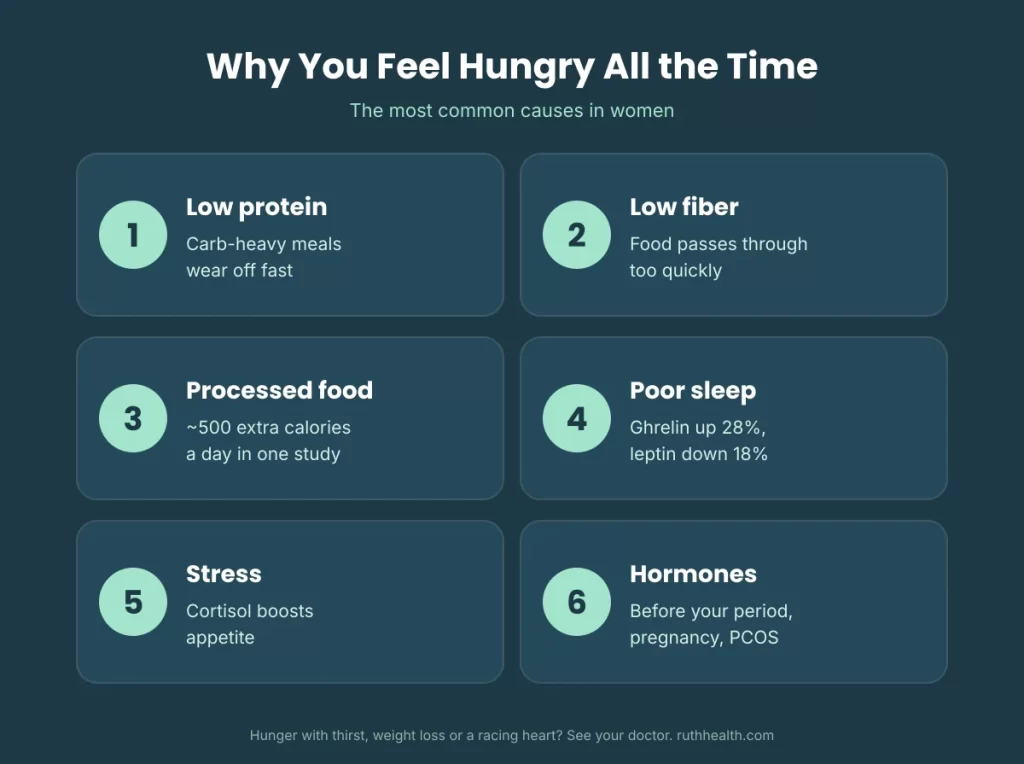
11 reasons you’re always hungry
1. Your meals are low in protein
Protein is the most filling nutrient. Breakfasts like toast, cereal or a pastry are mostly carbs and tend to leave you hungry again quickly. Aim for a source of protein at every meal.
2. You’re not eating enough fiber
Fiber slows digestion and adds bulk. Vegetables, beans, lentils, oats, fruit and whole grains help you stay full for longer.
3. You eat a lot of ultra-processed food
Ultra-processed foods are easy to eat quickly and in large amounts. In a tightly controlled NIH trial, people ate about 500 more calories per day on an ultra-processed diet than on an unprocessed diet, even though the meals offered were matched for calories, sugar, fat and fiber. They also ate faster.
4. You’re not sleeping enough
Sleep is one of the strongest hunger regulators. In one randomized study, two nights of restricted sleep lowered leptin by 18%, raised ghrelin by 28% and increased hunger by 24%, with the biggest rise in appetite for high-carb foods. If you often wake in the night, read about waking up at 3am.
5. You’re stressed
Stress raises cortisol, which can increase appetite and cravings for comfort foods. Learn the signs of high cortisol in women.
6. You’re eating too little
Skipping meals or following a very strict diet can backfire. Your body pushes back with stronger hunger, which often leads to overeating later in the day.
7. You drink your calories
Juice, soda, sweet coffees and alcohol add calories without filling you up the way food does. Alcohol can also lower your inhibitions around food.
8. You’re thirsty
Mild dehydration can feel like hunger. Try a glass of water first and wait 10 to 15 minutes.
9. You eat while distracted
Eating in front of a screen or on the go makes it harder to notice when you’re full. You may also remember the meal less, which makes you hungrier later.
10. Hormonal changes
Many women feel hungrier in the week or two before their period. Learn more about PMS symptoms. Hunger also rises in pregnancy and can shift during perimenopause. Conditions like PCOS and insulin resistance can affect appetite too.
11. Medical conditions and medications
Constant hunger can be a sign of:
- High blood sugar or diabetes, especially with thirst, frequent urination, tiredness or weight loss.
- An overactive thyroid (hyperthyroidism), often with weight loss, a racing heart, sweating and anxiety.
- Low blood sugar in people taking certain diabetes medicines.
- Medications such as some antidepressants, antipsychotics and steroids.
If you’re losing weight without trying while feeling ravenous, see a doctor.
Is it real hunger or a craving?
| Physical hunger | Emotional hunger or craving |
|---|---|
| Builds gradually | Comes on suddenly |
| Any food would do | You want something specific (often sweet or salty) |
| Stomach growling, low energy | Triggered by stress, boredom or emotions |
| Stops when you’re full | Can continue after you’re full |
| No guilt afterward | Often followed by guilt |
How to stop being hungry all the time
- Build balanced meals: protein, fiber-rich carbs, vegetables and some healthy fat at every meal.
- Start the day with protein: eggs, Greek yogurt or cottage cheese instead of cereal or pastries.
- Choose mostly whole foods that need chewing.
- Eat slowly, without screens, and pause halfway through.
- Drink water with meals and before snacks.
- Plan filling snacks like an apple with peanut butter, hummus with vegetables or a handful of nuts.
- Sleep 7 to 9 hours and keep a regular schedule.
- Find non-food ways to manage stress, like walking, calling a friend or breathing exercises.
- Don’t crash diet. A moderate approach is easier to stick to and causes less rebound hunger.
Do appetite suppressant supplements work?
Fiber supplements such as glucomannan or psyllium may help some people feel fuller, but the effect is modest. Be careful with “appetite suppressant” pills that contain stimulants. If you’re considering one, compare products in our weight loss supplement reviews, scored with our 11-point audit.
When to see a doctor
Talk to your doctor if your hunger is new or extreme, or if it comes with:
- Excessive thirst or peeing more often.
- Unexplained weight loss or weight gain.
- A racing heart, shaking or sweating.
- Extreme tiredness, blurred vision or slow-healing cuts.
Frequently asked questions about being always hungry
Why am I always hungry even after eating?
Usually because your meals are low in protein and fiber, you’re eating highly processed foods, or you’re short on sleep. Less often, it’s a sign of high blood sugar or an overactive thyroid.
Why am I always hungry before my period?
Hormone shifts in the second half of your cycle can increase appetite and cravings, especially for sweets and carbs. It usually settles once your period starts.
Can stress make you always hungry?
Yes. Stress raises cortisol, which can increase appetite and cravings for high-calorie foods.
What should I eat if I’m always hungry?
Choose meals with protein (eggs, fish, chicken, tofu, beans), fiber (vegetables, oats, lentils) and healthy fats. These keep you full for longer than refined carbs.
Is being hungry all the time a sign of diabetes?
It can be, especially if you’re also very thirsty, peeing more often, tired or losing weight. Ask your doctor about a blood sugar test. Learn how to lower blood sugar naturally.
The bottom line on always hungry
Feeling always hungry is common and usually has a fixable cause. Eat more protein and fiber, cut back on ultra-processed food, sleep 7 to 9 hours and manage stress. If your hunger is extreme or comes with thirst, weight changes or a racing heart, see your doctor to rule out a medical cause.
