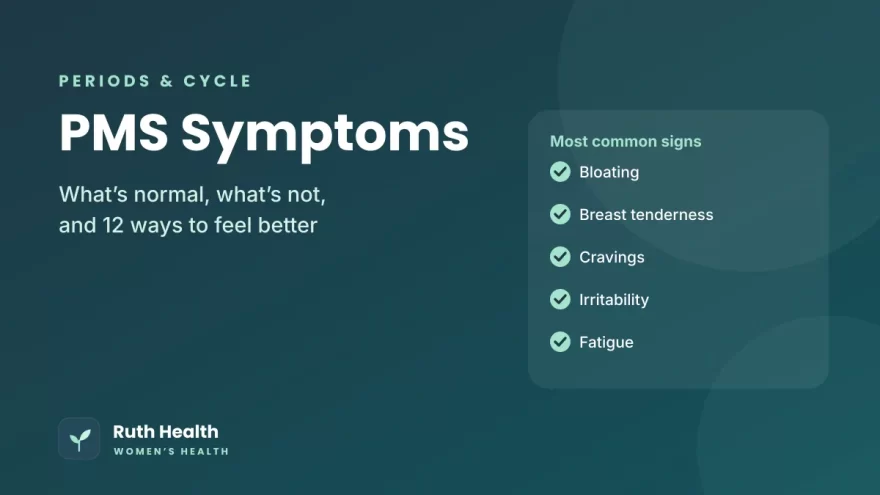
Bloating, sore breasts, cravings, irritability, tearfulness, fatigue: for many women, the week or two before a period brings a predictable wave of symptoms. Premenstrual syndrome (PMS) is extremely common, but that doesn’t mean you have to just put up with it.
This guide explains which PMS symptoms are normal, how to tell PMS from PMDD or early pregnancy, and 12 evidence-based ways to feel better. This guide explains everything you need to know about pms symptoms.
Key takeaways
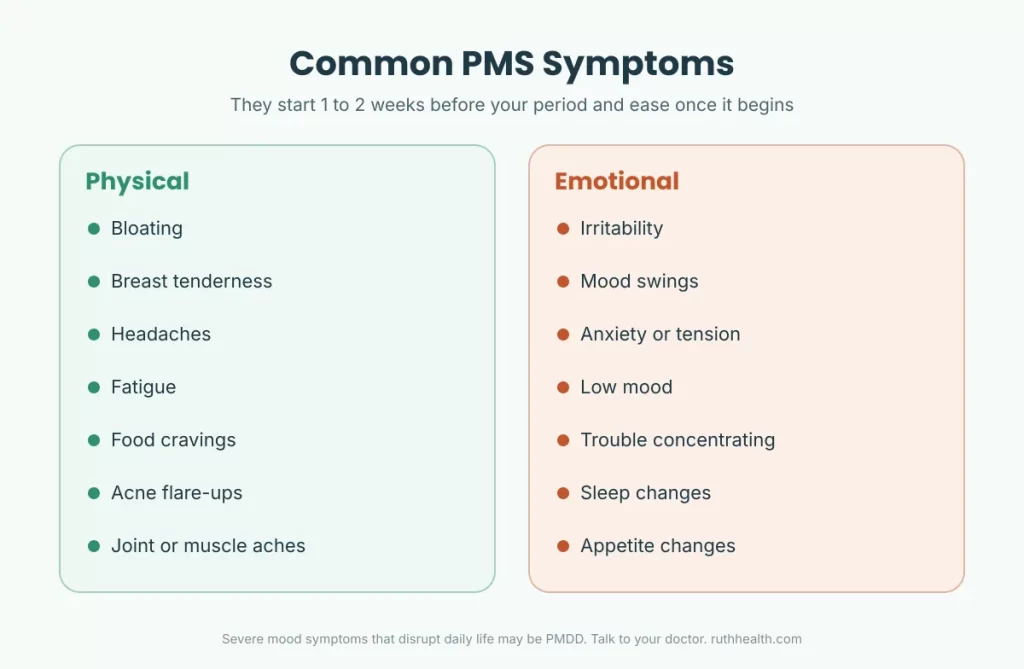
- PMS is a group of physical and emotional symptoms that start 1 to 2 weeks before your period and ease once it begins.
- It’s caused by normal hormone changes after ovulation and how your brain responds to them.
- Common symptoms include bloating, breast tenderness, cravings, fatigue, irritability, anxiety and mood swings.
- PMDD is a severe form that seriously affects mood and daily life and needs medical treatment.
- Exercise, a balanced diet, less salt, caffeine and alcohol, good sleep and stress management help many women. Medication can help severe symptoms.
What is PMS?
Premenstrual syndrome describes symptoms that appear in the luteal phase of your cycle, the 1 to 2 weeks between ovulation and your period, and go away within a few days of your period starting. The pattern matters: symptoms that come and go with your cycle point to PMS, while symptoms present all month suggest something else. According to the Office on Women’s Health, more than 90% of women report some premenstrual symptoms, while fewer than 5% of women of childbearing age have PMDD, the severe form.
What causes PMS?
After ovulation, estrogen and progesterone rise and then fall sharply before your period. Experts think some women are more sensitive to these normal changes, which affect brain chemicals like serotonin. Low serotonin can affect mood, sleep and cravings. Stress, poor sleep and lifestyle factors can make symptoms worse. The exact cause isn’t fully understood, but cyclic hormone changes play a central role, which is why symptoms disappear during pregnancy and after menopause.
Common PMS symptoms
Physical symptoms
- Bloating and water retention.
- Breast tenderness or swelling.
- Headaches.
- Fatigue and low energy.
- Food cravings, especially for sweets and salty foods.
- Acne flare-ups.
- Constipation or diarrhea.
- Joint or muscle aches.
Emotional symptoms
- Irritability and short temper.
- Mood swings and tearfulness.
- Anxiety or feeling tense.
- Low mood.
- Trouble concentrating.
- Changes in sleep (too much or too little).
- Changes in appetite.
PMS vs PMDD
Premenstrual dysphoric disorder (PMDD) is a severe form of PMS that mainly affects mood. It can cause deep sadness or hopelessness, severe irritability or anger, intense anxiety, feeling out of control, and can seriously affect work and relationships. PMDD is a recognized medical condition and responds well to treatment, so talk to your doctor if your symptoms feel this severe. If you ever have thoughts of harming yourself, seek help immediately; in the US, call or text 988.
PMS vs early pregnancy
Both can cause breast tenderness, fatigue, bloating, cramps and mood changes. Clues that point to pregnancy include a missed period, nausea, spotting around the time your period was due, and symptoms that continue rather than ease. If there’s a chance you could be pregnant, take a test.
| Symptom | PMS | Early pregnancy |
|---|---|---|
| Timing | 1 to 2 weeks before your period, eases once it starts | Continues past the expected period |
| Period | Arrives as expected | Missed |
| Breast tenderness | Eases when period starts | Often continues or increases |
| Nausea | Uncommon | Common |
| Spotting | Uncommon | Possible light implantation bleeding |
12 ways to relieve PMS symptoms
1. Exercise regularly
Aerobic exercise like brisk walking, cycling or swimming can improve mood, energy and bloating. Aim for most days of the week.
2. Eat balanced meals
Regular meals with protein, fiber and complex carbohydrates help steady blood sugar and mood.
3. Cut back on salt
Less salt in the week before your period can reduce bloating and water retention.
4. Limit caffeine
Caffeine may worsen breast tenderness, anxiety and sleep problems.
5. Reduce alcohol
Alcohol can worsen mood and sleep.
6. Get enough calcium
Calcium-rich foods like dairy, fortified plant milks and leafy greens may help some PMS symptoms.
7. Prioritize sleep
Aim for 7 to 9 hours. Poor sleep makes irritability and cravings worse.
8. Manage stress
Yoga, meditation, breathing exercises and time outdoors can ease emotional symptoms.
9. Track your symptoms
Use an app or diary for 2 to 3 cycles. It helps you plan ahead and gives your doctor useful information.
10. Use heat for cramps
A heating pad or warm bath can relax cramping muscles. See our guide to period cramps relief.
11. Try pain relief
Over-the-counter anti-inflammatories like ibuprofen can ease cramps, headaches and breast pain (if safe for you).
12. Ask about medical treatment
For moderate to severe PMS or PMDD, doctors may suggest:
- SSRIs (antidepressants), taken daily or just in the second half of your cycle.
- Hormonal birth control to even out hormone swings.
- Cognitive behavioral therapy (CBT).
Do supplements help PMS?
Calcium, vitamin B6, magnesium and chasteberry (vitex) are popular for PMS. Some have modest evidence, but quality varies and some interact with medications or aren’t suitable in pregnancy. Talk to your doctor before trying them, and see our hormone balance supplement reviews, scored with our 11-point audit.
When to see a doctor
See your doctor if:
- Symptoms disrupt your work, relationships or daily life.
- Mood symptoms are severe, or you feel hopeless.
- Symptoms don’t follow your cycle or don’t go away after your period.
- Over-the-counter treatments and lifestyle changes aren’t helping.
- Your periods are irregular. Read about irregular periods.
Frequently asked questions about pms symptoms
When does PMS start?
Usually 1 to 2 weeks before your period, after ovulation, and it eases within a few days of your period starting.
Can PMS get worse with age?
Many women notice PMS changes in their late 30s and 40s, as hormone swings become more pronounced in perimenopause.
Why do I crave sugar before my period?
Hormone changes can affect serotonin and blood sugar control, increasing cravings for sweets and carbs.
Can PMS cause anxiety?
Yes. Anxiety, tension and irritability are common PMS symptoms. Read about perimenopause anxiety if you’re in your 40s.
Is PMS the same as PMDD?
No. PMDD is a severe form of PMS with significant mood symptoms that need medical treatment.
The bottom line on pms symptoms
PMS is common and caused by normal hormone changes after ovulation and your body’s sensitivity to them. Regular exercise, balanced meals, less salt, caffeine and alcohol, good sleep and stress management help many women. If symptoms are severe or affect your daily life, talk to your doctor, as effective treatments are available.
Read more in our PMS and cycle health guides.