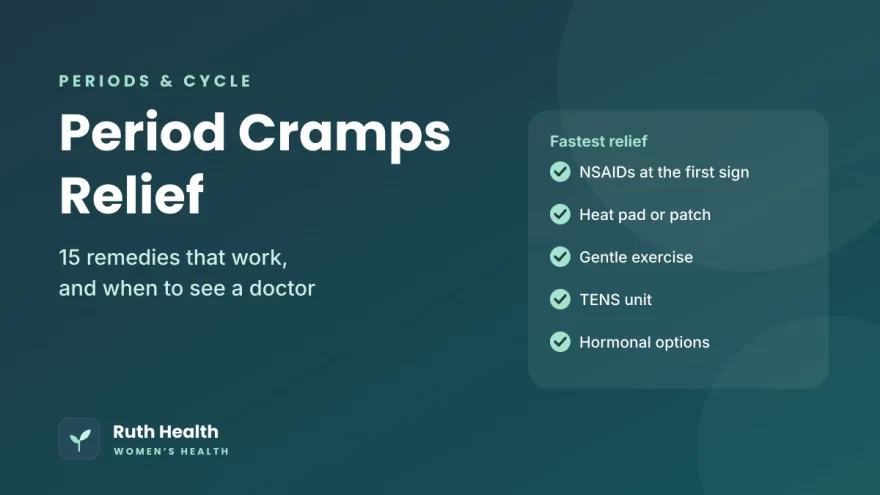
Period cramps can range from a mild ache to pain so intense that you have to cancel plans, miss work or curl up with a heating pad. Painful periods are one of the most common health complaints women have, but severe pain isn’t something you should simply accept.
This guide explains what causes period cramps, 15 remedies that actually work, and the signs that your pain might be due to an underlying condition like endometriosis. This guide explains everything you need to know about period cramps relief.
Key takeaways
- Painful periods (dysmenorrhea) affect 50% to 90% of women and girls of reproductive age.
- Cramps are caused by prostaglandins, chemicals that make the uterus contract.
- NSAIDs like ibuprofen and hormonal birth control are first-line treatments.
- Heat and exercise are non-drug options with good evidence.
- Severe pain that doesn’t respond to treatment may be a sign of endometriosis or fibroids and needs a doctor’s review.
What causes period cramps?
During your period, the lining of your uterus releases chemicals called prostaglandins. These make the uterus contract to shed its lining. Higher levels of prostaglandins cause stronger contractions, reduced blood flow to the uterus, and more pain. They can also cause nausea, diarrhea and headaches.
There are two types:
- Primary dysmenorrhea: common cramps with no underlying condition. It usually starts in the teen years and is typically most severe on the first day of bleeding, lasting up to 72 hours.
- Secondary dysmenorrhea: pain caused by a condition such as endometriosis, adenomyosis, fibroids or pelvic infection. It often starts later in life or gets worse over time.
How common are period cramps?
Very common. According to American Family Physician, dysmenorrhea occurs in 50% to 90% of adolescent girls and women of reproductive age and is a leading cause of missed school and work. A meta-analysis of over 20,000 young women in 38 countries found a prevalence of 71%.
15 remedies for period cramps that work
Medications
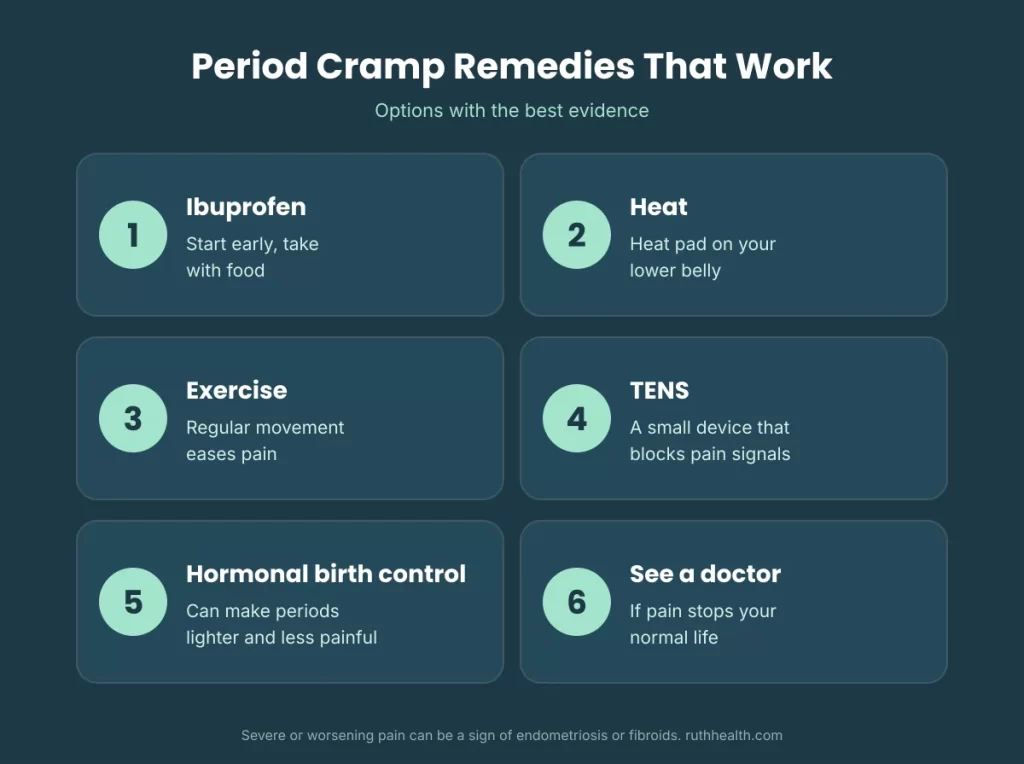
1. NSAIDs (ibuprofen, naproxen). These are first-line treatment because they block prostaglandin production. For best results, ACOG recommends starting medication 1 to 2 days before your period is expected and continuing through the first days. Take with food, and avoid if you have stomach ulcers, kidney problems or are told not to take them.
2. Hormonal birth control. Pills, patches, rings, the hormonal IUD and implants thin the uterine lining and reduce prostaglandins. Hormonal therapy is also considered first-line and can be combined with NSAIDs.
3. Acetaminophen (paracetamol). Less effective than NSAIDs for cramps but an option if you can’t take them.
Non-drug remedies with good evidence
4. Heat therapy. A heating pad, hot water bottle or heat patch on your lower belly relaxes the uterus. A 2024 review lists heat therapy and exercise as non-drug treatments with strong evidence.
5. Exercise. Regular aerobic exercise and stretching can reduce period pain over time.
6. TENS. Transcutaneous electrical nerve stimulation units deliver gentle electrical pulses that block pain signals. Good evidence supports TENS, heat, exercise and self-acupressure.
7. Acupressure. Pressing on the point about four finger-widths above your inner ankle bone (SP6) may help.
Other helpful steps
8. Warm bath. Relaxes muscles and helps you unwind.
9. Gentle yoga. Poses like child’s pose, cat-cow and reclined bound angle can ease tension.
10. Massage. Gently massage your lower abdomen in circles.
11. Stay hydrated. Can reduce bloating that adds to discomfort.
12. Limit caffeine, salt and alcohol around your period.
13. Get enough sleep. Pain feels worse when you’re tired.
14. Track your cycle so you can start pain relief early.
15. Consider supplements carefully. Magnesium, vitamin B1, ginger and omega-3s have some evidence, but less than first-line treatments, and should be used alongside them. See our hormone balance supplement reviews.
| Remedy | Evidence | Best for |
|---|---|---|
| NSAIDs (ibuprofen, naproxen) | Strong | Most women with cramps |
| Hormonal birth control | Strong | Frequent, severe cramps; also need contraception |
| Heat therapy | Strong | Quick, drug-free relief |
| Exercise | Good | Long-term reduction |
| TENS | Good | Drug-free relief |
| Supplements | Limited | Add-on to first-line treatment |
Signs your cramps could be something more
Women who don’t get adequate relief with NSAIDs and hormonal contraceptives should be re-evaluated for secondary dysmenorrhea. In one study of women whose pelvic pain didn’t respond to NSAIDs, about 80% had endometriosis.
See your doctor if:
- Pain is severe enough to stop you doing normal activities.
- Pain doesn’t improve with NSAIDs or hormonal birth control after a few cycles.
- Pain started in your 20s or later, or is getting worse.
- You have pain during sex, bowel movements or urination.
- You have very heavy bleeding, bleeding between periods, or irregular periods.
- You’re having trouble getting pregnant.
- You have fever or unusual discharge (possible infection).
Frequently asked questions about period cramps relief
How can I stop period cramps fast?
Take an NSAID like ibuprofen with food and apply heat to your lower belly. Starting NSAIDs a day before your period is due works even better.
Why are my period cramps so bad?
Higher prostaglandin levels cause stronger contractions. But very severe or worsening pain can be caused by endometriosis, adenomyosis or fibroids, so see a doctor.
Do period cramps get better with age?
For many women, primary cramps ease with age and after childbirth. Pain that gets worse with age should be checked.
Can exercise help period cramps?
Yes. Regular aerobic exercise and stretching can reduce period pain over time.
Is it normal to throw up from period cramps?
Some women feel nauseous due to prostaglandins, but frequent vomiting or pain that stops you functioning should be assessed by a doctor.
The bottom line on period cramps relief
Period cramps are very common and caused by prostaglandins that make the uterus contract. NSAIDs and hormonal birth control are the most effective treatments, and heat, exercise, TENS and acupressure have good evidence as drug-free options. If your pain is severe, getting worse, or doesn’t respond to treatment, see your doctor to rule out conditions like endometriosis.
Read more about PMS symptoms and our PMS and cycle health guides.