You fall asleep fine, but like clockwork, you’re wide awake at 3 a.m. Your mind starts racing, you check the time, and you lie there for an hour or more before drifting off again, only to wake up exhausted. Waking in the middle of the night is one of the most common sleep complaints, especially for women in their 40s and 50s.
This guide explains why you wake at 3 a.m., the most common causes in women, and practical steps to sleep through the night. This guide explains everything you need to know about waking up at 3am.
Key takeaways
- Waking briefly at night is normal; we cycle through lighter sleep several times each night.
- The problem is when you can’t fall back asleep, which is a form of insomnia.
- Common causes in women include stress and anxiety, hot flashes and night sweats, needing to pee, alcohol, blood sugar dips and sleep apnea.
- Cortisol naturally starts rising in the early morning, which can make it harder to fall back asleep when you’re stressed.
- The most effective long-term treatment for insomnia is CBT for insomnia (CBT-I).
Why do we wake up in the night?
Sleep happens in cycles of about 90 minutes, moving between light sleep, deep sleep and REM (dreaming) sleep. In the second half of the night, sleep becomes lighter, with more REM and more brief awakenings. Most people wake several times a night and don’t remember it.
Waking at 3 or 4 a.m. becomes a problem when something keeps you awake, such as a racing mind, heat, a full bladder or pain.
Why 3 a.m.?
By the early hours, you’ve had most of your deep sleep, so your “sleep pressure” is lower and it’s easier to wake. Your body’s cortisol, which normally peaks within an hour of waking, starts rising in the early morning, and stress can amplify this, making you feel alert and anxious.
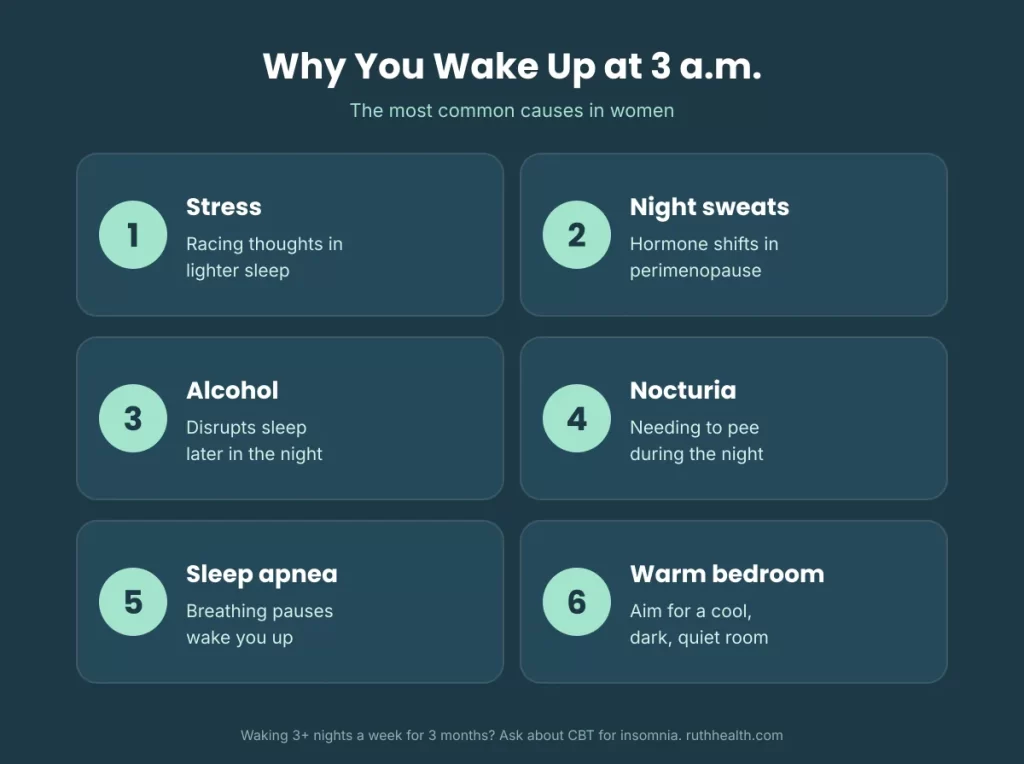
10 common causes of waking up at 3 a.m.
1. Stress and anxiety
Worry and rumination are among the biggest causes. A busy mind that’s been suppressed during the day often surfaces at night. Read about high cortisol symptoms.
2. Hot flashes and night sweats
In perimenopause and menopause, night sweats commonly wake women, and sleep after a hot flash is often broken. Experts note that awakenings in the middle of the night are a top sleep problem for midlife women. Read about night sweats in women.
3. Needing to pee (nocturia)
A full bladder, drinking late in the evening, menopause changes and overactive bladder can all wake you. Read about bladder leakage.
4. Alcohol
Alcohol helps you fall asleep but disrupts the second half of the night as it’s metabolized, causing lighter sleep and early waking.
5. Caffeine
Caffeine stays in your system for many hours. An afternoon coffee can still affect your sleep at 3 a.m.
6. Blood sugar dips
A large, carb-heavy dinner or eating very late can lead to blood sugar swings that may wake some people.
7. Sleep apnea
Pauses in breathing cause repeated awakenings. Signs include snoring, gasping and daytime sleepiness.
8. Depression
Early morning waking with difficulty getting back to sleep is a classic sign of depression.
9. A warm or noisy bedroom
Your body temperature naturally drops at night. A hot room, too many covers or noise and light can wake you.
10. Medications and health conditions
Some medicines (like steroids and some antidepressants), pain, acid reflux, restless legs and an overactive thyroid can disrupt sleep.
How to stop waking up at 3 a.m.
During the day
- Get morning daylight to strengthen your body clock.
- Exercise regularly, but not too close to bedtime.
- Limit caffeine to before noon.
- Manage stress with daily relaxation or a “worry time” earlier in the evening: write down worries and a plan for tomorrow.
In the evening
- Avoid alcohol within 3 to 4 hours of bed.
- Eat dinner 2 to 3 hours before bed, and include protein and fiber.
- Reduce drinks in the 2 hours before bed.
- Keep a consistent bedtime and wake time, even on weekends.
- Dim lights and put screens away 30 to 60 minutes before bed.
- Keep your bedroom cool, dark and quiet.
When you wake at 3 a.m.
- Don’t check the time. Clock-watching increases anxiety.
- Breathe slowly: in for 4 seconds, out for 6 to 8 seconds.
- Try a body scan or progressive muscle relaxation.
- If you’re awake for about 20 minutes, get up. Go to another room with dim light and do something calm, like reading a paper book, until you feel sleepy. Then go back to bed.
- Avoid your phone.
Does magnesium help you sleep through the night?
Magnesium may help some people relax and fall asleep a bit faster, especially if they’re low in it, though evidence is limited. Read our guide to magnesium for sleep, or compare products in our sleep and stress supplement reviews, scored with our 11-point audit.
CBT for insomnia
If you regularly wake and can’t get back to sleep, CBT for insomnia (CBT-I) is the recommended first-line treatment. It helps reset your sleep patterns and calm a racing mind, and its benefits last longer than sleeping pills. It’s available through therapists, apps and online programs.
When to see a doctor
See your doctor if:
- You wake at night and can’t get back to sleep at least 3 nights a week for 3 months.
- You feel exhausted during the day.
- You snore loudly, gasp or stop breathing during sleep.
- You wake with night sweats, palpitations or need to pee several times a night.
- You also feel low, hopeless or anxious.
Frequently asked questions about waking up at 3am
Why do I wake up at 3 a.m. every night?
Common reasons include stress, hot flashes or night sweats, needing to pee, alcohol, caffeine, a warm bedroom and sleep apnea. Your body’s natural early-morning rise in cortisol can make it harder to drift off again.
Is waking up at 3 a.m. a sign of anxiety?
It can be. Anxiety and stress often cause early waking with a racing mind. Depression can also cause early morning waking.
Is waking at night a sign of menopause?
Yes, night sweats and hormone changes in perimenopause and menopause commonly disrupt sleep.
What should I do when I can’t fall back asleep?
Avoid checking the time, use slow breathing or relaxation, and if you’re awake for about 20 minutes, get up and do something calm until you feel sleepy.
Should I take sleeping pills?
Sleeping pills can help short term but aren’t a long-term solution. CBT-I is more effective over time. Talk to your doctor.
The bottom line on waking up at 3am
Waking at 3 a.m. is common, especially in women in midlife. Stress, hot flashes, needing to pee, alcohol, caffeine and sleep apnea are among the most common causes. Good daytime habits, a cool bedroom, avoiding late alcohol and screens, and calm strategies when you wake can help. If it continues, CBT for insomnia is the most effective long-term treatment.
Read more in our sleep guides.