Waking up drenched, with damp pajamas and sheets, is unpleasant and worrying. Night sweats are very common in women, especially in their 40s and 50s, and most of the time the cause is harmless and treatable. But occasionally they’re a sign of something that needs medical attention.
This guide explains what counts as true night sweats, the 10 most common causes in women, the warning signs that need a doctor, and how to get a better night’s sleep.
Key takeaways
- Night sweats are heavy sweating during sleep that can soak your clothes or sheets, even when your room isn’t hot.
- They’re common: up to 41% of primary care patients report them, most often between ages 41 and 55.
- Perimenopause and menopause are the most common cause in midlife women.
- Other causes include medications, anxiety, acid reflux, sleep apnea, overactive thyroid, low blood sugar and infections.
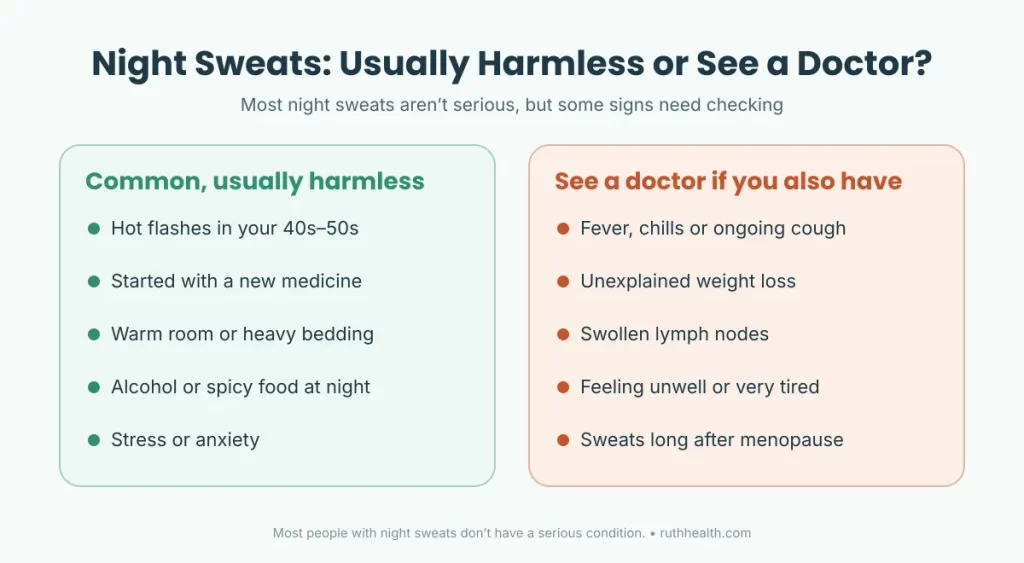
- Most people with night sweats don’t have a serious condition, but see a doctor if they come with fever, weight loss or swollen glands.
What are night sweats?
Everyone sweats a little at night, especially in a warm room or under heavy covers. True night sweats are different. They’re episodes of heavy sweating during sleep, often enough to drench your nightclothes and bedding, that happen even when your bedroom isn’t too hot.
A simple definition used in research is “sweating at night even when it is not excessively hot in your bedroom.”
How common are night sweats?
Very common. According to American Family Physician, a systematic review found night sweats in 10% to 41% of primary care patients, with the highest rates between ages 41 and 55. Yet patients rarely mention them to their doctors unless asked: in one study, only 12% of patients who had night sweats reported them.
The reassuring news: most patients with persistent night sweats in primary care don’t have a serious underlying disorder.
10 common causes of night sweats in women
1. Perimenopause and menopause
Night sweats are hot flashes that happen while you sleep. As estrogen falls, the brain’s temperature control becomes more sensitive, triggering sudden heat and sweating. This is a very common cause of night sweats in perimenopausal women. Read our full guide to hot flashes.
2. Medications
Many common medicines can cause night sweats, especially antidepressants, as well as steroids like prednisone, some diabetes medicines, hormone treatments, fever reducers and some blood pressure drugs. If your night sweats started after a new medication, talk to your doctor. Don’t stop prescribed medicines on your own.
3. Anxiety and stress
Anxiety, panic disorder and PTSD are associated with night sweats. Read about perimenopause anxiety.
4. Acid reflux (GERD)
Reflux is one of the conditions commonly associated with night sweats, possibly due to nerve signals triggered by acid.
5. Obstructive sleep apnea
Pauses in breathing during sleep can cause sweating. In one study, treatment with a CPAP machine reduced night sweats to 11.5% of patients. Signs include loud snoring, gasping and daytime sleepiness.
6. Overactive thyroid (hyperthyroidism)
Too much thyroid hormone speeds up your metabolism, causing heat intolerance, sweating, weight loss and a racing heart.
7. Low blood sugar
People with diabetes who take insulin or certain tablets can have low blood sugar overnight, which causes sweating, shaking and nightmares.
8. Infections
Tuberculosis is classically associated with night sweats, along with other infections such as endocarditis, HIV and abscesses. These usually come with fever.
9. Alcohol
Drinking in the evening widens blood vessels and disrupts sleep, which can trigger sweating.
10. Cancer (rare)
Night sweats can be an early symptom of some cancers, most commonly lymphoma. But as MedicineNet notes, people with undiagnosed cancer usually have other symptoms as well, such as unexplained weight loss and fever.
| Cause | Other clues |
|---|---|
| Perimenopause or menopause | Hot flashes in the daytime, irregular periods, age 40s to 50s |
| Medication | Started after a new medicine or dose change |
| Anxiety | Racing thoughts, worry, palpitations |
| Acid reflux | Heartburn, sour taste, worse after late meals |
| Sleep apnea | Loud snoring, gasping, daytime sleepiness |
| Overactive thyroid | Weight loss, racing heart, feeling hot all day |
| Low blood sugar | Diabetes medication, shaking, nightmares |
| Infection | Fever, chills, cough, feeling unwell |
| Lymphoma (rare) | Unexplained weight loss, fever, swollen lymph nodes, itching |
Night sweats vs. hot flashes
In women, the two are often the same thing. Night sweats from menopause are hot flashes that happen while you’re asleep. Typically you’ll feel a sudden wave of heat, sweat, then feel cold and clammy as it passes. Daytime hot flashes, irregular periods and your age are strong clues that menopause is the cause.
When to see a doctor about night sweats
Most night sweats are not serious, but see your doctor if they:
- Happen regularly and disrupt your sleep.
- Come with fever, chills or a cough that won’t go away.
- Come with unexplained weight loss.
- Come with swollen lymph nodes in your neck, armpits or groin.
- Started after a new medication.
- Happen with diarrhea, persistent fatigue or a general feeling of being unwell.
- Occur after menopause has been over for years, without other explanation.
Your doctor will ask about your symptoms, medications and medical history, examine you, and may order blood tests (such as a blood count, thyroid function and inflammation markers), a chest X-ray or other tests.
How to stop night sweats
Treat the cause
- Menopause: hormone therapy is the most effective treatment. Non-hormonal options include fezolinetant, elinzanetant, some antidepressants, gabapentin, CBT and clinical hypnosis.
- Medication-related: your doctor may adjust the dose or switch medicines.
- Sleep apnea: CPAP treatment.
- Reflux: avoid late meals, raise the head of your bed, and take treatment if prescribed.
- Thyroid and other conditions: treating the condition usually stops the sweats.
Cool-sleep tips
- Keep your bedroom cool, around 60 to 67°F (16 to 19°C).
- Use a fan by your bed.
- Choose breathable cotton or moisture-wicking pajamas and sheets.
- Layer bedding so you can remove covers easily.
- Keep cold water by your bed.
- Use a cooling pillow or mattress topper.
- Take a lukewarm shower before bed.
Lifestyle changes
- Avoid alcohol, spicy food and caffeine in the evening.
- Don’t eat large meals close to bedtime.
- Manage stress with relaxation techniques before bed.
- Lose weight if you’re overweight, which may reduce hot flashes and night sweats.
Do supplements help night sweats?
Supplements like black cohosh, soy isoflavones and evening primrose oil are often marketed for night sweats, but evidence is weak or mixed. Magnesium may help with sleep but doesn’t treat the sweating itself. Read our guide to magnesium for sleep, or see our menopause supplement reviews scored with our 11-point audit.
Frequently asked questions
Why am I suddenly sweating at night?
In women in their 40s and 50s, perimenopause is the most likely cause. Other common causes are new medications, anxiety, alcohol, reflux and sleep apnea. If the sweating comes with fever, weight loss or swollen glands, see a doctor.
Can stress cause night sweats?
Yes. Anxiety and stress can trigger night sweats, and poor sleep from night sweats can make anxiety worse.
Can night sweats happen before your period?
Yes. Hormone changes in the days before your period can cause night sweats in some women, especially in perimenopause.
Are night sweats a sign of cancer?
Rarely. Most night sweats have harmless causes. Cancer-related night sweats, usually from lymphoma, typically come with other symptoms such as weight loss, fever and swollen lymph nodes.
How long do menopause night sweats last?
Hot flashes and night sweats last a median of about 7.4 years, but they vary a lot from woman to woman. Treatment can reduce them significantly.
The bottom line
Night sweats are common in women, especially in midlife, and perimenopause is the most frequent cause. Medications, anxiety, reflux, sleep apnea, thyroid problems, low blood sugar, alcohol and infections can also be responsible. Most people with night sweats don’t have a serious condition, but see a doctor if they come with fever, weight loss or swollen lymph nodes.
Keeping cool, avoiding evening alcohol and spicy food, and treating the underlying cause can bring relief. Read more in our hot flashes and night sweats guides.