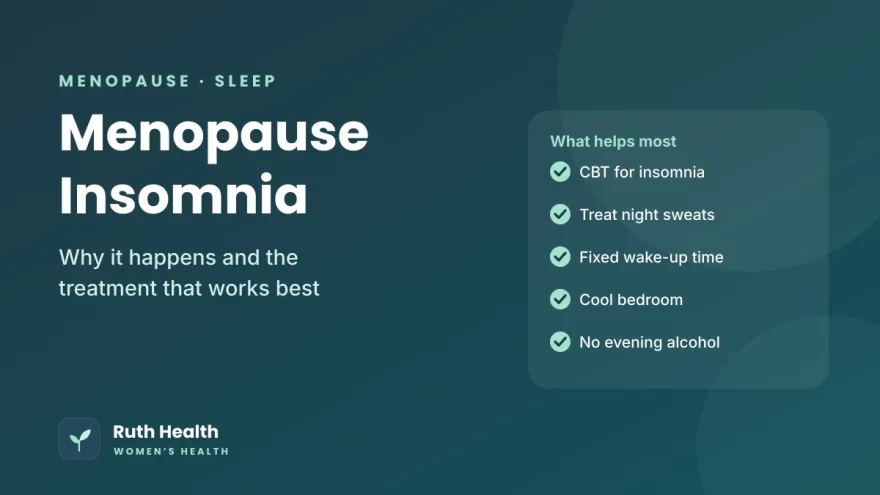
If you used to sleep well and now lie awake for hours, wake up drenched in sweat, or open your eyes at 3 a.m. and can’t drift off again, menopause may be to blame. Sleep problems are one of the most common and most exhausting parts of the menopause transition, and they often get less attention than hot flashes.
The good news is that menopause insomnia is very treatable. This guide explains why it happens, what helps, and the treatment that research shows works best. Here is what causes menopause insomnia and how to treat it.
Key takeaways
- Insomnia is common in menopause: in the SWAN study, 46% to 48% of menopausal women had insomnia, compared with 38% of premenopausal women.
- Causes include night sweats, hormone changes, anxiety, needing to pee, and sleep apnea.
- Cognitive behavioral therapy for insomnia (CBT-I) is the first-line treatment, and works in menopausal women whether done in person or remotely.
- Treating night sweats, with hormone therapy or non-hormonal options, often improves sleep too.
- Loud snoring, gasping or daytime sleepiness can signal sleep apnea, which becomes more common after menopause.
How common is menopause insomnia?
Very. In the long-running Study of Women’s Health Across the Nation (SWAN), 46% to 48% of menopausal women experienced insomnia, compared with 38% of premenopausal women. Insomnia means trouble falling asleep, staying asleep or waking too early. When it happens at least three nights a week for three months and affects your days, doctors call it chronic insomnia.
Why does menopause cause insomnia?
Hot flashes and night sweats
Night sweats can wake you suddenly and leave you too hot or wet to settle. But researchers also note that many women wake up at night for reasons unrelated to a hot flash, so insomnia can continue even when sweats are treated. Learn more about night sweats in women.
Falling estrogen and progesterone
Estrogen helps regulate body temperature and mood, and progesterone has a mild calming effect. As both fluctuate and fall, sleep can become lighter and more broken.
Anxiety and low mood
Many women feel more anxious in perimenopause, which makes it harder to switch off at night. Read about perimenopause anxiety.
Needing to pee at night
Changes in the bladder and pelvic floor after menopause can mean more trips to the bathroom. See our guide to bladder leakage.
Sleep apnea
The risk of obstructive sleep apnea rises after menopause. Snoring, gasping, morning headaches and daytime sleepiness are warning signs.
Habits that keep insomnia going
After a few bad nights, it’s natural to nap, go to bed earlier or lie in. Experts note these compensatory behaviors can actually keep insomnia going.
The best treatment: CBT for insomnia (CBT-I)
CBT-I is a short, structured program that retrains your sleep habits and the thoughts that keep you awake. It usually includes:
- Sleep restriction: limiting time in bed to the time you actually sleep, then gradually increasing it.
- Stimulus control: using your bed only for sleep and sex, and getting up if you can’t sleep.
- Cognitive work: challenging worries about sleep.
- Sleep hygiene: a consistent routine and a sleep-friendly bedroom.
The evidence in menopausal women is strong:
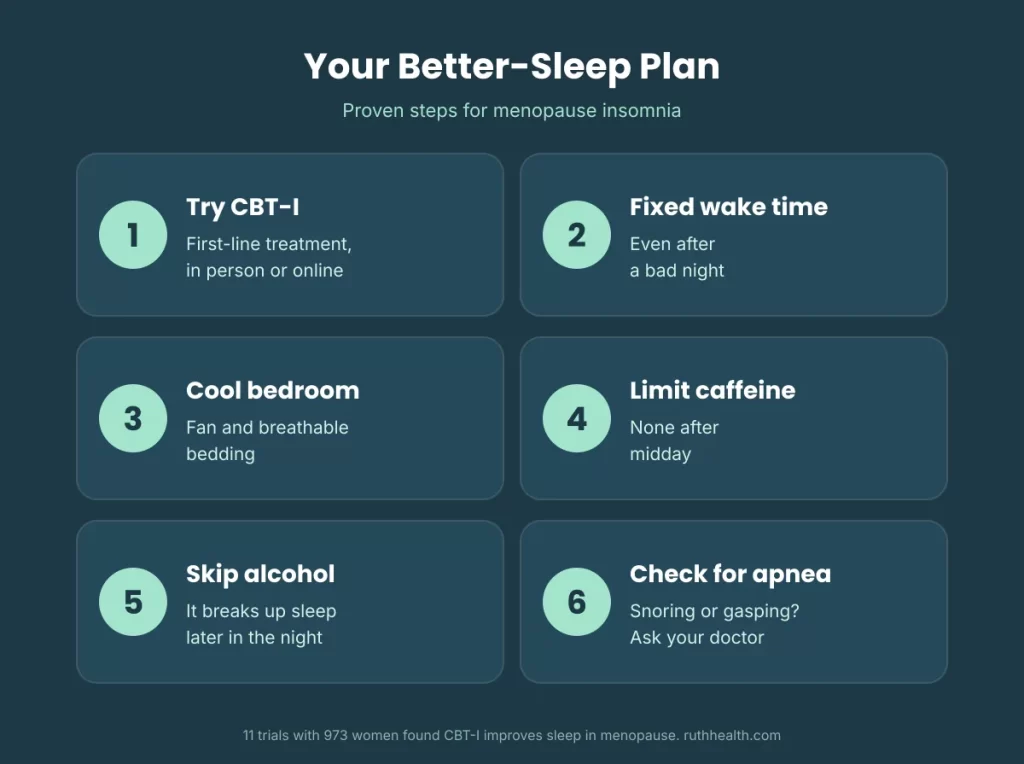
- A meta-analysis of 11 randomized trials with 973 women found CBT-I improved sleep quality and reduced insomnia severity, whether delivered face-to-face or remotely.
- In the MsFLASH trial, CBT-I delivered by telephone improved sleep in peri- and postmenopausal women with insomnia and hot flashes.
- A trial of 150 postmenopausal women found CBT-I worked better than sleep hygiene advice, with more durable results.
Experts describe CBT-I as producing results comparable to sleeping pills in the short term, with longer-lasting effects. You can access it through a sleep specialist, psychologist, online program or app.
Self-help tips for better sleep in menopause
- Keep regular hours: get up at the same time every day, even after a bad night.
- Keep your bedroom cool, with a fan and breathable bedding and sleepwear.
- Limit caffeine after midday and avoid alcohol in the evening, as it disrupts sleep later in the night.
- Get daylight and movement during the day.
- Avoid long naps. If you must, keep it under 20 to 30 minutes and before mid-afternoon.
- Get up if you can’t sleep after about 20 minutes, do something calm in dim light, and return when sleepy.
- Wind down with a regular routine and put screens away an hour before bed.
If you keep waking in the early hours, read our guide to waking up at 3am.
Medical treatments
- Hormone therapy can improve sleep in women whose sleep is disrupted by night sweats.
- Non-hormonal options for night sweats, such as certain antidepressants or gabapentin, may also help.
- Sleep apnea treatment if you’re diagnosed.
- Sleeping pills are best used short-term and with your doctor’s guidance, as they can cause next-day drowsiness and dependence.
What about supplements?
Magnesium and melatonin are popular. Evidence for magnesium is limited but it’s generally safe; read about magnesium for sleep. Melatonin can help with timing of sleep but isn’t a strong treatment for insomnia. Herbal sleep remedies have mixed evidence. Compare options in our sleep and stress supplement reviews, scored with our 11-point audit.
When to see a doctor
- Poor sleep is affecting your mood, work or safety (for example, drowsy driving).
- You snore loudly, gasp or stop breathing during sleep.
- You have low mood, anxiety or thoughts of hopelessness.
- Night sweats are severe or come with fever or weight loss.
Frequently asked questions about menopause insomnia
How long does menopause insomnia last?
It varies. For some women it improves after the transition, but insomnia often persists unless it’s treated. CBT-I can help at any stage.
Why do I wake up at 3am during menopause?
Night sweats, a lighter sleep pattern, needing to pee, anxiety and alcohol can all cause early waking. Your sleep becomes lighter in the second half of the night, so you’re more easily woken.
Does hormone therapy help menopause insomnia?
It can, especially when night sweats are disrupting your sleep. Discuss the benefits and risks with your doctor.
What is the best sleep aid for menopause?
The best-supported treatment is CBT-I, not a pill. Treating night sweats and sleep apnea, if present, also helps.
Can perimenopause cause insomnia?
Yes. Sleep problems often start in perimenopause, when hormone levels fluctuate most.
The bottom line on menopause insomnia
Menopause insomnia is common, but you don’t have to put up with it. Cognitive behavioral therapy for insomnia is the most effective long-term treatment, and treating night sweats, anxiety and sleep apnea can make a big difference. Keep a regular schedule, a cool bedroom and an alcohol-free evening, and talk to your doctor if poor sleep is affecting your life.