You go to bed tired and wake up tired. Coffee barely helps, your afternoons drag, and you can’t remember the last time you felt properly energized. Fatigue is one of the most common reasons women see a doctor, yet it’s often dismissed as “just being busy.” This guide explains everything you need to know about always tired.
Sometimes it is lifestyle, but persistent tiredness can also be a sign of something fixable, like low iron, thyroid problems, poor sleep or hormone changes. This guide covers the 15 most common causes of fatigue in women, the tests worth asking for, and practical ways to get your energy back.
Key takeaways
- Fatigue is reported by about 41% of people, and more often by women of childbearing age.
- Low iron is one of the most common, and most missed, causes: more than a third of women of reproductive age don’t have enough iron.
- You can have low iron stores (ferritin) without being anemic, and still feel exhausted.
- Other common causes include poor sleep, thyroid problems, depression, perimenopause, blood sugar problems and low vitamin B12 or D.
- See a doctor if tiredness lasts more than 2 to 4 weeks or comes with other symptoms.
Why are women so tired?
Fatigue is extremely common. A randomized trial in the Journal of the Pakistan Medical Association noted a prevalence of 41%, reported more commonly in women of childbearing age than men. Women face unique factors: monthly blood loss, pregnancy, breastfeeding, hormone changes, higher rates of thyroid disease and depression, and often a heavier share of caregiving.
15 common causes of fatigue in women
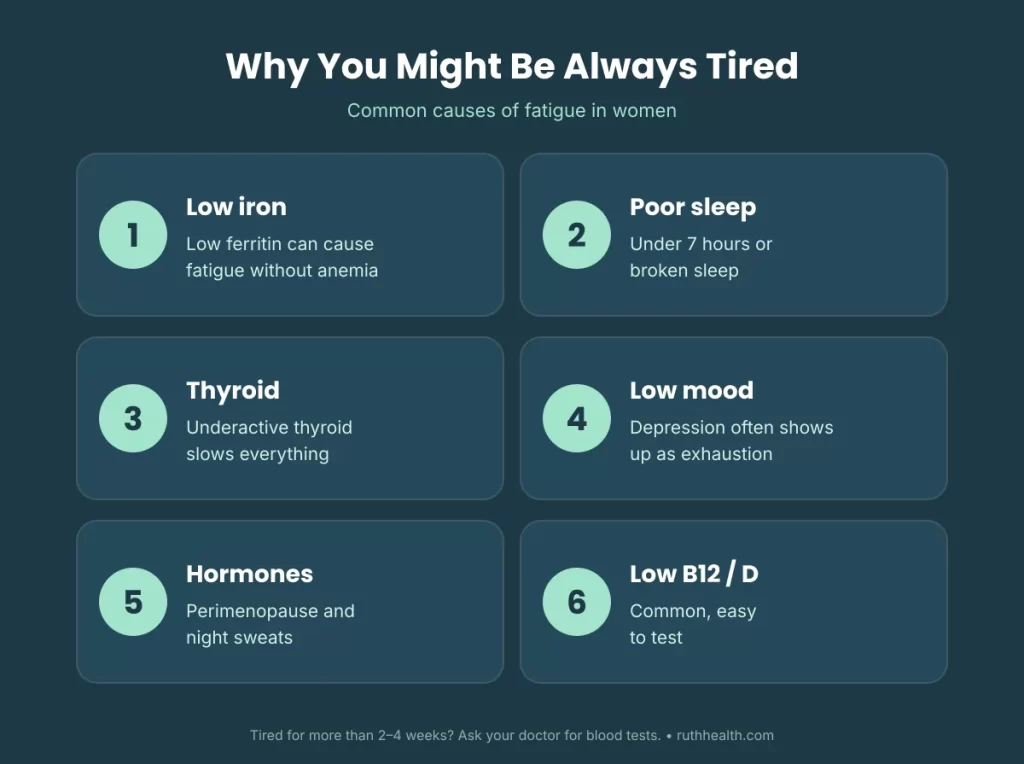
1. Iron deficiency (with or without anemia)
This is one of the biggest causes, and one of the most overlooked. UCLA Health reports that more than one-third of women of reproductive age don’t get enough iron, and that being female, especially of reproductive age, is the number one risk factor. Heavy periods and pregnancy are major contributors.
You can have low iron stores (ferritin) even when your hemoglobin is normal. This “iron deficiency without anemia” is at least twice as common as iron-deficiency anemia, especially in women of reproductive age, yet is often undiagnosed. A 2026 randomized trial found iron supplements reduced fatigue in non-anemic, iron-deficient women of childbearing age.
Other signs of low iron: shortness of breath, pale skin, headaches, hair loss, brittle nails, restless legs and craving ice.
2. Poor sleep
Not enough sleep, or poor-quality sleep, is the most obvious cause. Adults need 7 to 9 hours. Late nights, screens, caffeine, alcohol, kids waking you, or night sweats can all cut into restful sleep.
3. Sleep apnea
Pauses in breathing during sleep fragment your rest without you knowing. It’s underdiagnosed in women, who often have less “classic” symptoms. Clues include snoring, morning headaches, waking unrefreshed and daytime sleepiness.
4. Underactive thyroid
Hypothyroidism is very common in women and causes tiredness, weight gain, feeling cold and constipation. Read our guide to hypothyroidism symptoms in women.
5. Depression and anxiety
Both can cause deep fatigue, poor sleep and low motivation. Depression in particular often shows up as exhaustion rather than sadness.
6. Perimenopause and menopause
Night sweats, poor sleep and hormone fluctuations leave many women in their 40s and 50s drained. Read about night sweats and perimenopause anxiety.
7. Vitamin B12 deficiency
Low B12 causes fatigue, tingling hands and feet, memory problems and pale skin. It’s more common in vegans, older adults, people taking metformin or acid-reducing medicines, and people with gut conditions.
8. Vitamin D deficiency
Low vitamin D is common, especially in winter, and may contribute to tiredness and muscle aches.
9. Blood sugar problems
Energy crashes after carb-heavy meals can be a sign of insulin resistance. Untreated diabetes causes tiredness, thirst and frequent urination. Learn more about insulin resistance in women.
10. Chronic stress
Ongoing stress keeps your body in “alert” mode, disrupts sleep and leaves you feeling wired but tired. Read about high cortisol symptoms.
11. Diet and dehydration
Skipping meals, crash dieting, not eating enough protein or iron, and drinking too little water can all sap energy.
12. Too much caffeine or alcohol
Caffeine late in the day disrupts sleep. Alcohol may help you fall asleep but reduces deep sleep.
13. Lack of exercise (or too much)
Being inactive lowers energy levels, while over-training without enough rest can also cause exhaustion.
14. Pregnancy and postpartum
Hormone changes, increased iron needs and broken sleep with a newborn are major drains on energy.
15. Medical conditions and medications
Celiac disease, autoimmune conditions, long COVID, heart and kidney problems, and medications such as antihistamines, some blood pressure drugs and antidepressants can all cause fatigue.
Tests to ask your doctor about
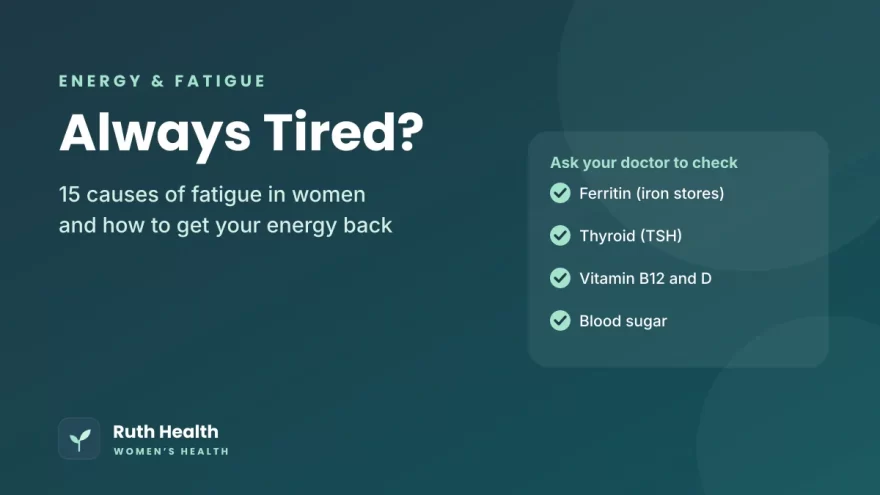
If you’ve been tired for weeks, ask about:
| Test | Checks for |
|---|---|
| Full blood count | Anemia |
| Ferritin | Iron stores (can be low even without anemia) |
| TSH | Thyroid function |
| Vitamin B12 and folate | Vitamin deficiencies |
| Vitamin D | Vitamin D deficiency |
| Fasting glucose or HbA1c | Diabetes or prediabetes |
| Celiac screen | Celiac disease, if you have gut symptoms or low iron |
| Kidney and liver tests | Other medical causes |
If your ferritin is low, ask your doctor what level they’re aiming for and whether you need supplements. Don’t start high-dose iron without testing, as too much iron is harmful.
How to get your energy back
1. Fix your sleep: keep a consistent bedtime and wake time, avoid screens before bed, and keep your bedroom cool and dark.
2. Eat regular, balanced meals: include protein, fiber and healthy fats to avoid energy crashes.
3. Eat iron-rich foods: lean red meat, chicken, fish, beans, lentils, tofu, spinach and fortified cereals. Pair plant iron with vitamin C (like citrus or peppers) to boost absorption, and avoid tea or coffee with meals.
4. Stay hydrated: even mild dehydration can cause tiredness.
5. Move every day: a brisk 20 to 30 minute walk can boost energy more than a nap.
6. Limit caffeine after midday and cut back on alcohol.
7. Get morning daylight to set your body clock.
8. Manage stress: short breaks, breathing exercises, time outside and asking for help.
9. Treat the cause: iron, thyroid medication, B12, sleep apnea treatment or mental health support can transform how you feel.
What about energy supplements?
Supplements help most when they correct a real deficiency, such as iron, B12 or vitamin D. “Energy boosting” products often rely on caffeine or herbs with limited evidence. Get tested first so you know what you actually need. Magnesium may help if poor sleep is the issue; see our guide to magnesium for sleep.
When to see a doctor
See your doctor if:
- You’ve felt tired for more than 2 to 4 weeks despite rest.
- Fatigue stops you from doing normal activities.
- You have heavy periods, shortness of breath, palpitations or dizziness.
- You’ve lost weight without trying, or have fevers or night sweats.
- You feel low, hopeless or anxious most days.
- You snore loudly or stop breathing during sleep.
Seek urgent care for chest pain, severe shortness of breath or fainting.
Frequently asked questions
Why am I always tired even after sleeping 8 hours?
You may not be getting quality sleep (due to sleep apnea, night sweats or alcohol), or there may be a medical cause like low iron, thyroid problems, depression or vitamin deficiencies.
What deficiency causes extreme tiredness in women?
Iron deficiency is the most common. Low vitamin B12 and vitamin D can also cause fatigue.
Can low iron cause tiredness without anemia?
Yes. Low ferritin (iron stores) can cause fatigue even when your hemoglobin is normal, and treating it can help.
Can hormones make you tired?
Yes. Thyroid problems, perimenopause, pregnancy and the days before your period can all cause fatigue.
When should I worry about fatigue?
If it lasts more than a few weeks, affects daily life, or comes with weight loss, fever, night sweats, heavy bleeding or shortness of breath, see a doctor.
The bottom line
Feeling tired all the time is common in women, but it isn’t something you have to accept. Low iron, poor sleep, sleep apnea, thyroid problems, depression, perimenopause, vitamin deficiencies and blood sugar issues are among the most common causes, and many are easily tested and treated.
Start with good sleep, regular balanced meals, hydration and daily movement, and ask your doctor for blood tests, especially ferritin and thyroid, if tiredness lasts more than a few weeks. Read more in our energy and fatigue guides.