Every month, like clockwork, you feel on edge in the days before your period. Your heart races, you worry about everything, you snap at people you love, or you feel a heavy sense of dread. Then your period starts and it lifts. If that sounds familiar, you’re not alone.
This guide explains why anxiety before your period happens, how to tell PMS from PMDD or premenstrual worsening of an anxiety disorder, and what helps. Here is why anxiety before your period happens and what helps.
Key takeaways
- Anxiety, tension and irritability are among the most common premenstrual symptoms.
- They’re linked to how your brain responds to the normal rise and fall of hormones after ovulation.
- PMDD is a severe form of PMS that affects about 3% to 8% of women with regular cycles.
- If you have anxiety all month that gets worse before your period, it may be premenstrual exacerbation of an anxiety disorder.
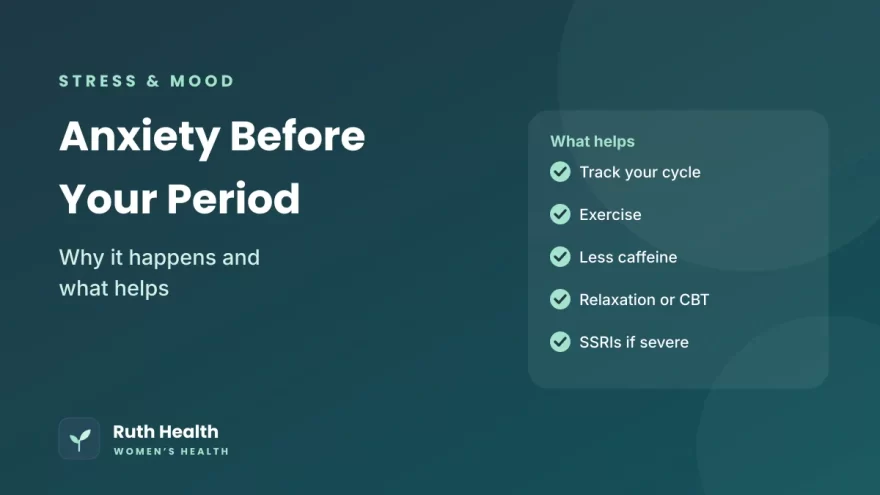
- Tracking your symptoms, exercise, sleep, limiting caffeine and alcohol, CBT and, for severe symptoms, SSRIs or hormonal treatment can help.
Why do I get anxiety before my period?
After ovulation, estrogen and progesterone rise and then fall sharply before your period. These hormones affect brain chemicals such as serotonin and GABA, which help regulate mood and anxiety. Experts think some women’s brains are more sensitive to these normal hormone shifts, even when hormone levels themselves are normal.
Other factors can make premenstrual anxiety worse:
- Poor sleep, which is common before a period.
- Stress.
- Caffeine and alcohol.
- Blood sugar swings from skipped meals or sugary snacks.
- An existing anxiety or mood disorder.
Learn more about PMS symptoms.
Symptoms of premenstrual anxiety
- Feeling tense, on edge or keyed up.
- Racing or worried thoughts.
- Irritability or a short temper.
- Feeling overwhelmed.
- A racing heart or shortness of breath.
- Trouble sleeping.
- Trouble concentrating.
- Panic attacks in some women.
These symptoms usually start in the week or two before your period and ease within a few days after it starts.
PMS, PMDD or premenstrual exacerbation?
PMS
Many women have some premenstrual mood symptoms that are mild to moderate and manageable.
PMDD (premenstrual dysphoric disorder)
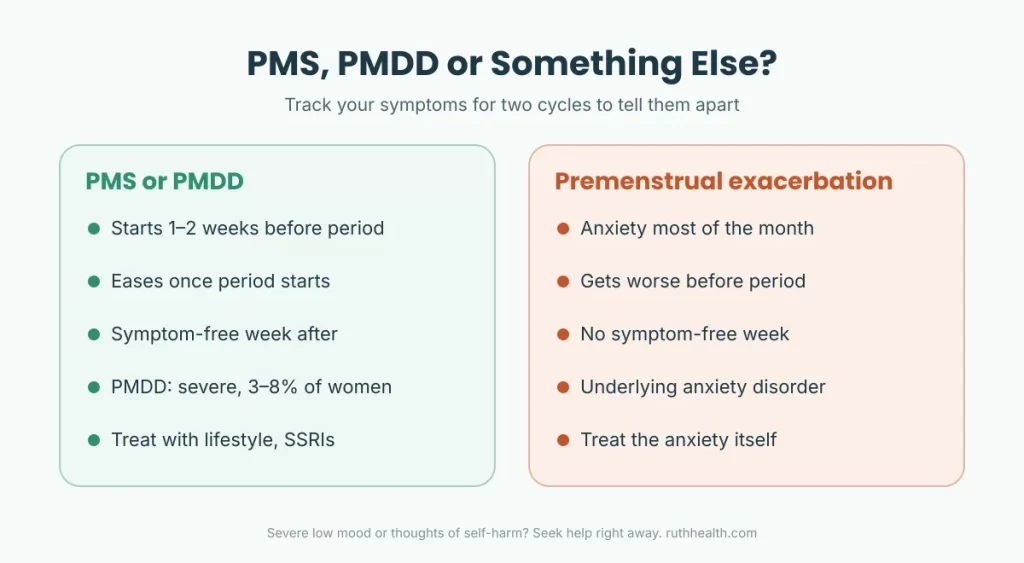
PMDD is a severe form of PMS. It occurs in about 3% to 8% of women with regular ovulatory cycles. Symptoms occur in the luteal phase and remit with the onset of menses. The most consistently reported symptoms are anxiety, irritability and mood swings, and they must interfere with daily life or cause substantial distress.
Premenstrual exacerbation (PME)
If you have anxiety or depression most of the month and it gets worse before your period, that’s called premenstrual exacerbation. Harvard Health notes that this isn’t considered PMDD. It’s common and important to recognize, because treating the underlying condition is key.
| PMS | PMDD | Premenstrual exacerbation | |
|---|---|---|---|
| When symptoms happen | Before period, ease after | Before period, ease after | All month, worse before period |
| Severity | Mild to moderate | Severe, disrupts daily life | Varies |
| Symptom-free week after period | Yes | Yes | No |
| Main treatment | Lifestyle, sometimes medication | SSRIs, hormonal options, CBT | Treat the underlying anxiety or mood disorder |
Track your symptoms
The best way to understand what’s happening is to track your mood and symptoms daily for at least two cycles. Note your period dates, anxiety level, sleep, and anything else you notice. This helps you and your doctor see whether symptoms follow your cycle.
How to ease anxiety before your period
1. Exercise regularly
Aerobic exercise such as brisk walking, cycling or swimming can improve mood and reduce anxiety.
2. Prioritize sleep
Keep a regular sleep schedule, especially in the week before your period.
3. Cut back on caffeine and alcohol
Both can worsen anxiety and sleep.
4. Eat regular, balanced meals
Protein, fiber and complex carbs help keep blood sugar steady.
5. Practice relaxation
Breathing exercises, yoga, meditation and time outdoors can calm your nervous system.
6. Plan ahead
If you know a tough week is coming, schedule lighter commitments and more self-care.
7. Try cognitive behavioral therapy (CBT)
CBT teaches practical tools for managing anxious thoughts and can help with PMS and PMDD.
Medical treatments
For moderate to severe symptoms, or PMDD, talk to your doctor about:
- SSRIs (antidepressants): these work faster for PMDD than for depression, so Harvard Health notes they can be taken only during the luteal phase, the roughly 14 days after ovulation, instead of every day.
- Hormonal birth control, particularly some pills containing drospirenone.
- Treatment for an underlying anxiety disorder if you have premenstrual exacerbation.
Do supplements help?
Calcium, vitamin B6, magnesium and chasteberry (vitex) are sometimes used for PMS. Some have modest evidence, but quality varies and some interact with medications. Talk to your doctor first. Compare options in our sleep and stress supplement reviews, scored with our 11-point audit.
When to see a doctor
See your doctor if premenstrual anxiety:
- Affects your work, relationships or daily life.
- Causes panic attacks.
- Comes with severe low mood or hopelessness.
- Is present all month, not just before your period.
If you ever have thoughts of harming yourself, seek help right away from a doctor, a crisis line or emergency services.
Frequently asked questions about anxiety before period
Why do I feel anxious before my period?
Your brain may be sensitive to the normal rise and fall of estrogen and progesterone after ovulation, which affects mood-regulating chemicals like serotonin.
How many days before your period does anxiety start?
Usually in the week or two before your period, easing within a few days after it starts.
Can PMS cause panic attacks?
Yes. Some women have panic attacks before their period, particularly with PMDD or an existing anxiety disorder.
Is premenstrual anxiety a sign of PMDD?
Not always. PMDD is severe and disrupts daily life. Mild to moderate anxiety before your period is more likely PMS.
Does premenstrual anxiety get worse with age?
It can worsen in perimenopause, when hormones fluctuate more. Learn about perimenopause anxiety.
The bottom line on anxiety before period
Anxiety before your period is common and linked to how your brain responds to normal hormone changes. Track your symptoms, exercise, sleep well, limit caffeine and alcohol, and try relaxation or CBT. If symptoms are severe or present all month, talk to your doctor about PMDD, premenstrual exacerbation and treatments such as SSRIs.