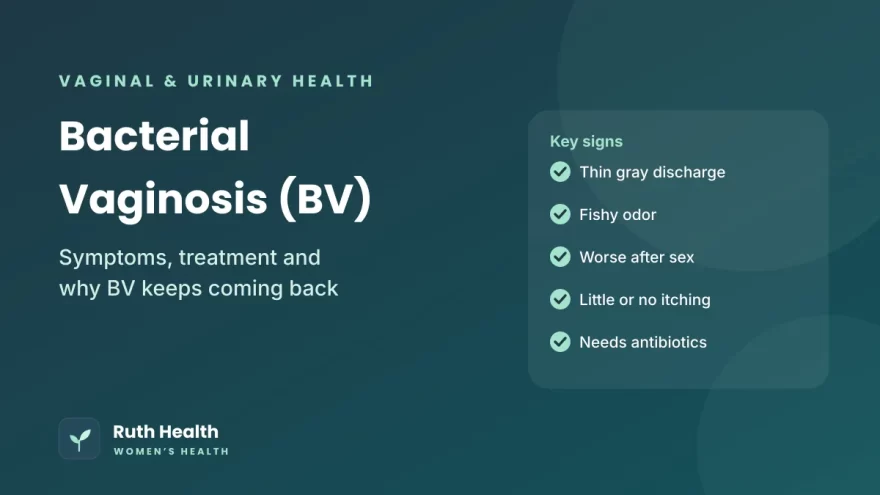
An unusual thin, grayish discharge with a strong “fishy” smell, especially after sex, is the classic sign of bacterial vaginosis (BV). It’s the most common cause of abnormal vaginal discharge in women of reproductive age, yet many women have never heard of it, and it’s often confused with a yeast infection.
This guide explains what BV is, its symptoms and causes, how it’s treated, why it so often comes back, and practical steps to prevent it. This guide explains everything you need to know about bacterial vaginosis.
Key takeaways
- BV is the most common cause of vaginal discharge worldwide, affecting about 23% to 29% of women of reproductive age.
- It happens when the normal balance of vaginal bacteria shifts, with fewer protective lactobacilli and more of other bacteria.
- Symptoms include thin gray-white discharge and a fishy odor, often worse after sex. Many women have no symptoms.
- BV is treated with antibiotics such as metronidazole or clindamycin.
- More than half of women have BV come back within a year, so prevention matters.
What is bacterial vaginosis?
Your vagina naturally contains a balance of bacteria, mostly lactobacilli, which keep it slightly acidic and protect against infections. In BV, this balance shifts: lactobacilli decrease and other bacteria, such as Gardnerella vaginalis, multiply. As one review explains, BV is caused by a complex change in vaginal flora with a reduction in lactobacilli and an increase in other organisms.
BV isn’t a classic sexually transmitted infection, but it’s linked to sexual activity. It isn’t caused by poor hygiene; in fact, over-washing can make it worse.
How common is BV?
BV is the most common cause of vaginal discharge worldwide, with a global prevalence of 23% to 29%, and higher rates in some groups, including African American and Hispanic women. In North American women, prevalence is estimated at about 29%.
Symptoms of bacterial vaginosis
- Thin, watery, gray or white discharge.
- A strong fishy odor, often stronger after sex or during your period.
- Mild itching or irritation (less common than with yeast).
- Burning when you pee (sometimes).
Many women with BV have no symptoms at all.
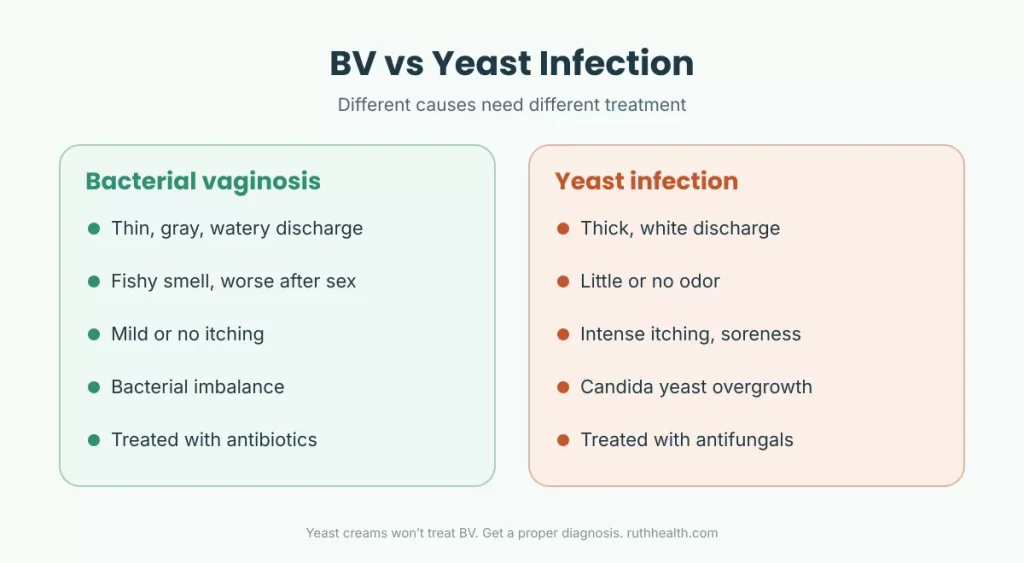
BV vs yeast infection
| Bacterial vaginosis | Yeast infection | |
|---|---|---|
| Discharge | Thin, gray or white, watery | Thick, white, like cottage cheese |
| Smell | Fishy, especially after sex | Usually little or no odor |
| Itching | Mild or none | Often intense itching and soreness |
| Cause | Bacterial imbalance | Overgrowth of Candida yeast |
| Treatment | Prescription antibiotics | Antifungal medicine |
Treating BV with yeast infection creams won’t work, so it’s worth getting a proper diagnosis.
What causes BV and who’s at risk?
Risk factors include:
- New or multiple sexual partners.
- Douching or using scented washes inside or around the vagina.
- Not using condoms.
- Smoking.
- Using an IUD (in some studies).
- Higher body weight: one study found BV prevalence of 21.3% in lean women, 30.4% in overweight women and 34.5% in women with obesity.
How is BV diagnosed?
Your doctor or nurse will look at your discharge, check the vaginal pH (BV raises it above 4.5), do a “whiff test” and look at a sample under a microscope. Home pH tests can suggest BV but can’t confirm it.
How is BV treated?
BV is treated with antibiotics. According to a review in the Journal of Infectious Diseases, recommended first-line options include:
- Oral metronidazole 500 mg twice a day for 7 days.
- Metronidazole gel inside the vagina once a day for 5 days.
- Clindamycin cream inside the vagina once a day for 7 days.
Important tips:
- Finish the full course, even if symptoms improve.
- Avoid alcohol while taking metronidazole and for at least 2 to 3 days afterwards; it can cause severe nausea and vomiting.
- Clindamycin cream can weaken latex condoms.
- The CDC doesn’t currently recommend treating male partners of women with BV.
Why BV comes back
Recurrence is the biggest frustration with BV. Over 50% of women experience a recurrence after treatment. Reasons may include bacteria persisting in a protective biofilm, reinfection from partners and ongoing risk factors.
For frequent recurrences, doctors may suggest longer or suppressive treatment, such as twice-weekly metronidazole gel for several months, or vaginal boric acid alongside standard treatment, under medical guidance.
Why BV matters
BV is often mild, but it can increase the risk of other sexually transmitted infections such as HIV, herpes and others. In pregnancy, BV is associated with an increased risk of preterm delivery and infection, so tell your provider if you have symptoms while pregnant.
How to prevent BV
1. Don’t douche or wash inside your vagina.
2. Use plain water or a mild unscented soap on the outside only.
3. Avoid scented products, bubble baths and vaginal deodorants.
4. Use condoms, especially with new partners.
5. Wear breathable cotton underwear.
6. Wipe from front to back.
7. Stop smoking.
8. Change out of wet swimwear or sweaty clothes promptly.
Do probiotics help BV?
Lactobacillus probiotics are popular for vaginal health, but one systematic review found insufficient evidence to recommend for or against probiotic treatment of BV. They may help some women as an add-on but shouldn’t replace antibiotics. Compare products in our probiotic and gut supplement reviews, scored with our 11-point audit.
When to see a doctor
See your doctor if:
- You have new or unusual discharge or odor.
- You’re pregnant and have symptoms.
- You’ve had a new sexual partner (to check for STIs).
- Symptoms come back after treatment.
- You have pelvic pain or fever.
Frequently asked questions about bacterial vaginosis
Can BV go away on its own?
Sometimes, but it often persists or returns. Treatment is recommended for women with symptoms and during pregnancy.
Is BV an STI?
Not exactly, but it’s linked to sexual activity and can increase the risk of STIs.
Can men get BV?
No, but sexual activity can influence BV in women. Partners of women who have sex with women may share BV.
What’s the fastest way to get rid of BV?
Prescription antibiotics are the most effective treatment. Home remedies are not proven to cure BV.
Why does my discharge smell fishy after sex?
Semen is alkaline and can make the odor of BV more noticeable. If this happens regularly, see your doctor.
The bottom line on bacterial vaginosis
Bacterial vaginosis is very common and caused by an imbalance of vaginal bacteria. It typically causes thin gray discharge and a fishy smell, but many women have no symptoms. It’s easily treated with antibiotics, but often comes back, so avoiding douching and scented products, using condoms and stopping smoking can help keep your vaginal bacteria balanced.
Read more about UTI symptoms and our vaginal and urinary health guides.