Morning sickness is one of the best-known parts of early pregnancy, and one of the most misnamed. For many women, it lasts all day. It can make it hard to work, eat or care for other children, and it can feel endless while you’re in it.
This guide explains when morning sickness starts and ends, what causes it, the remedies with the best evidence, and when nausea and vomiting need urgent care. Here is what to expect from morning sickness and how to ease it.
Key takeaways
- Morning sickness affects at least 7 in 10 pregnant women in the first trimester.
- It usually starts around 6 weeks, is worst around 9 weeks, and improves for most women in the second trimester.
- Small, frequent meals, ginger and vitamin B6 help many women. Vitamin B6 with doxylamine is a first-line medicine.
- Hyperemesis gravidarum, a severe form, affects about 3 in 100 pregnant women and needs medical treatment.
- Get help if you can’t keep fluids down, are losing weight, feel dizzy or have very dark urine.
When does morning sickness start and end?
According to March of Dimes, morning sickness usually starts at about 6 weeks of pregnancy and is at its worst at about 9 weeks. Most women feel better in their second trimester, but some have symptoms throughout pregnancy.
It’s very common: at least 7 in 10 pregnant women have morning sickness in the first trimester. And despite the name, it can happen any time of day.
What causes morning sickness?
The exact cause isn’t known. It’s linked to rising pregnancy hormones, especially hCG and estrogen. You may be more likely to have it if you:
- Had nausea in a previous pregnancy.
- Have a mother or sister who had severe nausea in pregnancy.
- Have a history of motion sickness or migraines.
- Are pregnant with twins or more.
Mild morning sickness doesn’t harm you or your baby.
Morning sickness remedies that help
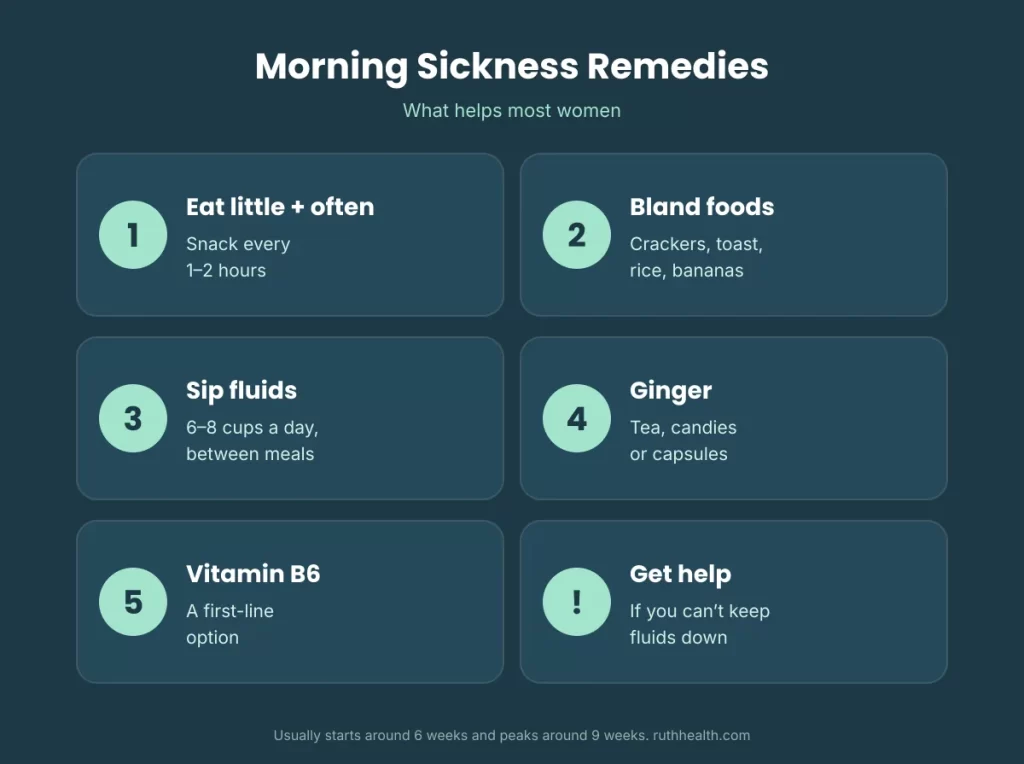
Eat little and often
An empty stomach often makes nausea worse. Try small snacks every 1 to 2 hours, and keep plain crackers by your bed to eat before getting up.
Choose bland, easy foods
Plain foods like toast, crackers, rice, bananas, potatoes and broth are often easier to tolerate. Cold foods may smell less and be easier than hot meals.
Sip fluids between meals
Mayo Clinic suggests sipping water, real ginger ale or ginger tea and aiming for 6 to 8 cups of caffeine-free fluids a day. Drinking between rather than with meals can help.
Try ginger
Ginger may reduce nausea and vomiting compared with placebo, though studies used different forms. Ginger tea, ginger candies or capsules are options. Check with your provider before taking ginger supplements.
Take vitamin B6
Vitamin B6 (pyridoxine) is a recommended first step. Guidance for doctors states that vitamin B6 with or without doxylamine is first-line treatment for mild or moderate cases.
Avoid triggers
Strong smells, stuffy rooms, fatty or spicy foods and some vitamins can make nausea worse. If your prenatal vitamin triggers nausea, try taking it at night with a snack, or ask your provider about switching.
Rest
Tiredness can worsen nausea. Rest when you can.
Try acupressure wristbands
Some women find acupressure bands helpful, though evidence is mixed.
Medical treatments
If home measures aren’t enough, don’t struggle on. Treatment is safer and easier when started early. Options include:
- Vitamin B6 plus doxylamine: a combination that, according to the American Academy of Family Physicians, reduces symptoms by 70%.
- Other anti-nausea medications prescribed by your provider.
- IV fluids if you’re dehydrated.
Always check with your doctor, midwife or pharmacist before taking any medication or supplement in pregnancy.
Hyperemesis gravidarum
Hyperemesis gravidarum (HG) is severe, persistent nausea and vomiting. March of Dimes reports that about 3 in 100 women may have it. It can cause weight loss and dehydration, and some women need hospital treatment.
| Morning sickness | Hyperemesis gravidarum | |
|---|---|---|
| Nausea | Comes and goes | Severe and constant |
| Vomiting | Occasional | Frequent, often several times a day |
| Eating and drinking | Usually possible | Hard to keep anything down |
| Weight | Stable or small changes | Weight loss |
| Treatment | Home measures, B6 | Medical treatment, sometimes hospital |
When to call your doctor or midwife
Call your provider right away if you:
- Can’t keep any food or fluids down for 24 hours.
- Are losing weight.
- Feel dizzy or faint when standing.
- Pass very little urine, or it’s very dark.
- Vomit blood.
- Have a fever, belly pain or headache with vomiting.
- Still have severe nausea into your fourth month. March of Dimes advises telling your provider right away if morning sickness is severe or continues into the fourth month.
Does morning sickness affect the baby?
Mild to moderate morning sickness doesn’t harm your baby. Many women worry about not eating enough in early pregnancy, but your baby is very small and your body’s stores help. Focus on staying hydrated and eating what you can. Severe, untreated HG is different and needs care.
Learn more about early pregnancy symptoms and foods to avoid during pregnancy.
Frequently asked questions about morning sickness
When does morning sickness start?
Usually around 6 weeks of pregnancy, though some women notice it a little earlier.
When does morning sickness stop?
For most women, it improves between 12 and 16 weeks. Some have nausea for longer.
Is it a bad sign if you don’t have morning sickness?
No. Many women have healthy pregnancies with little or no nausea.
What can I eat when I have morning sickness?
Bland, dry foods like crackers, toast, rice and bananas, plus small amounts of protein such as yogurt, eggs or nut butter.
Can morning sickness happen at night?
Yes. Despite the name, it can happen at any time of day or night.
The bottom line on morning sickness
Morning sickness is very common, usually starts around 6 weeks, peaks around 9 weeks and eases in the second trimester. Eat little and often, choose bland foods, sip fluids and try ginger or vitamin B6. If home steps don’t help, ask your provider about safe medicines, and get help quickly if you can’t keep fluids down or are losing weight.