When you’re pregnant, it can feel like everyone has an opinion about what you should and shouldn’t eat. Some advice is important for your baby’s safety; some is outdated or exaggerated. Knowing which is which helps you eat well without unnecessary worry.
This guide lists the foods to avoid during pregnancy, explains why, and suggests safer alternatives, based on guidance from the FDA, CDC and medical experts. Here are the foods to avoid during pregnancy and what to eat instead.
Key takeaways
- Pregnancy affects your immune system, making you and your baby more vulnerable to food poisoning.
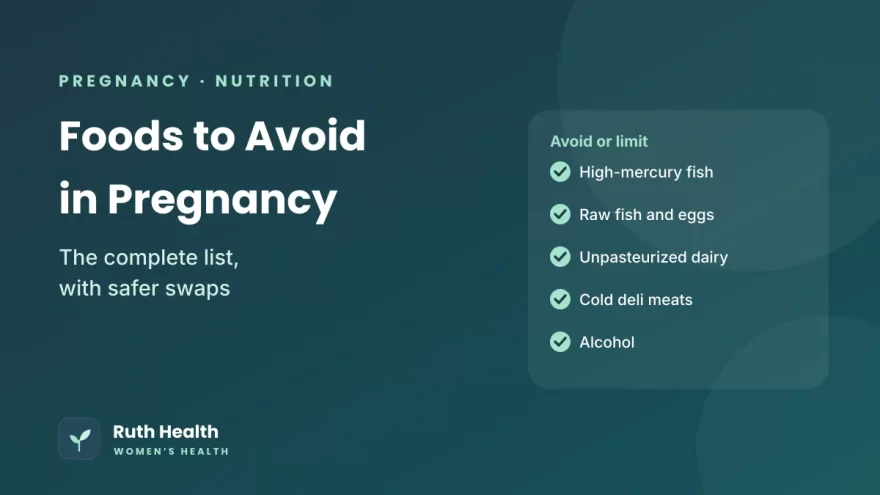
- Avoid high-mercury fish, raw or undercooked meat, fish and eggs, unpasteurized milk and juice, soft cheeses made from unpasteurized milk, cold deli meats, premade deli salads and raw sprouts.
- Don’t drink alcohol during pregnancy.
- Limit caffeine to 200 mg a day, about two small cups of coffee.
- Low-mercury fish is still good for you: aim for 2 to 3 servings a week.
Why some foods are risky in pregnancy
The US government’s food safety guidance explains that because pregnancy affects your immune system, you and your unborn baby are more susceptible to bacteria, viruses and parasites that cause foodborne illness. The main concerns are:
- Listeria, which can grow in the fridge and can cause miscarriage, stillbirth or serious infection in newborns.
- Toxoplasma, a parasite found in undercooked meat and soil.
- Salmonella and E. coli.
- Mercury, which can affect a baby’s developing nervous system.
Foods to avoid during pregnancy
1. High-mercury fish
Mayo Clinic notes that the bigger and older the fish, the more mercury it’s likely to contain. Avoid:
- Shark.
- Swordfish.
- King mackerel.
- Bigeye tuna.
- Marlin.
- Orange roughy.
- Tilefish from the Gulf of Mexico.
Don’t avoid fish altogether: guidance stresses that pregnant women should not avoid fish all together. Salmon, sardines, cod, shrimp, pollock, tilapia and canned light tuna are lower-mercury options. A family medicine review recommends two or three servings a week of low-mercury fish.
2. Raw or undercooked fish and shellfish
Avoid sushi or sashimi with raw fish, ceviche, raw oysters, clams and scallops. Mayo Clinic lists these among raw or undercooked seafood to avoid. Cooked sushi rolls are fine.
3. Refrigerated smoked seafood
Refrigerated smoked salmon (lox) can carry listeria. The guidance says it should be reheated to 165°F before eating, though canned or shelf-stable smoked fish is okay.
4. Undercooked meat and poultry
Cook meat and poultry thoroughly, with no pink in the middle. Use a food thermometer when you can.
5. Cold deli meats and hot dogs
Lunch meats, cold cuts and hot dogs can carry listeria. Heat them until steaming hot before eating.
6. Refrigerated meat spreads and pâté
Choose canned or shelf-stable versions instead.
7. Premade deli salads
Store-bought chicken, egg, ham, tuna or seafood salads can carry listeria. Make them at home instead.
8. Unpasteurized milk and cheese
Avoid raw milk and soft cheeses made from unpasteurized milk, such as some brie, camembert, feta, blue cheese and queso fresco. Pasteurized versions are generally fine; check the label.
9. Unpasteurized juice and cider
Fresh-squeezed juice from markets or juice bars may not be pasteurized. Choose pasteurized juice.
10. Raw or undercooked eggs
Avoid runny yolks, homemade mayonnaise, raw cookie dough and cake batter, and some homemade dressings. Commercial products are usually made with pasteurized eggs.
11. Raw sprouts
Raw alfalfa, clover, mung bean and radish sprouts may contain E. coli or Salmonella. Cook sprouts thoroughly.
12. Unwashed fruits and vegetables
Wash all produce well to remove soil, which can carry toxoplasma.
Drinks to avoid or limit
Alcohol
There’s no known safe amount of alcohol in pregnancy. Avoid it completely.
Caffeine
Caffeine should be limited to 200 mg a day during pregnancy, about two small cups of coffee. Remember tea, cola, energy drinks and chocolate also contain caffeine.
Herbal teas and supplements
Some herbs aren’t safe in pregnancy. Check with your provider before using herbal teas or supplements.
Safe swaps at a glance
| Instead of | Choose |
|---|---|
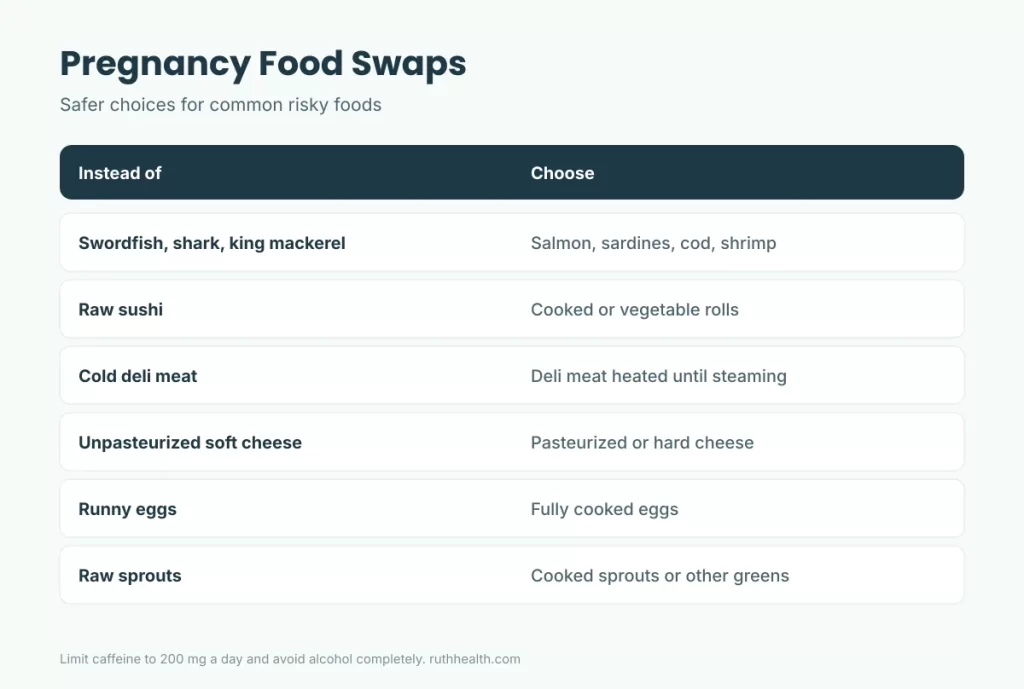
| Swordfish, shark, king mackerel | Salmon, sardines, cod, shrimp |
| Raw sushi | Cooked or vegetable rolls |
| Cold deli meat | Deli meat heated until steaming |
| Unpasteurized soft cheese | Pasteurized cheese or hard cheese |
| Fresh-squeezed juice | Pasteurized juice |
| Runny eggs | Fully cooked eggs |
| Raw sprouts | Cooked sprouts or other greens |
Food safety tips
- Wash your hands before and after handling food.
- Keep raw meat separate from ready-to-eat foods.
- Cook food to safe internal temperatures.
- Keep your fridge at 40°F (4°C) or below.
- Eat leftovers within a few days, reheated until steaming.
- Wear gloves when gardening and avoid changing cat litter if you can, to reduce toxoplasma risk.
What you should eat more of
Focus on fruit, vegetables, whole grains, protein, dairy or fortified alternatives, and healthy fats. Take a prenatal vitamin with at least 400 mcg of folic acid as recommended. If you’re struggling to eat because of nausea, see our guide to morning sickness.
When to call your provider
Call your doctor or midwife if you have fever, muscle aches, vomiting or diarrhea after eating a high-risk food. Listeria symptoms can appear days to weeks later, and early treatment matters.
Frequently asked questions about foods to avoid during pregnancy
Can I eat sushi while pregnant?
Avoid sushi with raw fish. Cooked rolls (like shrimp tempura or California rolls with cooked crab) and vegetable rolls are fine.
Can I eat deli meat while pregnant?
Only if it’s heated until steaming hot, to kill any listeria.
Is cheese safe during pregnancy?
Hard cheeses and pasteurized soft cheeses are generally fine. Avoid soft cheeses made from unpasteurized milk.
How much coffee can I drink while pregnant?
Up to 200 mg of caffeine a day, about two small cups of coffee.
Can I eat eggs while pregnant?
Yes, as long as they’re fully cooked, with firm yolks and whites.
The bottom line on foods to avoid during pregnancy
During pregnancy, avoid high-mercury fish, raw or undercooked meat, fish and eggs, unpasteurized milk, juice and soft cheese, cold deli meats, premade deli salads and raw sprouts. Skip alcohol and keep caffeine under 200 mg a day. Keep eating low-mercury fish and a varied diet, and call your provider if you get sick after eating a risky food.