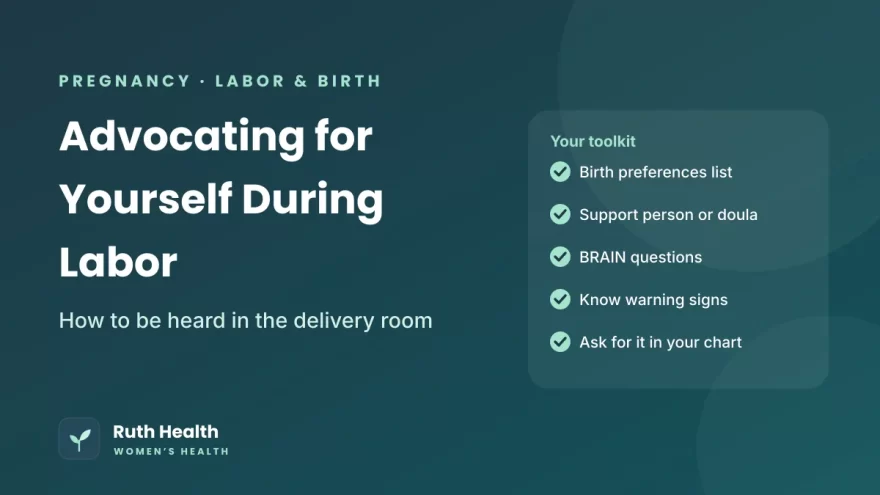
You know your body better than anyone. Yet many women leave the delivery room feeling unheard, rushed or unsure why decisions were made. Advocating for yourself during labor and delivery doesn’t mean fighting your care team. It means understanding your options, asking questions and speaking up when something doesn’t feel right.
This guide gives you practical tools for advocating for yourself during labor, including what to do before labor, a simple framework for making decisions, the warning signs you should never ignore, and how a support person can help. Here is how to start advocating for yourself during labor and after birth.
Key takeaways
- More than 700 women die each year in the US from pregnancy-related complications, and more than 80% of pregnancy-related deaths may be preventable.
- The CDC’s Hear Her campaign urges pregnant and postpartum women to speak up when something doesn’t feel right.
- Use the BRAIN questions (Benefits, Risks, Alternatives, Intuition, Nothing) when a decision comes up.
- Prepare a short birth preferences list and choose a support person who knows your wishes.
- Know the urgent maternal warning signs; complications can happen up to a year after birth.
Why self-advocacy in childbirth matters
The stakes can be high. A CDC report notes that more than 700 women die each year in the United States from complications related to pregnancy, and the Rhode Island Department of Health highlights that more than 80% of pregnancy-related deaths could be prevented.
The CDC launched its Hear Her campaign partly to empower people who are pregnant and postpartum to speak up and raise concerns. As the director of CDC’s Division of Reproductive Health put it, listening and acting on a woman’s concerns during or after pregnancy could save a life.
Beyond safety, feeling heard and involved in decisions is linked with a more positive birth experience.
Before labor: set yourself up to be heard
1. Choose your care team carefully
Ask your provider and hospital about their C-section rates, induction policies, and support for your preferences. Our list of pregnancy questions to ask your provider can help.
2. Learn about common interventions
Understand induction, epidurals, continuous monitoring, assisted delivery and the top medical reasons for a C-section. Knowing the terms makes it easier to follow conversations in the moment.
3. Write a short birth preferences list
Keep it to one page with bullet points. Include:
- Who you want in the room
- Pain relief preferences
- Movement, eating and drinking
- Preferences if a C-section is needed (partner present, skin-to-skin)
- Newborn care preferences (delayed cord clamping, feeding)
- Any medical history or trauma your team should know
Go over it with your provider before labor and bring copies.
4. Choose a support person
Pick someone calm and confident who knows your wishes: a partner, friend, family member or doula. Continuous labor support is linked with better birth experiences and fewer interventions.
Advocating for yourself during labor: the BRAIN questions
When your care team suggests an intervention and it’s not an emergency, ask:
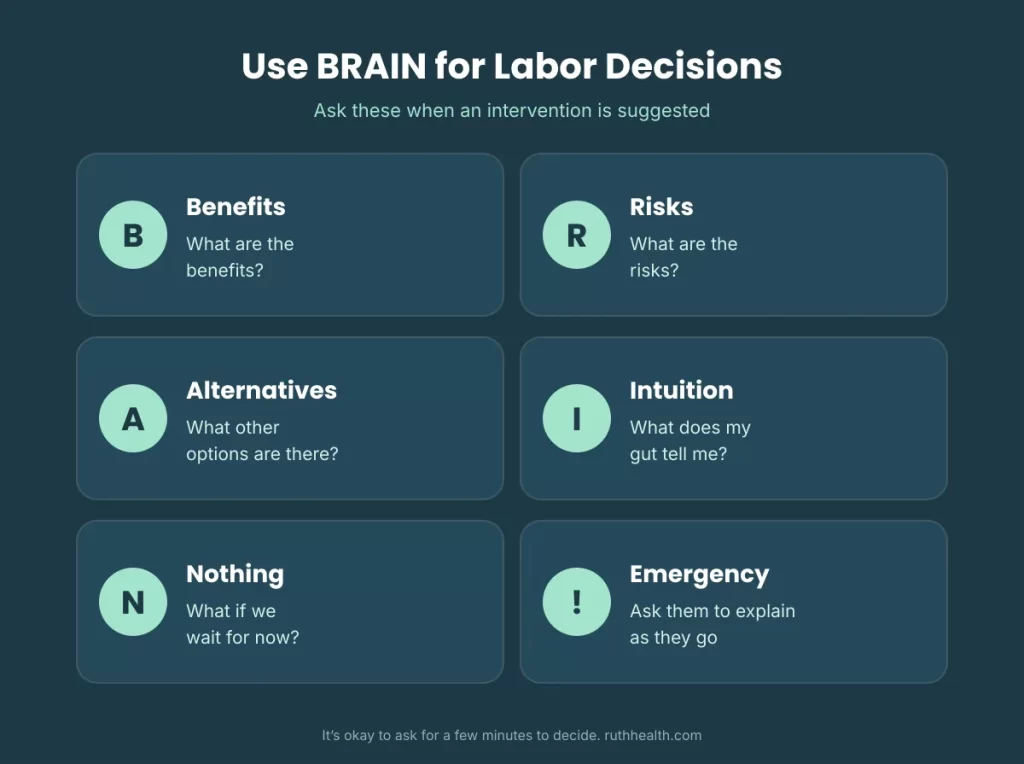
- B – Benefits: What are the benefits of this?
- R – Risks: What are the risks?
- A – Alternatives: What other options do we have?
- I – Intuition: What does my gut tell me?
- N – Nothing: What happens if we wait or do nothing for now?
It’s also fine to ask, “Can we have a few minutes to talk about it?” In a true emergency there may not be time, but you can still ask your team to explain what’s happening as they go, or afterward.
Phrases that help you speak up
- “I’m worried about ______. Can you check it?”
- “Something doesn’t feel right. I need you to take this seriously.”
- “Can you explain why you’re recommending this?”
- “I’d like to wait. Is it safe to do that?”
- “I don’t consent to that right now.”
- “I’d like to speak with the attending doctor (or charge nurse).”
- “Please write my concern in my chart.”
Your consent matters. Unless it’s an emergency where you can’t respond, providers should explain and ask before procedures and exams.
Urgent warning signs you should never ignore
The CDC’s Hear Her campaign lists urgent maternal warning signs. Get medical care right away and tell them you are pregnant or were pregnant within the last year if you have:
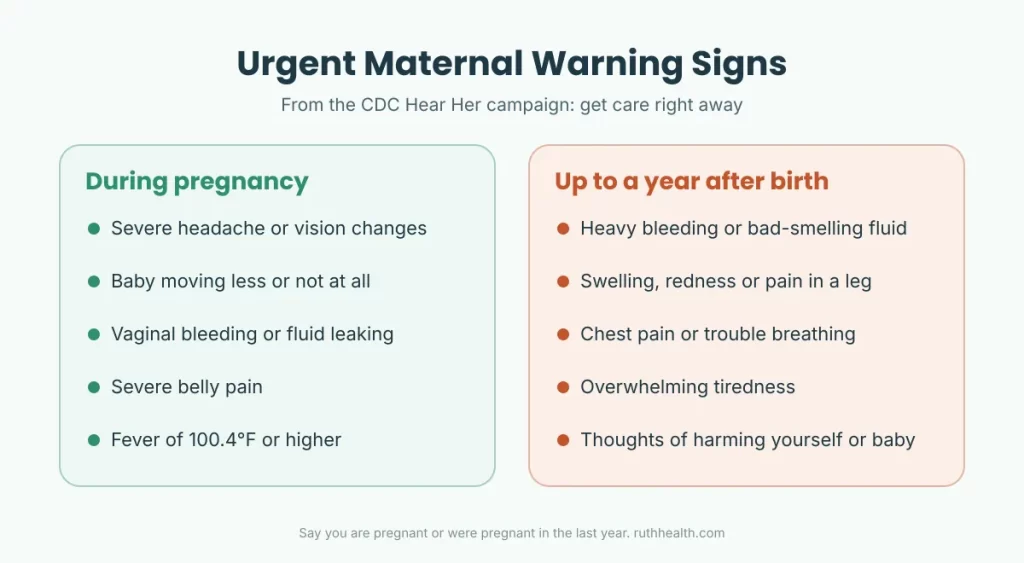
- Severe headache that won’t go away or gets worse over time, dizziness or fainting, changes in vision, a fever of 100.4°F or higher
- Thoughts about harming yourself or your baby
- Trouble breathing or chest pain
- Severe nausea and vomiting (not like morning sickness)
- Severe belly pain that doesn’t go away, the baby’s movement stopping or slowing, or vaginal bleeding or fluid leaking during pregnancy
- Heavy vaginal bleeding or leaking fluid that smells bad after pregnancy; swelling, redness or pain in your leg; overwhelming tiredness
- Swelling of your face or hands
The CDC stresses that pregnancy complications can happen up to a year after birth.
Advocating for yourself after delivery
Self-advocacy doesn’t stop when your baby arrives:
- Ask how to reach your provider after you go home.
- Ask about your blood pressure, especially if it was high during pregnancy.
- Speak up about pain, heavy bleeding or a wound that looks infected.
- Mention low mood, anxiety or intrusive thoughts. See our guide to postpartum depression.
- Keep your postpartum appointments. ACOG recommends contact within 3 weeks of birth.
Our postpartum recovery guide explains what’s normal in the weeks after birth.
How support people can help
The CDC encourages loved ones to offer to go with her to get medical care and help her ask questions, and to take notes and support her through follow-up care. A support person can:
- Repeat concerns if you’re too tired or in pain to keep asking
- Keep track of what was said and when
- Ask the BRAIN questions with you
- Request a second opinion or a senior clinician
Advocacy for Black women and other groups at higher risk
Black women in the US face higher rates of pregnancy-related death, and many report feeling dismissed. Choosing providers you trust, bringing a support person or doula, and documenting concerns can help. If you feel unheard, it is appropriate to ask for another clinician.
Frequently asked questions about advocating for yourself during labor
How can I advocate for myself during labor?
Learn about common interventions ahead of time, write a short birth preferences list, bring a support person, and use the BRAIN questions when decisions come up.
What does BRAIN stand for in labor?
Benefits, Risks, Alternatives, Intuition and Nothing (what happens if we wait). It’s a simple way to talk through decisions.
Can I say no during labor?
Yes. You have the right to informed consent and refusal. In emergencies, ask your team to explain what’s happening.
What if my doctor isn’t listening to me?
Repeat your concern clearly, ask for it to be noted in your chart, and ask to speak with the charge nurse or attending doctor.
What are urgent maternal warning signs?
They include severe headache, vision changes, chest pain, trouble breathing, heavy bleeding, fever, leg swelling or pain, and thoughts of self-harm. Get care right away.
The bottom line on advocating for yourself during labor
Advocating for yourself during labor and delivery means preparing ahead, bringing a support person, asking BRAIN questions and speaking up when something doesn’t feel right. Know the urgent maternal warning signs and remember that complications can happen up to a year after birth. Your voice is an important part of your care.