
Bloating in women is one of the most common gut complaints doctors hear. That tight, swollen, “I need to unbutton my jeans” feeling is one of the most common complaints women have. Sometimes it’s obvious why: a big meal, a fizzy drink or the days before your period. Other times it seems to happen for no reason at all, and it keeps coming back.
This guide explains why women bloat so much more than men, the 15 most common causes, how to work out what’s triggering yours, and when bloating is a sign you should see a doctor.
Key takeaways
- Nearly 1 in 5 people experience bloating every week, and women are about twice as likely as men to report it.
- Most bloating is caused by gas, constipation, food intolerances, hormones or a sensitive gut, not by anything serious.
- Bloating before your period is common and linked to hormone shifts and water retention.
- The low FODMAP diet helps 50% to 80% of people with IBS, one of the most common causes of ongoing bloating.
- See a doctor if bloating is persistent (most days for 3 weeks or more), especially after age 50 or with weight loss, bleeding or a change in bowel habits.
How common is bloating in women?
Very common. A Rome Foundation study of more than 51,000 people in 26 countries found nearly 18% reported bloating, and women were about twice as likely as men to experience it. Bloating was also more common in younger people. In the US, 15% to 30% of adults are estimated to have bloating.
Bloating (the feeling of fullness or pressure) and distension (your belly visibly getting bigger) often go together, but you can have one without the other. For bloating in women, both often show up together, especially in the second half of the cycle.
Why am I so bloated? 15 common causes
1. Swallowed air and gas
Eating quickly, chewing gum, drinking through a straw, fizzy drinks and talking while eating all make you swallow more air.
2. Gas-producing foods
Beans, lentils, onions, garlic, broccoli, cabbage, cauliflower and some fruits contain carbohydrates that gut bacteria ferment, producing gas.
3. Constipation
When stool moves slowly, gas gets trapped behind it. Bloating occurs in about 46% to 57% of people with functional constipation. Women are more prone to constipation than men. Because constipation is more common in women, it is a leading cause of bloating in women.
4. Your menstrual cycle
Hormone changes in the days before and during your period can cause water retention and slow digestion. Many women notice they’re most bloated just before their period starts.
5. Irritable bowel syndrome (IBS)
Bloating affects about 66% to 83% of people with IBS. IBS is more common in women and causes abdominal pain linked to bowel movements, along with diarrhea, constipation or both. IBS is about twice as common in women, which makes it one of the biggest drivers of bloating in women.
6. Lactose intolerance
If your body doesn’t make enough lactase, milk sugar ferments in your gut, causing bloating, gas and diarrhea within a few hours of eating dairy.
7. Fructose and other carbohydrate intolerances
Some people have trouble absorbing fructose (found in fruit, honey and high-fructose corn syrup) or sugar alcohols like sorbitol and xylitol in sugar-free gum and sweets.
8. Eating too much or too fast
Large meals stretch the stomach. Eating quickly also means you swallow more air and miss your fullness signals.
9. Salty foods
High-salt foods, including processed and restaurant meals, make your body hold on to water, which can feel like bloating. Salt-driven water retention is an often overlooked cause of bloating in women, especially before a period.
10. Sudden increase in fiber
Fiber is great for gut health, but jumping from a low-fiber diet to a high one too fast can cause gas and bloating. Increase it gradually and drink more water.
11. Small intestinal bacterial overgrowth (SIBO)
Too many bacteria in the small intestine can ferment food early, causing bloating, gas and sometimes diarrhea. It’s diagnosed with a breath test.
12. Celiac disease
This autoimmune reaction to gluten can cause bloating, diarrhea, tiredness, iron deficiency and weight loss. It’s listed among the main medical causes doctors rule out when assessing bloating.
13. Hypothyroidism and other conditions
An underactive thyroid slows digestion. Diabetes, gastroparesis (slow stomach emptying) and pancreatic problems can also cause bloating.
14. Stress and the gut-brain connection
Your gut and brain are closely linked. Stress and anxiety can make your gut more sensitive and change how it moves. Researchers have also described a reflex in some people where the belly muscles relax and the diaphragm pushes down, making the abdomen visibly distend even without extra gas.
15. Ovarian cancer (rare)
Most bloating is harmless. But persistent bloating can be an early symptom of ovarian cancer, which is often missed because its symptoms are vague. The NHS advises seeing a doctor if you feel bloated most days for 3 weeks or more.
Bloating before your period: why it happens
In the week before your period, falling progesterone and estrogen levels can make your body retain more water and salt. Progesterone also slows the movement of your gut, which can lead to constipation and gas. Bloating usually eases a day or two after your period starts.
To reduce period bloating:
- Cut back on salty foods in the week before your period.
- Drink plenty of water (it helps your body release retained fluid).
- Eat potassium-rich foods like bananas, spinach, avocado and sweet potatoes.
- Stay active; even a walk can help.
- Limit alcohol and caffeine, which may worsen symptoms for some women.
How to work out what’s causing your bloating
Keeping a 2 to 4 week symptom diary is the most useful thing you can do. Write down:
- What you eat and drink, and when.
- When bloating starts and how bad it is (score it 0 to 10).
- Your bowel movements.
- Where you are in your menstrual cycle.
- Your stress levels and sleep.
Patterns often appear quickly, for example bloating after dairy, worse before your period, or worse on days you’re constipated.
Low FODMAP diet: the best-studied diet for bloating
FODMAPs are a group of carbohydrates that are poorly absorbed and easily fermented by gut bacteria. They’re found in foods like wheat, onions, garlic, beans, apples, milk and some sweeteners.
According to a review in the journal Gut, at least 10 randomized trials show the low FODMAP diet improves symptoms in 50% to 80% of people with IBS, with particular improvements in bloating, flatulence and diarrhea.
The diet has three phases:
| Phase | What you do | How long |
|---|---|---|
| 1. Restrict | Swap high-FODMAP foods for low-FODMAP alternatives | 2 to 6 weeks |
| 2. Reintroduce | Test FODMAP groups one at a time to find your triggers | 6 to 8 weeks |
| 3. Personalize | Avoid only the foods that cause you problems; eat everything else | Long term |
It’s not meant to be followed strictly forever, as it can affect your gut bacteria and nutrient intake. It works best with a dietitian’s help.
| Common high-FODMAP foods | Low-FODMAP swaps |
|---|---|
| Onion and garlic | Chives, green parts of scallions, garlic-infused oil |
| Wheat bread and pasta | Sourdough spelt, gluten-free bread, rice, oats, quinoa |
| Apples, pears, mango, watermelon | Oranges, kiwi, strawberries, grapes, pineapple |
| Regular milk and soft cheese | Lactose-free milk, hard cheeses, almond milk |
| Beans and chickpeas | Small portions of canned, rinsed lentils or chickpeas |
| Honey, sugar-free gum (sorbitol, xylitol) | Maple syrup, small amounts of table sugar |
12 quick ways to relieve bloating
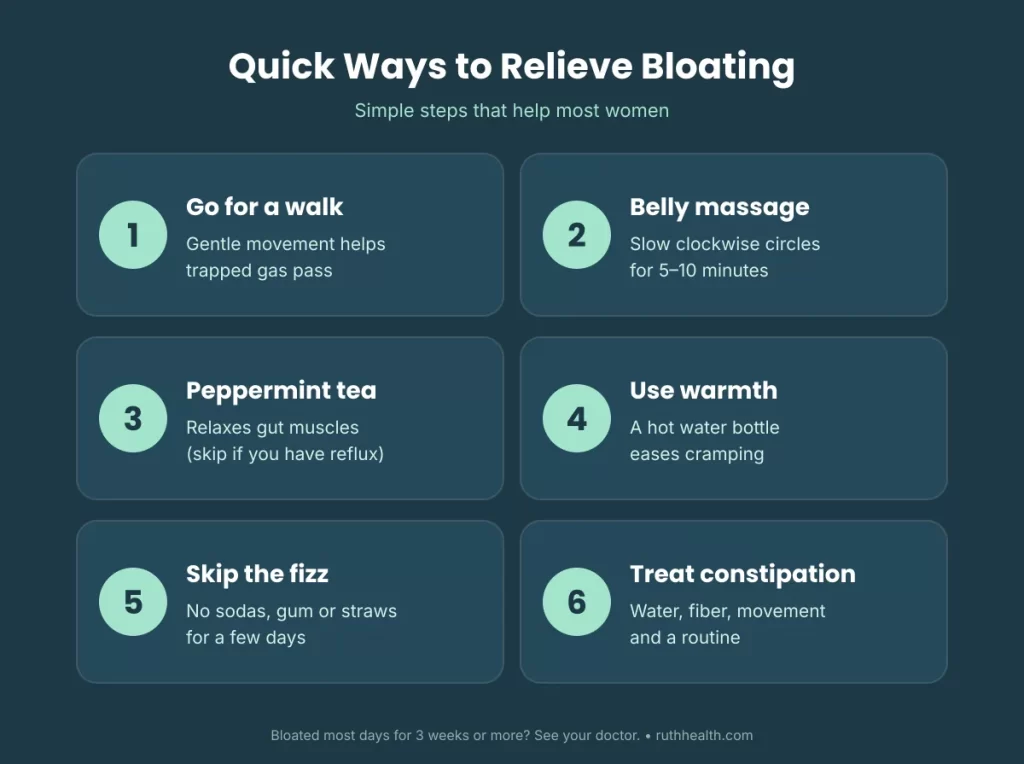
1. Go for a walk. Gentle movement helps gas pass through your gut.
2. Try abdominal massage. Massage your belly in slow clockwise circles.
3. Use heat. A warm compress or hot water bottle relaxes your gut muscles.
4. Sip peppermint tea. Peppermint relaxes intestinal muscles; peppermint oil capsules have evidence in IBS (avoid if you have reflux).
5. Eat slowly and chew well.
6. Skip fizzy drinks, gum and straws.
7. Cut back on salt for a few days.
8. Increase fiber gradually with plenty of water.
9. Treat constipation. Water, fiber, movement and a regular toilet routine.
10. Limit sugar alcohols like sorbitol and xylitol.
11. Try yoga poses like child’s pose or knees-to-chest to help release gas.
12. Manage stress with breathing exercises, which may also help the belly-diaphragm reflex.
Do probiotics help bloating?
Some people find probiotics reduce bloating, especially those with IBS, but results vary a lot between strains and individuals. If you try one, choose a product with specific strains that have been studied for bloating, use it daily for 4 weeks, and stop if it doesn’t help.
Compare options in our probiotic and gut health reviews, scored with our 11-point audit.
When to see a doctor about bloating
Make an appointment if:
- You feel bloated most days for 3 weeks or more.
- You’re over 50 and bloating is new.
- You have unexplained weight loss, loss of appetite or feel full quickly.
- You notice blood in your stool, black stools or a lasting change in bowel habits.
- You have bloating with pelvic or abdominal pain, needing to pee more often, or vaginal bleeding after menopause.
- You have a family history of ovarian, bowel or celiac disease.
Your doctor may check blood tests (including for celiac disease and anemia), a CA-125 test or ultrasound if ovarian problems are a concern, breath tests for SIBO or lactose intolerance, or refer you to a gastroenterologist.
Frequently asked questions
Why am I bloated every day?
Daily bloating is often linked to constipation, IBS, food intolerances or eating habits. But if it lasts most days for 3 weeks or more, see your doctor to rule out other causes, including ovarian problems.
How long does bloating last?
Bloating from a meal or gas usually eases within a few hours. Period-related bloating typically lasts a few days. Bloating that lasts weeks needs medical attention.
Why does my stomach get bigger throughout the day?
It’s common for the belly to be flattest in the morning and more distended by evening as you eat, drink and swallow air. In people with a sensitive gut, the belly-diaphragm reflex can also make it worse as the day goes on.
Can drinking water help bloating?
Yes. Staying hydrated helps prevent constipation and can reduce water retention, especially with salty foods or before your period.
What foods help reduce bloating?
Cucumber, ginger, peppermint, kiwi, papaya, bananas, yogurt with live cultures and fennel are often well tolerated and may help. The best foods depend on your personal triggers. Most bloating in women is harmless and improves with a few targeted changes.
The bottom line
Bloating is very common in women and usually caused by gas, constipation, hormones, food intolerances or IBS. A symptom diary can help you spot your triggers, and simple changes like eating slowly, cutting back on fizzy drinks and salt, and treating constipation often make a big difference. For ongoing bloating with IBS, the low FODMAP diet has strong evidence.
Don’t ignore bloating that’s persistent, new after 50, or comes with weight loss, bleeding or pain. Check in with your doctor. Read more in our gut, sleep and energy guides.
