A few months after giving birth, you notice clumps of hair in the shower drain, on your pillow and in your brush. It can be alarming, especially when you’re already exhausted. The good news: postpartum hair loss is very common, it’s temporary, and your hair will almost certainly grow back.
This guide explains why postpartum hair loss happens, when it starts and stops, what helps, and when to see a doctor. Here is what to expect from postpartum hair loss and how to cope.
Key takeaways
- Postpartum hair loss is excessive shedding, not true hair loss. Doctors call it telogen effluvium.
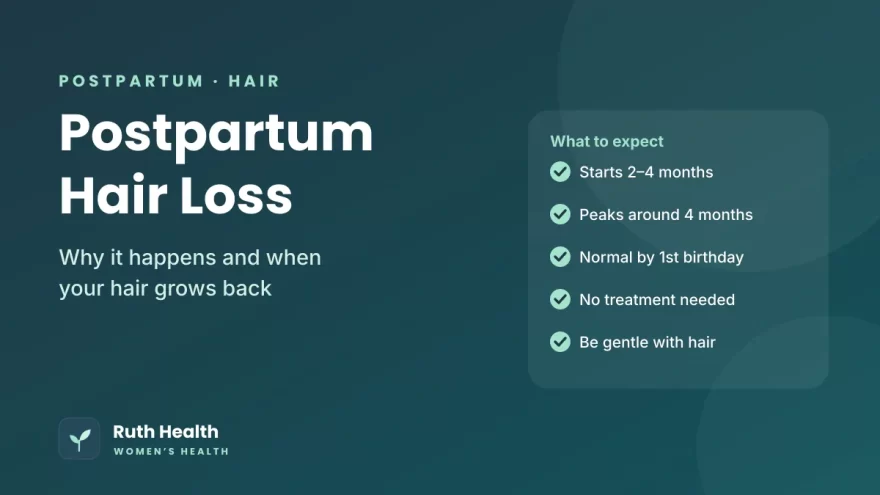
- It usually starts a few months after birth and peaks around 4 months postpartum.
- Most women regain normal fullness by their child’s first birthday, often sooner.
- No treatment is needed, but gentle hair care, good nutrition and a flattering haircut can help.
- See a doctor if shedding lasts beyond 12 months, comes in patches, or you have symptoms of thyroid problems or low iron.
Why does postpartum hair loss happen?
During pregnancy, high estrogen levels keep more hairs in the growing phase, so many women notice thicker, fuller hair. After birth, hormone levels drop sharply and those extra hairs move into the resting phase together. A few months later, they shed.
The American Academy of Dermatology explains that this is normal and not true hair loss. Dermatologists call it telogen effluvium, which means excessive hair shedding. Essentially, you’re losing the hair you would have shed during pregnancy, all at once.
Stress, sleep deprivation and changes in diet can add to it.
When does postpartum hair loss start and stop?
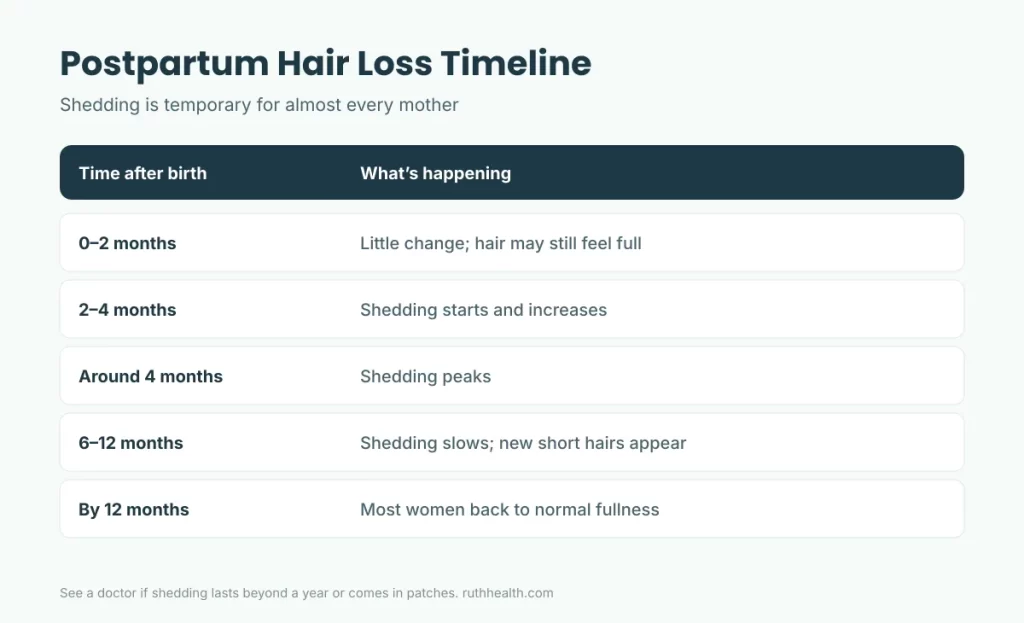
- Starts: usually 2 to 4 months after giving birth.
- Peaks: the AAD says shedding usually peaks about four months after giving birth.
- Ends: most women see their hair return to its normal fullness by their child’s first birthday, and many sooner.
Johns Hopkins Medicine notes that hair returns to its normal growth cycle after about 6 to 12 months.
| Time after birth | What’s happening |
|---|---|
| 0 to 2 months | Little change; hair may still feel full |
| 2 to 4 months | Shedding starts and increases |
| Around 4 months | Shedding peaks |
| 6 to 12 months | Shedding slows; short new hairs appear, often around the hairline |
| By 12 months | Most women back to normal fullness |
What helps with postpartum hair loss?
The AAD notes that you do not have to do anything to remedy it, because the shedding is temporary. But these tips can make it easier while it grows back.
Be gentle with your hair
- Use a wide-tooth comb and detangle gently.
- Avoid tight ponytails, buns and braids.
- Let hair air-dry when you can and limit hot tools.
- Skip harsh treatments like bleaching, perming and relaxing for now.
Use volumizing products
Lightweight volumizing shampoo and conditioner can make hair look fuller. Heavy conditioners and “intensive” formulas can weigh fine hair down; apply conditioner to the ends.
Try a new haircut
A shorter cut or layers can make thinning hair look fuller and is easier to manage with a newborn.
Keep taking your prenatal vitamin
Many providers recommend continuing your prenatal vitamin while breastfeeding.
Eat well
Enough protein, iron and overall calories support healthy hair growth. Postpartum is a common time to be low in iron, especially after heavy blood loss at birth. See low iron symptoms.
Manage stress where you can
Easier said than done with a newborn, but accepting help and getting rest when possible supports your overall recovery. See our guide to postpartum recovery.
Do hair supplements help?
There’s no strong evidence that hair supplements speed up regrowth after postpartum shedding. If you’re breastfeeding, check with your doctor or pharmacist before taking any supplement beyond your prenatal vitamin, as some contain high doses of vitamins or herbs.
Is it postpartum hair loss or something else?
Postpartum shedding is diffuse: you lose hair from all over your scalp, sometimes more around the temples and hairline. Other causes to consider include:
- Postpartum thyroiditis, which can cause tiredness, weight changes, feeling hot or cold, and mood changes in the months after birth. See hypothyroidism symptoms.
- Iron deficiency, especially after heavy bleeding during birth.
- Female pattern hair loss, which may become noticeable after pregnancy. See thinning hair in women.
- Alopecia areata, which causes round, smooth bald patches.
When to see a doctor
- Shedding continues past your baby’s first birthday.
- You notice bald patches or a widening part.
- You also feel very tired, cold, low or anxious, or notice weight changes.
- Your scalp is itchy, red or painful.
A doctor or dermatologist can check your thyroid and iron levels and look for other causes.
Frequently asked questions about postpartum hair loss
Will my hair grow back after postpartum hair loss?
Yes. For almost all women, hair returns to normal fullness within a year.
When does postpartum hair loss stop?
Shedding usually peaks around 4 months and slows by 6 to 12 months after birth.
Does breastfeeding cause postpartum hair loss?
No. Postpartum shedding happens whether or not you breastfeed. It’s caused by the drop in pregnancy hormones.
Can you prevent postpartum hair loss?
Not completely, because it’s a natural hormonal process. Gentle hair care and good nutrition support healthy regrowth.
How much hair loss is normal after pregnancy?
It can look like a lot, but if it’s diffuse and starts a few months after birth, it’s usually normal postpartum shedding.
The bottom line on postpartum hair loss
Postpartum hair loss is common, temporary shedding caused by falling pregnancy hormones. It usually starts 2 to 4 months after birth, peaks around 4 months and resolves by your baby’s first birthday. Be gentle with your hair, eat well and keep taking your prenatal vitamin. See a doctor if shedding lasts more than a year, comes in patches, or you have signs of thyroid problems or low iron.