After months of preparing for your baby, it’s easy to forget that your own body needs time to heal too. Postpartum recovery, often called the fourth trimester, involves big physical and emotional changes, and many new mothers feel unprepared for them.
This week-by-week guide explains what to expect after birth, how to care for yourself, and the warning signs that need urgent medical attention. Here is what to expect during postpartum recovery and how to care for yourself.
Key takeaways
- The postpartum period is usually counted as the first 12 weeks after birth, though full recovery often takes longer.
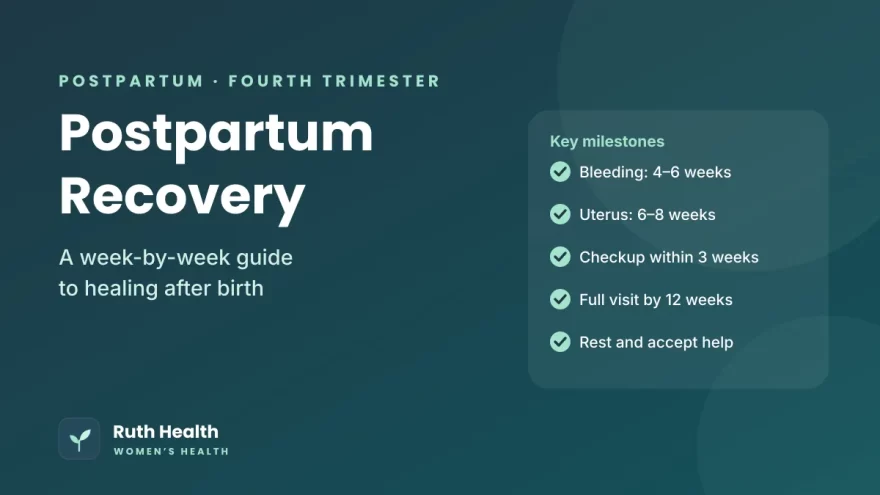
- Bleeding (lochia) is heavy and red for the first few days, then gradually lightens over about 4 to 6 weeks.
- ACOG recommends contact with your provider within 3 weeks of birth and a comprehensive visit no later than 12 weeks.
- Rest, nutrition, gentle movement and support help recovery.
- Heavy bleeding, fever, chest pain, severe headache, trouble breathing or thoughts of harming yourself need urgent care.
What is the postpartum period?
The postpartum period, or fourth trimester, is generally described as the 12 weeks after childbirth in which the body recovers from the changes of pregnancy and labor. Your uterus shrinks back, bleeding settles, hormones shift dramatically, and you adjust to caring for a newborn, often on very little sleep.
The American College of Obstetricians and Gynecologists (ACOG) recommends initial contact with your provider within 3 weeks after delivery, ongoing care as needed, and a comprehensive postpartum visit no later than 12 weeks after birth.
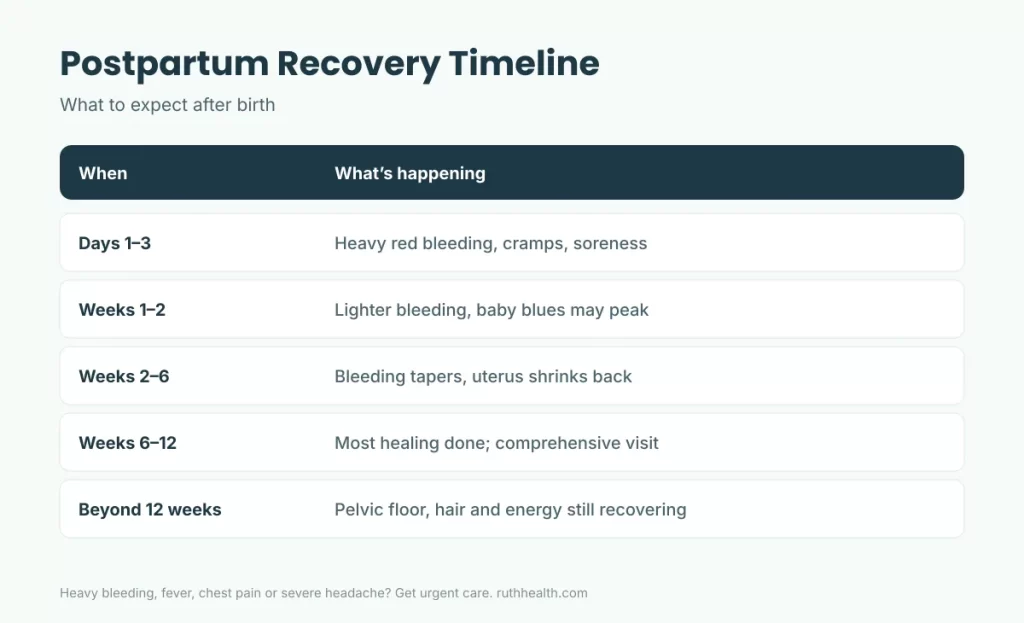
Postpartum recovery timeline
Days 1 to 3
- Bleeding is heavy and bright red. Merck Manual notes that discharge is bloody for 3 to 4 days, then becomes pale brown.
- Afterpains: cramps as your uterus contracts, often stronger while breastfeeding.
- Perineal soreness if you had a vaginal birth, or incision pain after a cesarean.
- Peeing more: your body gets rid of extra fluid from pregnancy.
- Breast changes as milk starts to come in.
Week 1 to 2
- Bleeding becomes lighter and brownish.
- Swelling in your legs and feet goes down.
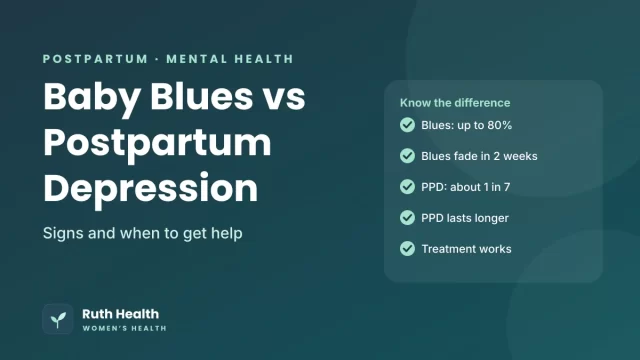
- Many women feel tearful or moody: the “baby blues” usually peak a few days after birth and fade within 2 weeks.
- Stitches begin to heal.
Weeks 2 to 6
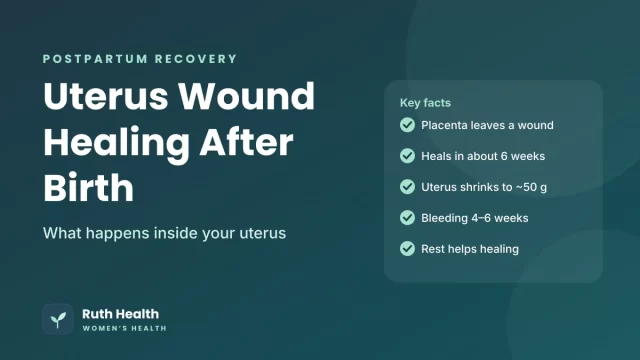
- Bleeding usually becomes yellowish-white and tapers off. Most women pass lochia for about 4 weeks after delivery, sometimes 6 to 8 weeks.
- Your uterus returns close to its normal size by around 6 to 8 weeks.
- Energy slowly improves, though sleep deprivation continues.
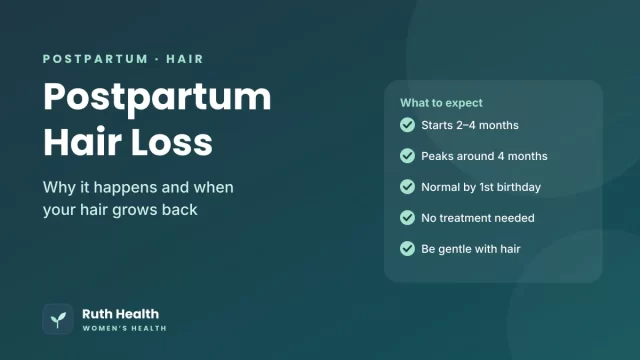
- Hair shedding may start a few months after birth. See postpartum hair loss.
Weeks 6 to 12
- Most physical healing is well underway.
- You may be cleared to return to exercise, sex and other activities. Go at your own pace.
- Your comprehensive postpartum visit should happen in this window.
Beyond 12 weeks
Many women continue to notice changes for months, including pelvic floor weakness, abdominal separation, hair loss and changes in periods. That’s normal, and support should continue as needed.
How to care for yourself after birth
Rest
Sleep when your baby sleeps if you can, and accept help with meals, chores and older children.
Eat well and stay hydrated
Regular meals with protein, fiber, fruit and vegetables support healing and energy. Drink plenty of water, especially if breastfeeding.
Care for your perineum or incision
- Use a peri bottle with warm water when you pee.
- Cold packs can ease swelling in the first day or two.
- Keep a cesarean incision clean and dry, and avoid heavy lifting.
Prevent constipation
Drink water, eat fiber and ask about a stool softener, especially if you have stitches or are taking pain medicine.
Move gently
Short walks help circulation and mood. Start pelvic floor (Kegel) exercises when comfortable, and build up activity gradually. Ask your provider before returning to high-impact exercise.
Look after your mental health
Feeling overwhelmed is common, but persistent sadness, anxiety or hopelessness isn’t something to push through alone. Read about baby blues vs postpartum depression.
Warning signs: get urgent care
Seek emergency care or call your provider right away if you have:
- Heavy bleeding: soaking a pad in an hour or less, or passing large clots.
- Fever of 100.4°F (38°C) or higher.
- Chest pain or trouble breathing.
- Severe headache, vision changes or swelling in your face or hands (signs of postpartum preeclampsia).
- A painful, swollen, red leg.
- Foul-smelling vaginal discharge or worsening belly pain.
- A red, hot, painful incision or one that’s oozing.
- A red, painful area on your breast with fever.
- Thoughts of harming yourself or your baby.
If you’re in the US and having thoughts of self-harm, call or text 988, or call the National Maternal Mental Health Hotline at 1-833-TLC-MAMA (1-833-852-6262).
Your postpartum checkup
At your visits, your provider will check your physical recovery, mood, blood pressure, breastfeeding, contraception plans, and any conditions from pregnancy such as gestational diabetes or high blood pressure. Prepare a list of questions, and be honest about how you’re feeling.
Frequently asked questions about postpartum recovery
How long does postpartum recovery take?
Most physical healing happens in the first 6 to 12 weeks, but full recovery, including your pelvic floor and energy, can take several months or longer.
How long does postpartum bleeding last?
Usually about 4 to 6 weeks, getting lighter over time.
When can I exercise after giving birth?
Gentle walking can start soon after birth. Ask your provider before starting more intense exercise, often around 6 weeks, or later after a cesarean.
When will my period come back?
It varies. If you’re not breastfeeding, it may return within 6 to 8 weeks. Breastfeeding can delay it for months. You can ovulate before your first period, so use contraception if you don’t want to become pregnant.
Is it normal to feel sad after giving birth?
The baby blues are very common in the first 2 weeks. If sadness lasts longer or is severe, talk to your provider.
The bottom line on postpartum recovery
Postpartum recovery takes time. Bleeding lightens over 4 to 6 weeks, your uterus shrinks back by about 6 to 8 weeks, and your body and mind keep adjusting for months. Rest, eat well, move gently, accept help and keep your postpartum appointments. Get urgent care for heavy bleeding, fever, chest pain, severe headache or thoughts of harming yourself.