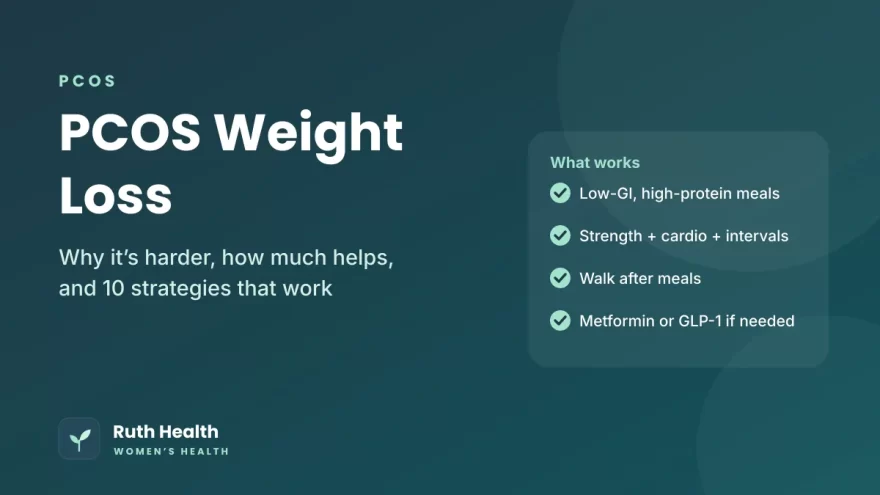
If you have PCOS, you’ve probably heard “just lose weight” from a doctor, often with no real advice on how. And if you’ve tried, you know it can feel harder than it does for other women. That’s not in your head. Insulin resistance and high androgens make weight loss with PCOS genuinely more challenging. This guide explains everything you need to know about pcos weight loss.
This guide explains why PCOS makes weight loss harder, how much weight loss actually helps, and 10 evidence-based strategies, from diet and exercise to medication, that work with your hormones rather than against them.
Key takeaways
- Over half of women with PCOS have overweight or obesity, and 65% to 80% have insulin resistance, which makes losing weight harder.
- Losing just 5% of your body weight can lower testosterone and improve insulin resistance.
- A 2024 meta-analysis found weight-loss interventions in PCOS increased periods by about 2.6 more per year and improved insulin and hormone markers.
- Combining exercise (including strength training and intervals) with a low-GI diet works better than either alone.
- Metformin and GLP-1 medicines can help when lifestyle changes aren’t enough.
Why is it so hard to lose weight with PCOS?
Insulin resistance
Research suggests 65% to 80% of women with PCOS have insulin resistance, meaning their cells don’t respond well to insulin. The body makes more insulin to compensate, and high insulin encourages fat storage, especially around the belly, and increases hunger and cravings. Learn more in our guide to insulin resistance in women.
High androgens
High insulin also tells the ovaries to make more testosterone, and androgens are linked to more abdominal fat. Belly fat in turn worsens insulin resistance, creating a vicious cycle.
Appetite and cravings
Many women with PCOS report stronger hunger and cravings, which may be linked to insulin and appetite hormones.
Mood and stress
Anxiety, depression and poor body image are more common with PCOS and can make consistent healthy habits harder. Women with PCOS also have a higher risk of disordered eating, so a gentle, sustainable approach matters.
How much weight loss helps PCOS?
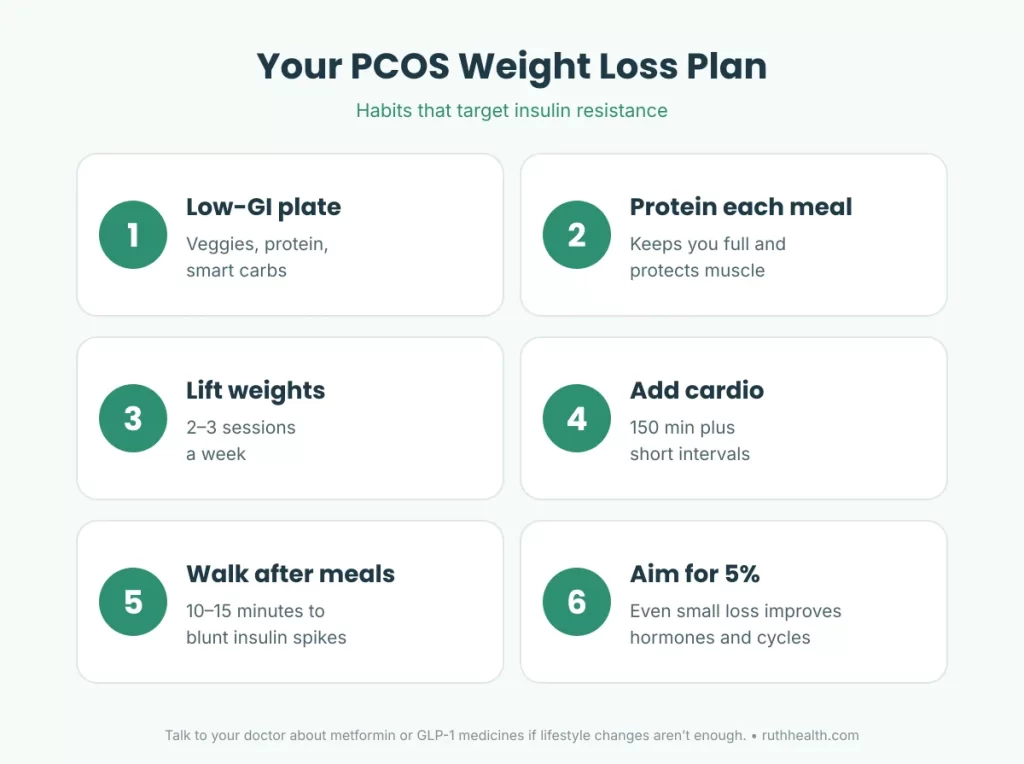
You don’t need to reach an “ideal” weight. According to UK clinical guidance, losing just 5% of your body weight may lower testosterone and markers of insulin resistance.
A 2024 systematic review and meta-analysis of randomized trials compared weight-loss interventions (behavioral programs, GLP-1 medicines and other weight-loss drugs) with usual care in PCOS. It found that weight loss improved insulin resistance, hormone markers and menstrual frequency, increasing periods by about 2.6 per year. However, weight loss didn’t significantly reduce excess hair growth or improve quality of life on its own.
| Your weight | 5% loss | 10% loss |
|---|---|---|
| 160 lb (73 kg) | 8 lb (3.6 kg) | 16 lb (7.3 kg) |
| 180 lb (82 kg) | 9 lb (4.1 kg) | 18 lb (8.2 kg) |
| 200 lb (91 kg) | 10 lb (4.5 kg) | 20 lb (9.1 kg) |
| 220 lb (100 kg) | 11 lb (5 kg) | 22 lb (10 kg) |
10 ways to lose weight with PCOS
1. Focus on insulin, not just calories
Since insulin resistance drives so much of PCOS, the most effective approaches target it directly. That means steady blood sugar: fewer refined carbs and sugary drinks, more fiber, protein and healthy fat at every meal.
2. Eat a low-glycemic, Mediterranean-style diet
There’s no single best PCOS diet, but low-GI, Mediterranean and moderately lower-carb patterns have the best evidence. See our full PCOS diet guide with a 7-day meal plan.
A simple plate: half non-starchy vegetables, a quarter lean protein, a quarter low-GI carbs (like lentils, quinoa or sweet potato), plus a little healthy fat.
3. Create a modest calorie deficit
Weight loss still requires eating somewhat less energy than you burn. A moderate deficit of around 500 calories a day is a common starting point, but there’s no need for extreme restriction, which can backfire.
4. Eat enough protein
Protein keeps you full, helps preserve muscle during weight loss and reduces blood sugar spikes. Include a palm-sized portion at every meal: eggs, Greek yogurt, fish, chicken, tofu, beans or lentils.
5. Combine cardio, strength training and intervals
Exercise improves insulin sensitivity even before you lose weight. A 2025 review of randomized trials concluded that combining HIIT, resistance training and dietary changes is the most effective non-drug strategy for PCOS. In one small trial, 8 weeks of combined resistance and endurance training significantly improved insulin, insulin resistance and cholesterol in women with PCOS.
A weekly plan to aim for:
- 150 minutes of moderate cardio (brisk walking, cycling, swimming).
- 2 to 3 strength sessions working all major muscles.
- 1 to 2 short interval sessions once you have a fitness base.
6. Walk after meals
A 10 to 15 minute walk after eating helps your muscles absorb glucose and reduces the insulin spike from that meal.
7. Sleep 7 to 9 hours
Poor sleep worsens insulin resistance and increases hunger. Women with PCOS are also more likely to have sleep apnea, so mention loud snoring or daytime sleepiness to your doctor.
8. Manage stress
Chronic stress raises cortisol, which affects blood sugar and appetite. Daily walks, breathing exercises, yoga or therapy can help. Read about high cortisol symptoms.
9. Track progress beyond the scale
Measure your waist monthly and notice changes in your cycles, skin, energy and strength. These often improve before your weight changes much.
10. Ask about medication if needed
Lifestyle changes are first-line, but pharmacotherapy is used as an add-on when lifestyle measures aren’t enough:
- Metformin: improves insulin sensitivity and may help modestly with weight and cycles.
- GLP-1 medicines (like semaglutide): can produce significant weight loss of 10% to 15% over 1 to 2 years in people with obesity. Early studies suggest they may improve weight, insulin sensitivity and menstrual regularity in PCOS, though PCOS-specific evidence is still limited. They aren’t suitable during pregnancy or when trying to conceive.
- Hormonal birth control and anti-androgens: don’t cause weight loss but treat cycles, acne and hair growth.
What about supplements?
Inositol (especially myo-inositol) is the most studied supplement for PCOS and may help insulin resistance and cycles in some women. Others, such as berberine, vitamin D and omega-3s, have mixed evidence. No supplement replaces diet, exercise and medical care, and some interact with medicines. See our weight loss supplement reviews and hormone balance supplement reviews, scored with our 11-point audit.
Mistakes to avoid
- Crash diets: very low-calorie plans often lead to muscle loss and rebound weight gain.
- Cutting all carbs forever: most women do better with smart carb choices than total elimination.
- Only doing cardio: strength training is key for insulin sensitivity.
- Comparing yourself to others: PCOS makes your starting point different. Progress may be slower but it still counts.
When to see a doctor or dietitian
Talk to your doctor if you’ve made consistent changes for 3 to 6 months without progress, if your periods are very irregular, or if you’re struggling with mood or eating patterns. A registered dietitian who understands PCOS can help build a plan that fits your life.
Frequently asked questions
Why can’t I lose weight with PCOS?
Insulin resistance, high androgens, increased appetite and sometimes poor sleep or stress all make weight loss harder. Targeting insulin with diet, exercise and sometimes medication helps.
How fast can you lose weight with PCOS?
A realistic, sustainable pace is about 0.5 to 1 kg (1 to 2 pounds) a week, though it may be slower. Even a 5% loss over several months can improve symptoms.
Is keto good for PCOS weight loss?
Some women lose weight on keto, but it’s hard to sustain. A moderately lower-carb, Mediterranean-style diet gives many of the same benefits and is easier to follow long term.
Does metformin help you lose weight with PCOS?
Metformin can lead to modest weight loss in some women and improves insulin resistance, but it isn’t a weight-loss drug on its own.
Can you get your period back by losing weight?
Yes, many women find their cycles become more regular after losing even a small amount of weight.
The bottom line
Losing weight with PCOS is harder because of insulin resistance and high androgens, but it is possible, and even 5% can make a real difference to your hormones, cycles and long-term health. Focus on steady blood sugar with a low-GI diet, eat enough protein, combine cardio with strength training, walk after meals, sleep well and manage stress. If lifestyle changes aren’t enough, ask your doctor about metformin or GLP-1 medicines.
Read our guide to PCOS symptoms and explore more in our PCOS guides.