
Belly fat is one of the most frustrating areas to shift, and for many women it seems to appear out of nowhere in their 30s, 40s or 50s. But stubborn belly fat isn’t just about how your jeans fit. Deep belly fat (visceral fat) is linked to heart disease, type 2 diabetes and other health problems.
The good news: belly fat responds well to the right changes. This guide explains what causes belly fat in women, why “spot reduction” doesn’t work, and the steps with the strongest evidence for losing it. This guide explains everything you need to know about lose belly fat.
Key takeaways
- There are two types of belly fat: subcutaneous (the fat you can pinch) and visceral (deep fat around your organs). Visceral fat is the more harmful kind.
- Hormones, stress, poor sleep, menopause, genetics and diet all affect where women store fat.
- You can’t spot-reduce belly fat with crunches, but exercise does reduce belly and visceral fat.
- Higher-intensity intervals, strength training, enough protein, fewer refined carbs and sugary drinks, and good sleep are the most effective tools.
- Track your waist measurement, not just the scale: a waist under half your height is a good target.
Two types of belly fat
Subcutaneous fat sits just under the skin. It’s the soft fat you can pinch. Visceral fat sits deep inside the abdomen, around the liver, intestines and other organs. According to Mayo Clinic, too much visceral fat is strongly linked to a greater risk of serious health problems.
Visceral fat is metabolically active. It releases inflammatory substances and fatty acids that affect insulin and cholesterol, which is why a larger waist raises your risk of heart disease and type 2 diabetes, even if your weight is normal.
What causes belly fat in women?
Hormone changes and menopause
As estrogen falls during perimenopause and menopause, women tend to store more fat around the waist rather than the hips. Research from the SWAN study found that the rate of fat gain doubles around the menopause transition. Read our guide to menopause weight gain.
Insulin resistance
High insulin encourages fat storage around the middle. Diets high in refined carbs and sugary drinks, inactivity and PCOS all contribute. See our guide to insulin resistance in women.
Stress and cortisol
Abdominal fat cells have more receptors for cortisol. Research has found that women with more central fat release more cortisol under stress. Learn more about high cortisol symptoms.
Poor sleep
Short or broken sleep raises hunger hormones, increases cravings and is linked to more belly fat.
Muscle loss and inactivity
Less muscle means fewer calories burned, and sitting for long periods encourages fat gain.
Alcohol and sugary drinks
Liquid calories are easy to overconsume and are linked to abdominal fat.
Genetics
Your genes influence where you store fat. If your mother carried weight around her middle, you may too.
Can you spot-reduce belly fat?
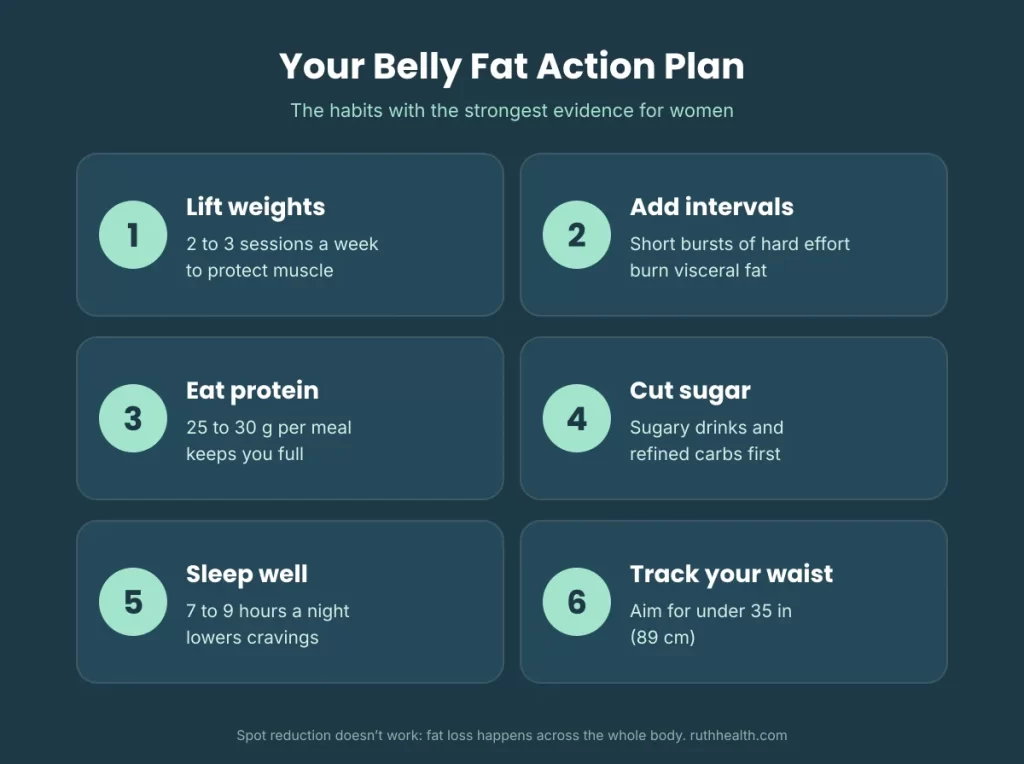
No. Doing hundreds of crunches strengthens your core muscles but doesn’t burn the fat on top of them. Fat loss happens across the whole body. The good news is that overall exercise does reduce belly fat specifically: a meta-analysis of 101 studies in postmenopausal women found exercise reduced waist circumference and visceral fat.
10 proven ways to lose belly fat
1. Add high-intensity intervals
In a 12-week trial in postmenopausal women, only the groups doing high-intensity interval training (HIIT) significantly reduced abdominal and visceral fat; steady moderate exercise did not. Try 30 seconds of fast effort followed by 90 seconds easy, repeated 6 to 8 times, two or three times a week.
2. Strength train 2 to 3 times a week
Building muscle raises the calories you burn at rest and improves insulin sensitivity. A 6-year study found long-term resistance training helped prevent weight gain and harmful changes in body composition in postmenopausal women.
3. Do regular cardio
Aim for at least 150 minutes of moderate activity a week, such as brisk walking, cycling or swimming. Aerobic exercise is especially effective for reducing fat mass.
4. Eat enough protein
Protein keeps you full and protects muscle while you lose fat. Aim for 25 to 30 grams at each meal from eggs, Greek yogurt, fish, chicken, tofu or beans.
5. Cut refined carbs and added sugar
Swap white bread, pastries, sugary cereals and sweets for whole grains, beans, vegetables and fruit. This steadies blood sugar and insulin.
6. Drop sugary drinks and limit alcohol
Soda, juice, sweetened coffees and alcohol are major sources of easily overeaten calories.
7. Eat more fiber
Soluble fiber from oats, beans, lentils, chia seeds, apples and vegetables helps you feel full and supports healthy blood sugar.
8. Sleep 7 to 9 hours
Prioritize consistent sleep. If night sweats or snoring disrupt your sleep, talk to your doctor.
9. Manage stress
Daily walks, breathing exercises, yoga or time outdoors help lower stress hormones and stress eating.
10. Be consistent and patient
Belly fat often goes last. Expect noticeable changes over 8 to 12 weeks of consistent effort.
Measure your waist, not just your weight
| Measurement | Healthy target | Higher risk |
|---|---|---|
| Waist circumference (women) | Under 35 inches (89 cm) | 35 inches or more |
| Waist-to-height ratio | Under 0.5 | 0.5 or higher |
According to the NIDDK, a waist of 35 inches or more in women is linked to insulin resistance, even with a normal BMI. To measure, wrap a tape measure around your belly at the level of your belly button after breathing out.
Do belly fat supplements work?
Most “fat burner” supplements have weak evidence, and some contain stimulants that can raise heart rate and blood pressure. None can replace exercise, diet and sleep. If you’re comparing products, see our weight loss supplement reviews, scored with our 11-point audit.
When to see a doctor
See your doctor if belly fat appeared quickly along with other symptoms such as wide purple stretch marks, easy bruising or muscle weakness (possible Cushing’s syndrome), if you have irregular periods or excess hair growth (possible PCOS), or if you have signs of high blood sugar like thirst and frequent urination.
Frequently asked questions about lose belly fat
What is the fastest way to lose belly fat for women?
There’s no shortcut, but combining high-intensity intervals and strength training with a higher-protein, lower-sugar diet and good sleep gives the fastest sustainable results.
Why do I have belly fat but I’m thin?
Genetics, stress, poor sleep, inactivity and hormones can cause fat to collect around the middle even at a normal weight. This visceral fat still affects health, so a waist measurement matters.
Does walking reduce belly fat?
Yes, regular brisk walking helps reduce overall and belly fat, especially combined with strength training and a healthy diet.
What foods burn belly fat?
No food burns fat directly, but high-protein foods, high-fiber foods (beans, oats, vegetables) and healthy fats support fat loss by keeping you full and steadying blood sugar.
How long does it take to lose belly fat?
Most women see a difference in their waist within 2 to 3 months of consistent exercise and diet changes.
The bottom line on lose belly fat
Belly fat in women is driven by hormones, insulin, stress, sleep, muscle loss and lifestyle. You can’t spot-reduce it, but exercise, especially high-intensity intervals and strength training, reduces belly and visceral fat. Pair this with enough protein, fewer refined carbs and sugary drinks, good sleep and stress management, and track your waist rather than just the scale.
Read more in our belly fat guides.
